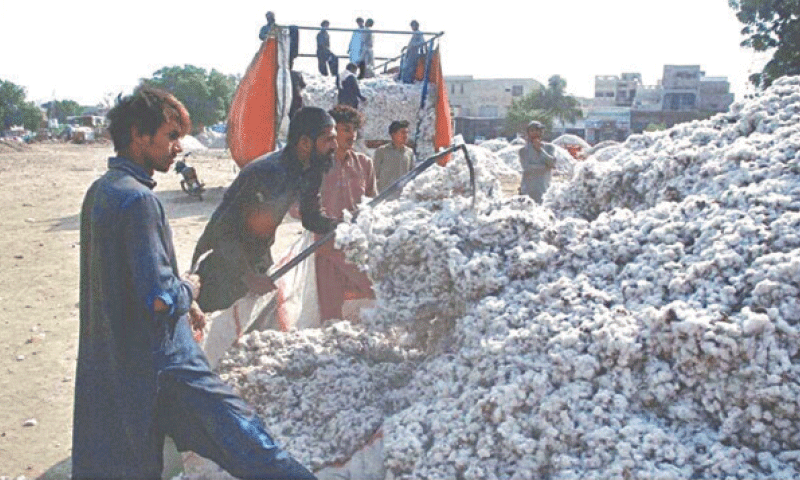
LAHORE: Pakistan’s cotton industry is sliding into a deeper crisis as fresh data from the Pakistan Cotton Ginners Association (PCGA) reveals a decline in national arrivals and mounting pressure on the ginning and spinning sectors. Industry experts warn that without immediate policy intervention, the entire cotton value chain may face long-term damage.
Read More: Cotton Output Soars 49pc as Govt Forms Pakistan Cotton Board for sector revival
According to PCGA data released on Wednesday, total cotton arrivals reached 5,133,620 bales as of Nov 30, slightly lower than last year’s 5,190,725 bales. Unsold stocks have also climbed to 667,257 bales, signalling weakening demand and rising uncertainty among traders.
Business Club analyst Haseeb Ahmad described the situation as alarming, noting that the country is producing less, consuming less and becoming increasingly dependent on imports. “The numbers paint a troubling picture,” he said, highlighting the widening gap between local supply and industrial requirements.
—’
Pakistan’s cotton arrivals decline by 1%YoY to 5.1mn bales as of Nov 30, 2025, compared to 5.2mn bales during SPLY.#Pakistan #Cotton #Agriculture #GDP #Imports@PakPMO @CMShehbaz @Financegovpk @StateBank_Pak… pic.twitter.com/5Gk5vSHMWd
— AKD Securities (@akdsecurities) December 3, 2025
Sajid Mahmood, Head of Technology Transfer at the Central Cotton Research Institute (CCRI) Multan, said the report underscores the severity of the crisis. Punjab alone recorded a shortfall of 110,437 bales — a 4.49pc decline — while Sindh showed a marginal increase that was not enough to offset national deficits.
Mahmood said the absence of a viable support price remains one of the most pressing issues for farmers. He added that growers are shifting to more profitable crops such as sugarcane and rice, while extreme weather and pest attacks like whitefly and pink bollworm continue to devastate cotton fields.
The domestic textile sector, which requires more than 15 million bales annually, is relying heavily on imports to fill the supply gap. This has placed additional strain on the economy, especially amid rising global prices and foreign exchange challenges.
Read More: PM Shehbaz calls for urgent revival of cotton industry
Naseem Usman of the Karachi Cotton Brokers Association estimates that local lint production may reach only 5.5 million bales this year. Meanwhile, Ihsanul Haq of the Cotton Ginners Forum warned that large-scale imports of yarn and fabric — particularly from China — have pushed Faisalabad’s yarn market into “the worst economic crisis in its history.”