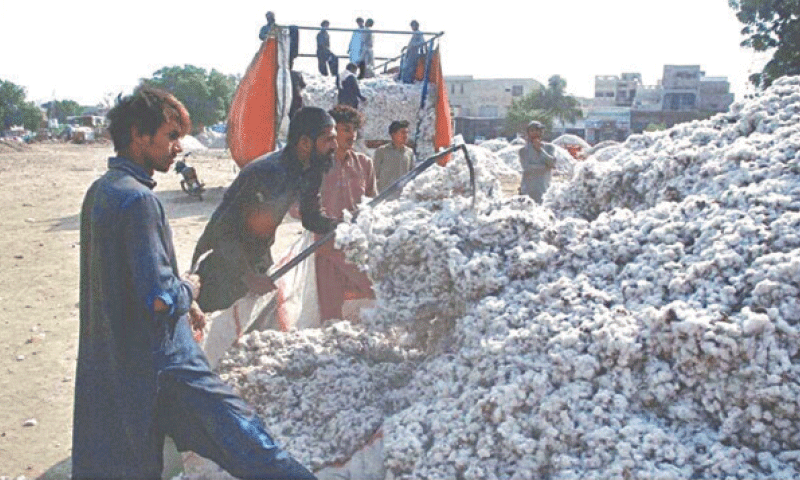
LAHORE – Pakistan’s cotton sector has recorded a remarkable turnaround, with production surging by 49 percent this season, prompting the government to establish the Pakistan Cotton Board (PCB) to steer the industry’s revival through a long-term strategic plan.
According to the latest figures from the Pakistan Cotton Ginners Association (PCGA), a total of 3.044 million bales of seed cotton had reached ginning factories by September 30, marking a sharp recovery from last year’s slump. Sindh led the growth with 1.907 million bales — up 45 percent — while Punjab followed closely with 1.136 million bales, showing a 56 percent jump.
Sajid Mahmood, Head of the Technology Transfer Department at the Central Cotton Research Institute in Multan, said the strong numbers had eased earlier fears of lower output. “Despite adverse weather conditions, this year’s production outlook remains positive,” he added.
During the same period, textile mills purchased around 2.41 million bales and exporters 95,000, leaving roughly 540,000 unsold bales at ginning factories. Ginning activity has also picked up sharply, with 265 factories operational in Punjab compared to 171 last year, and 236 in Sindh, up from 221.
Read More: Turning Pakistan’s Power Surplus into a Digital Export Revolution
Despite recent floods, water shortages, and erratic rainfall, the crop’s overall performance has remained encouraging. In Punjab, about 162,000 acres were affected, while in Sindh, nearly 57,500 acres sustained damage. However, discrepancies persist between PCGA and the Punjab Crop Reporting Service (CRS) data — the latter estimating Punjab’s production at 2.65 million bales by the end of September.
Highlighting the long-term decline in domestic output, Mahmood noted that Pakistan’s cotton production had fallen drastically from 14.8 million bales in its peak years to just 5.5 million last year.
To reverse this trend, the government has announced the formation of the Pakistan Cotton Board, to be headed by Deputy Prime Minister Ishaq Dar. The PCB will work with the Ministry of National Food Security and the All Pakistan Textile Mills Association (Aptma) to implement the “Pakistan Cotton Plan 2026.” The initiative, expected to be financed through the Cotton Cess, aims to revitalise production, though the funding mechanism has drawn some concern.
Cotton Ginners Forum Chairman Ihsanul Haq welcomed the move but voiced reservations about the plan’s missing elements, particularly the lack of crop zoning laws and upgrades to the Meteorological Department. “Without proper zoning and weather forecasting improvements, sustainable revival will remain a challenge,” he said.
Haq also pointed to the expansion of sugarcane cultivation in cotton-growing areas as a major hurdle, citing its environmental impact on lint quality and yield. In contrast, he noted that regions like Balochistan and Cholistan — where sugarcane farming is limited — consistently produce premium-quality cotton with better fibre strength and length.
He concluded that Pakistan’s cotton revival hinges on decisive action against sugarcane expansion in key cotton belts and the implementation of modern agricultural reforms to protect one of the country’s most vital cash crops.