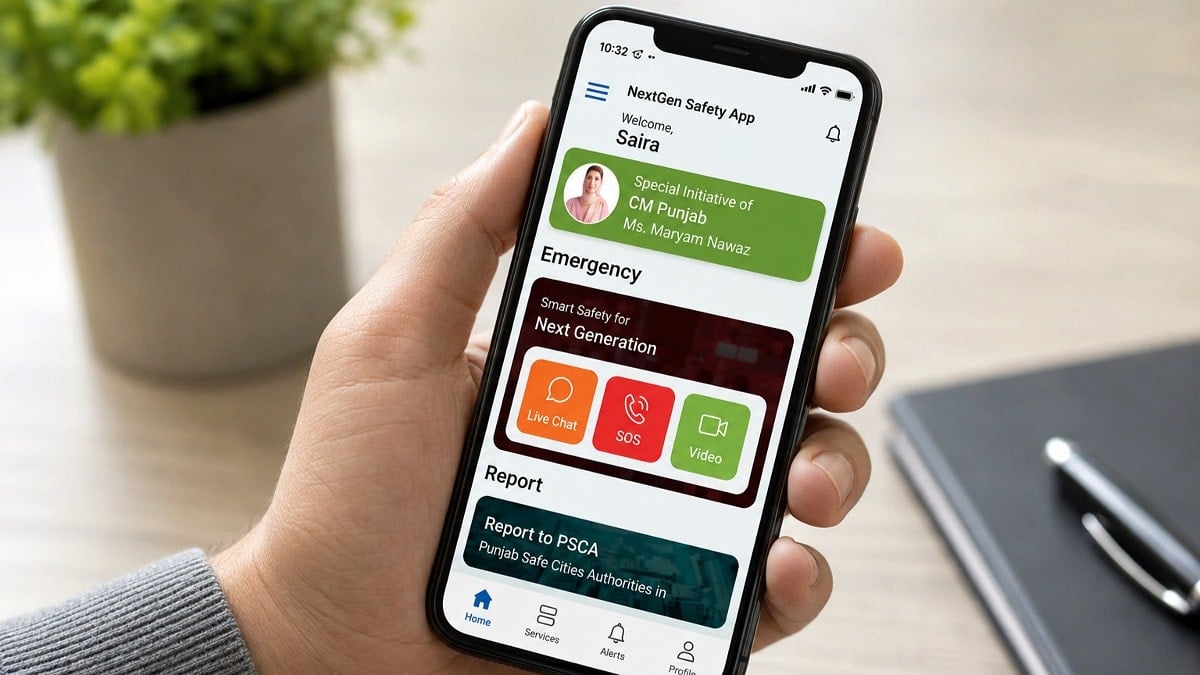
Punjab has launched a QR-based panic button system to improve public transport safety across the province by linking vehicles with digital emergency response networks and real-time monitoring systems. The initiative aims to strengthen passenger protection and ensure faster coordination during emergencies through smart technology integration in buses, taxis, vans, and rickshaws.
The Punjab Safe Cities Authority introduced the system under the Digital Punjab vision led by Chief Minister Maryam Nawaz, ensuring full integration with existing surveillance and emergency infrastructure. Officials confirmed that the system has been developed in-house without placing any additional financial burden on the provincial government.
Read more : Punjab okays Electricity Duty Rules 2026
According to authorities, QR panic buttons will be installed in all major public transport vehicles, allowing passengers to scan codes before starting their journey. This scan will display verified driver, vehicle, and ownership details, while also enabling users to share information with trusted contacts for added security.
In case of emergencies, passengers can instantly trigger alerts through calls, video calls, or live chat options, while the system automatically shares live location and vehicle data with the Safe Cities control room. This enables police and response teams to coordinate rapid assistance through an integrated command network.
Read more : Punjab approves Rs96 billion for major development projects
Furthermore, officials stated that the system includes 12 key safety features, including emergency calling, location tracking, vehicle verification, and instant police response mechanisms. Drivers will also be able to use the same platform to request urgent help during critical situations on the road.
Meanwhile, Inspector General of Punjab Police Abdul Karim said citizen safety remains the top priority, adding that the QR panic button will improve coordination between police and passengers. Additionally, PSCA Managing Director Ahsan Younas said the project represents a major step toward building a fully connected, technology-driven public transport safety ecosystem.