• Skip to primary navigation
  • Skip to main content
  • Skip to primary sidebar
  • Skip to footer
Trending:
  • Kashmir
  • Elections
Saturday, June 6, 2026

Daily Times

Your right to know

  • HOME
  • Latest
  • Iran-Israel war
  • Gilgit Baltistan Election
  • Pakistan
    • Balochistan
    • Gilgit Baltistan
    • Khyber Pakhtunkhwa
    • Punjab
    • Sindh
  • World
  • Editorials & Opinions
    • Editorials
    • Op-Eds
    • Commentary / Insight
    • Perspectives
    • Cartoons
    • Letters to the Editor
    • Featured
    • Blogs
      • Pakistan
      • World
      • Lifestyle
      • Culture
      • Sports
  • Business
  • Sports
  • E-PAPER
    • Lahore
    • Islamabad
    • Karachi

Government’s 27th Amendment plan sparks debate over new constitutional court

Published on: November 9, 2025 10:12 AM

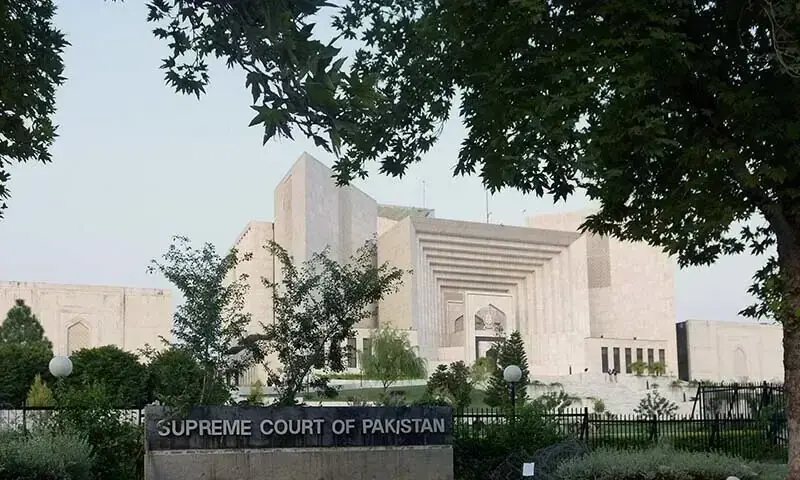
An outside view of the Supreme Court building. — AFP/File
ISLAMABAD: The initial draft of the 27th Constitutional Amendment Bill, presented in the Senate on Saturday, has ignited intense debate within Pakistan’s legal and political circles. Legal experts warn that the proposed changes could effectively dethrone the Supreme Court as the country’s highest judicial authority, transferring that status to a newly proposed Federal Constitutional Court (FCC).

According to the draft, the FCC would assume exclusive jurisdiction over constitutional interpretation, inter-governmental disputes, and Article 199 matters, while the existing Supreme Court would continue to handle civil, criminal, and statutory appeals. Critics argue that this restructuring would “make the Supreme Court irrelevant,” reducing it to what one senior counsel described as a “Supreme District Court.”

Read More: Bill for 27th Amendment lands in Senate 

Several constitutional lawyers expressed concern that by amending Article 175, the government is “virtually ending the judiciary as we knew it.” They warned that future legislative amendments — such as to the Elections Act 2017 — could further limit the Supreme Court’s powers by redirecting appeals to the FCC.

Former Additional Attorney General Tariq Mehmood Khokhar described the package as twofold: first, the insertion of a new Chapter 1A granting the executive expanded authority to transfer high court judges and empowering the FCC “by disempowering the Supreme Court”; and second, an amendment to Article 243, which would formally vest the Chief of the Defence Forces’ office in the Chief of the Army Staff, while granting the Field Marshal rank for life.

Read More: Lawyers warn 27th Amendment threatens judicial independence in Pakistan

Another senior lawyer noted that under the proposed amendments, the Chief Justice of the FCC would precede the Chief Justice of Pakistan in the constitutional hierarchy and serve until the age of 68, compared to the current 65-year retirement age for Supreme Court judges. Additionally, the FCC is listed first in the oath sections of the Constitution, signalling its superior status in the judicial order.

However, proponents of the reform have hailed the bill as a “forward-looking model” aimed at modernising Pakistan’s justice system. Senior counsel Hafiz Ahsaan Ahmad Khokhar argued that creating two separate apex courts — one constitutional and one appellate — aligns Pakistan’s judiciary with modern democracies that maintain institutional separation between constitutional interpretation and appellate adjudication.

Read More: Supreme Court questions proposed constitutional court

He said the reform would help reduce backlogs, eliminate internal judicial divisions, and enhance clarity in constitutional matters. He also defended the proposed military-related amendment as consistent with international norms that establish a unified advisory framework under the prime minister and the National Security Committee.

Meanwhile, Supreme Court Bar Association President Haroonur Rasheed welcomed the proposal, calling it a “historic consensus-based reform” and announced plans to convene an All Pakistan Lawyers Convention in collaboration with the Pakistan Bar Council to deliberate the amendment’s implications.

Filed Under: Pakistan Tagged With: 27th Amendment, judiciary reform, Latest, lead, Pakistan Parliament, Supreme Court

Submit a Comment


Primary Sidebar


Latest News

Alexander Zverev eases past Jakub Mensik in French Open semifinals

Taylor to face Pili in Croke Park farewell

FIFA bans vuvuzelas from World Cup stadiums

France brush off Ivory Coast loss, call it timely World Cup reminder

Legendary boxer Muhammad Ali’s 10th death anniversary observed

Pakistan

JAAC declared proscribed party ahead of AJK polls on July 27

Fixed tax scheme for small retailers launched to raise Rs 50bn annually

Govt cuts petrol price by Rs 4 per litre, keeps diesel’s unchanged

Bilawal promises GB voters with land and job rights

Iran declares support for Hezbollah with wider peace deal in doubt

More Posts from this Category

Business

SBP’s ‘Go Cashless’ campaign saw Rs 34bn in digital transactions on Eid

Short-term inflation down by 0.56%

Saudi-Pak Business Council shows interest in infrastructure investment

‘Govt, allies united in efforts to craft people-centric budget’

Rupee records gain against US dollar

More Posts from this Category

World

CENTCOM space post signals wider US military footprint

US official delivers Trump’s “good hello” to Putin

NASA lifts ISS evacuation alert after leak

More Posts from this Category


Footer

Home
Lead Stories
Latest News
Editor’s Picks

Culture
Life & Style
Featured
Videos

Editorials
OP-EDS
Commentary
Advertise

Cartoons
Letters
Blogs
Privacy Policy

Contact
Company’s Financials
Investor Information
Terms & Conditions

Facebook
Twitter
Instagram
Youtube

© 2026 Daily Times. All rights reserved.

Manage Consent
To provide the best experiences, we use technologies like cookies to store and/or access device information. Consenting to these technologies will allow us to process data such as browsing behavior or unique IDs on this site. Not consenting or withdrawing consent, may adversely affect certain features and functions.
Functional Always active
The technical storage or access is strictly necessary for the legitimate purpose of enabling the use of a specific service explicitly requested by the subscriber or user, or for the sole purpose of carrying out the transmission of a communication over an electronic communications network.
Preferences
The technical storage or access is necessary for the legitimate purpose of storing preferences that are not requested by the subscriber or user.
Statistics
The technical storage or access that is used exclusively for statistical purposes. The technical storage or access that is used exclusively for anonymous statistical purposes. Without a subpoena, voluntary compliance on the part of your Internet Service Provider, or additional records from a third party, information stored or retrieved for this purpose alone cannot usually be used to identify you.
Marketing
The technical storage or access is required to create user profiles to send advertising, or to track the user on a website or across several websites for similar marketing purposes.
  • Manage options
  • Manage services
  • Manage {vendor_count} vendors
  • Read more about these purposes
View preferences
  • {title}
  • {title}
  • {title}
We use cookies to ensure that we give you the best experience on our website. If you continue to use this site we will assume that you are happy with it.