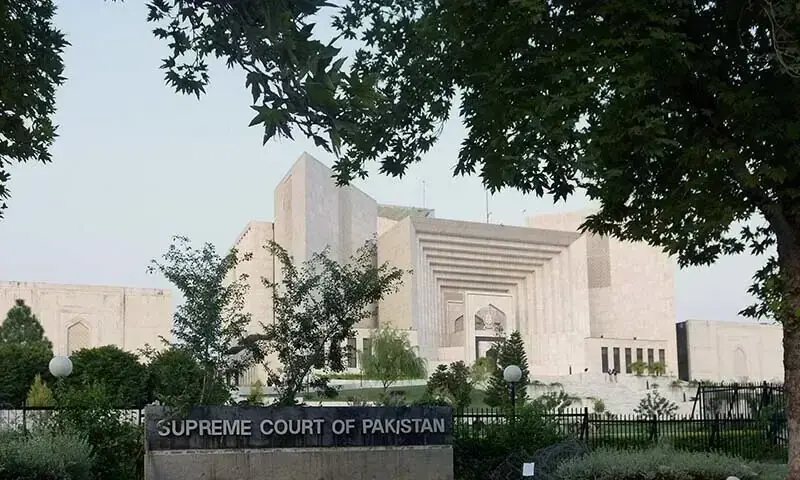
ISLAMABAD: The initial draft of the 27th Constitutional Amendment Bill, presented in the Senate on Saturday, has ignited intense debate within Pakistan’s legal and political circles. Legal experts warn that the proposed changes could effectively dethrone the Supreme Court as the country’s highest judicial authority, transferring that status to a newly proposed Federal Constitutional Court (FCC).
According to the draft, the FCC would assume exclusive jurisdiction over constitutional interpretation, inter-governmental disputes, and Article 199 matters, while the existing Supreme Court would continue to handle civil, criminal, and statutory appeals. Critics argue that this restructuring would “make the Supreme Court irrelevant,” reducing it to what one senior counsel described as a “Supreme District Court.”
Read More: Bill for 27th Amendment lands in Senate
Several constitutional lawyers expressed concern that by amending Article 175, the government is “virtually ending the judiciary as we knew it.” They warned that future legislative amendments — such as to the Elections Act 2017 — could further limit the Supreme Court’s powers by redirecting appeals to the FCC.
Former Additional Attorney General Tariq Mehmood Khokhar described the package as twofold: first, the insertion of a new Chapter 1A granting the executive expanded authority to transfer high court judges and empowering the FCC “by disempowering the Supreme Court”; and second, an amendment to Article 243, which would formally vest the Chief of the Defence Forces’ office in the Chief of the Army Staff, while granting the Field Marshal rank for life.
Read More: Lawyers warn 27th Amendment threatens judicial independence in Pakistan
Another senior lawyer noted that under the proposed amendments, the Chief Justice of the FCC would precede the Chief Justice of Pakistan in the constitutional hierarchy and serve until the age of 68, compared to the current 65-year retirement age for Supreme Court judges. Additionally, the FCC is listed first in the oath sections of the Constitution, signalling its superior status in the judicial order.
However, proponents of the reform have hailed the bill as a “forward-looking model” aimed at modernising Pakistan’s justice system. Senior counsel Hafiz Ahsaan Ahmad Khokhar argued that creating two separate apex courts — one constitutional and one appellate — aligns Pakistan’s judiciary with modern democracies that maintain institutional separation between constitutional interpretation and appellate adjudication.
Read More: Supreme Court questions proposed constitutional court
He said the reform would help reduce backlogs, eliminate internal judicial divisions, and enhance clarity in constitutional matters. He also defended the proposed military-related amendment as consistent with international norms that establish a unified advisory framework under the prime minister and the National Security Committee.
Meanwhile, Supreme Court Bar Association President Haroonur Rasheed welcomed the proposal, calling it a “historic consensus-based reform” and announced plans to convene an All Pakistan Lawyers Convention in collaboration with the Pakistan Bar Council to deliberate the amendment’s implications.