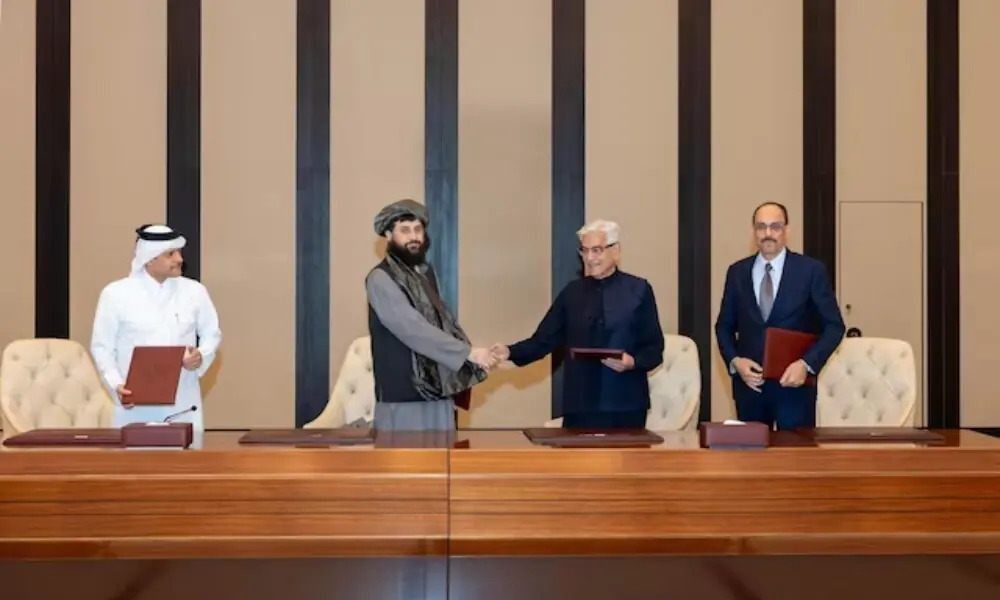
Pakistan and Afghanistan officials met in Istanbul on Monday for a third straight day of peace talks. The discussions followed a ceasefire agreed in Doha on October 19 after deadly border clashes. Dozens of people were killed in the worst violence since the Taliban took power in Kabul in 2021. The ongoing talks, mediated by Turkiye, aim to reach a lasting truce. However, both sides have expressed different views about the progress.
Pakistani security sources accused the Afghan Taliban of slowing the dialogue process. They said Pakistan would not compromise on its demands to end cross-border terrorism. One official stated that Islamabad had made its position clear to the Afghan side. In contrast, a Taliban representative denied any delay, saying the meetings were proceeding positively. He added that discussions were being held in a “friendly environment” and that both sides were still negotiating.
Read more: Pakistan, Afghanistan seek to bolster truce in Istanbul talks
Taliban spokesperson Zabihullah Mujahid said the Islamic Emirate supported dialogue as the only way to solve disputes. He told state broadcaster RTA that Afghanistan believed peace could come through discussion, not war. Meanwhile, Pakistan’s foreign ministry declined to comment on the talks. Defence Minister Khawaja Asif, however, warned that failure in Istanbul could lead to “open war.” His remarks underscored growing frustration within Islamabad over the stalled progress.
Late Sunday, US President Donald Trump renewed his offer to mediate between the two countries. Speaking in Kuala Lumpur, he said he could “get that solved very quickly.” Trump added that he knew both sides well and expected peace soon. His statement came as international pressure grew for a settlement to prevent further bloodshed. Yet, neither Islamabad nor Kabul publicly responded to his proposal.
Read more: US Remains Vital to Peace and Prosperity in Southeast Asia
The border clashes began after an airstrike in Kabul targeted the head of Tehreek-e-Taliban Pakistan (TTP). The TTP retaliated by attacking Pakistani military posts along the 2,600-kilometer border. Pakistan accuses the Afghan Taliban of sheltering the group and ignoring its cross-border operations. Kabul has rejected these claims. Over the weekend, Pakistan’s military reported that five soldiers and 25 militants were killed near the frontier. The fragile ceasefire now depends on whether both nations can turn talks into real peace.