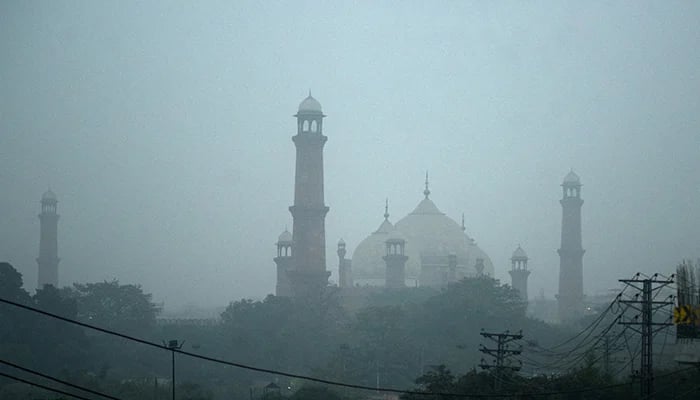
Lahore_ Punjab’s capital, Lahore, once again claimed the top spot as the world’s most polluted city on Saturday morning, with hazardous air blanketing the metropolis and nearby regions. According to air quality monitoring platform IQ Air, Lahore recorded a US AQI of 412 at 8:30am — a level categorized as hazardous — with PM2.5 concentrations reaching 281 µg/m³, which is 56 times higher than the World Health Organization’s (WHO) safe limit.
The dense smog has significantly reduced visibility and triggered a rise in respiratory issues among residents, including throat irritation and breathing difficulties. Health experts have urged citizens to limit outdoor activities and use protective masks, while hospitals have reported a surge in patients with pollution-related ailments.
Read More: Pakistan Uses Anti-Smog Guns to Fight Air Pollution in Lahore
The crisis mirrors trends across South Asia, where cities like New Delhi and Karachi also reported alarming air quality levels. New Delhi recorded an AQI of 275, categorized as very unhealthy, mainly due to vehicle emissions and stubble burning. While Karachi logged an AQI of 141, posing risks for sensitive groups. Experts attribute the worsening pollution to seasonal weather patterns, vehicular emissions, industrial activities, and widespread crop burning.
In response, Punjab authorities have intensified anti-smog operations. Senior Minister Marriyum Aurangzeb said that nine departments are working under the chief minister’s directives to combat smog through drone surveillance, brick-kiln monitoring, and deployment of anti-smog guns at critical hotspots. The province’s first Smog Monitoring and Control Centre is also collecting real-time data to guide interventions.
Read More: Lahore tops global pollution chart as smog worsens
Despite these measures, environmental experts warn that short-term solutions will not be enough. They stress the need for sustained enforcement, cross-border cooperation, and long-term policies to address emissions and promote cleaner energy alternatives before the situation worsens further with the onset of winter.