Pakistan’s Foreign Office (FO) has strongly rejected reports claiming that Deputy Prime Minister and Foreign Minister Ishaq Dar shared information about Iran’s nuclear programme during a recent meeting with US Secretary of State Marco Rubio.
Read More: FO clarifies US made no request to use Pakistani airspace against Iran
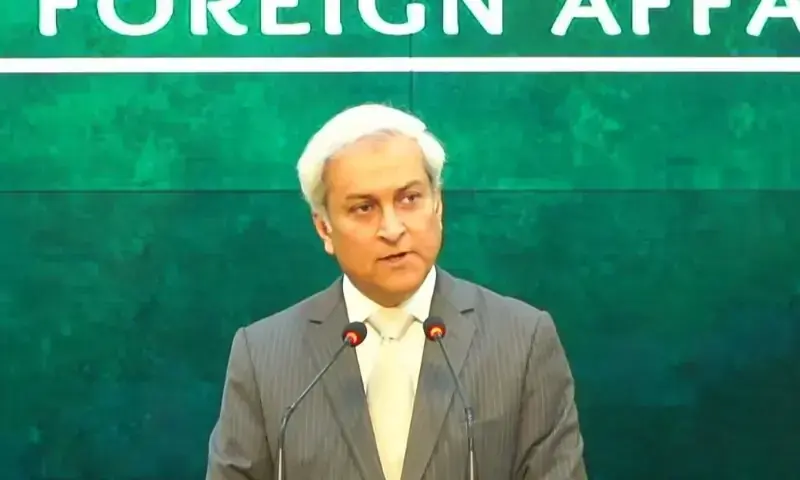
Addressing a weekly media briefing in Islamabad, FO spokesperson Tahir Andrabi dismissed the claims as baseless and clarified that no such information was exchanged during the meeting held in Washington on May 29.
🔴LIVE: Spokesperson’s Weekly Press Briefing 04-06-2026 at Ministry of Foreign Affairs, Islamabad https://t.co/3ebcyb2jT0
— Ministry of Foreign Affairs – Pakistan (@ForeignOfficePk) June 4, 2026
The clarification came after former CIA analyst Larry Johnson reportedly cited an unnamed source alleging that Dar had conveyed information regarding Iran’s nuclear intentions during discussions with Rubio. The report suggested the conversation had raised concerns within the US administration.
Andrabi categorically denied the allegation, stating that no information relating to Iran’s nuclear programme was shared by the Pakistani side. He reiterated Pakistan’s position and rejected the reports circulating in sections of the media and on social platforms.
The issue was also raised during a US congressional hearing, where Congressman Scott Perry asked Rubio whether Dar had delivered a message suggesting Iran was prepared to demonstrate nuclear capability if regional tensions continued to escalate. Rubio responded that he was unaware of any such communication and said he would have known if such a message had been conveyed.
Separately, the Foreign Office voiced concerns over India’s reported plans to divert water from the Chenab River to the Beas basin through a proposed river-linking project. Andrabi described the plan as a serious violation of the Indus Waters Treaty and international water laws.
Read More: Pakistan backs Iran’s right to peaceful nuclear program
The spokesperson also criticized India’s reported plans regarding the Salal Dam, arguing that such actions could undermine Pakistan’s water rights under existing agreements. He warned that any attempts to restrict, divert or control water flows allocated to Pakistan could have serious implications for regional stability and economic security.