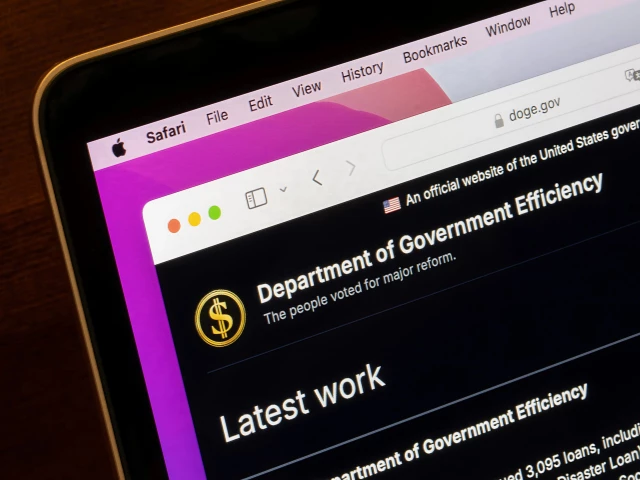
The Department of Government Efficiency (DOGE) has begun using a powerful artificial intelligence tool to review nearly 200,000 federal regulations. According to internal documents, the department plans to remove half of these rules within a year of Donald Trump’s return to office. This AI-driven effort is part of a broader push to reduce government oversight and speed up policy execution across key sectors.
A PowerPoint presentation dated July 1, reported by The Washington Post, outlines how the “DOGE AI Deregulation Decision Tool” is already active. It has started analyzing rules in federal agencies, including the Department of Housing and Urban Development (HUD). Notably, the tool was responsible for drafting all of the deregulation efforts recently carried out at the Consumer Financial Protection Bureau (CFPB), according to the presentation.
While the White House has not officially endorsed the full scope of the project, it acknowledged that AI-powered review is underway. A spokesperson clarified that “no single plan has been approved or greenlit” so far but added that the DOGE team consists of “the best and brightest in the business.” The plan is seen as a major step toward automating decision-making in regulatory policy.
DOGE has built an AI tool to slash federal regulations | TechCrunch https://t.co/AVBhaF6vw6
— TechCrunch (@TechCrunch) July 27, 2025
DOGE, originally led by Elon Musk during the early months of Trump’s current term, has developed several AI systems aimed at streamlining government operations. However, some past projects, including one used to process Veterans Affairs contracts — were found to produce inflated or even fictitious data, raising questions about the reliability of the tools. Despite this, the administration is pressing forward, citing the need for faster and more efficient governance.
Critics, including legal and civil rights groups, have expressed concern about the potential overreach of AI in making regulatory decisions. They warn that removing rules without human oversight may weaken protections for consumers, workers, and the environment. These groups have also questioned how the AI tool makes decisions and whether the process meets legal standards of accountability and transparency.
As of now, the government has not released a list of which regulations might be eliminated. It has also not shared details on how the AI’s recommendations are reviewed or verified. Still, the move reflects a broader trend in Trump’s governance style, minimizing bureaucracy while relying heavily on technology and private-sector strategies to reshape public institutions.