• Skip to primary navigation
  • Skip to main content
  • Skip to primary sidebar
  • Skip to footer
Trending:
  • Kashmir
  • Elections
Sunday, June 7, 2026

Daily Times

Your right to know

  • HOME
  • Latest
  • Iran-Israel war
  • Gilgit Baltistan Election
  • Pakistan
    • Balochistan
    • Gilgit Baltistan
    • Khyber Pakhtunkhwa
    • Punjab
    • Sindh
  • World
  • Editorials & Opinions
    • Editorials
    • Op-Eds
    • Commentary / Insight
    • Perspectives
    • Cartoons
    • Letters to the Editor
    • Featured
    • Blogs
      • Pakistan
      • World
      • Lifestyle
      • Culture
      • Sports
  • Business
  • Sports
  • E-PAPER
    • Lahore
    • Islamabad
    • Karachi

Mohammed Mubeen

NEOWISE – The Universe’s Naked Eye Spectacle

Published on: July 23, 2020 2:54 PM

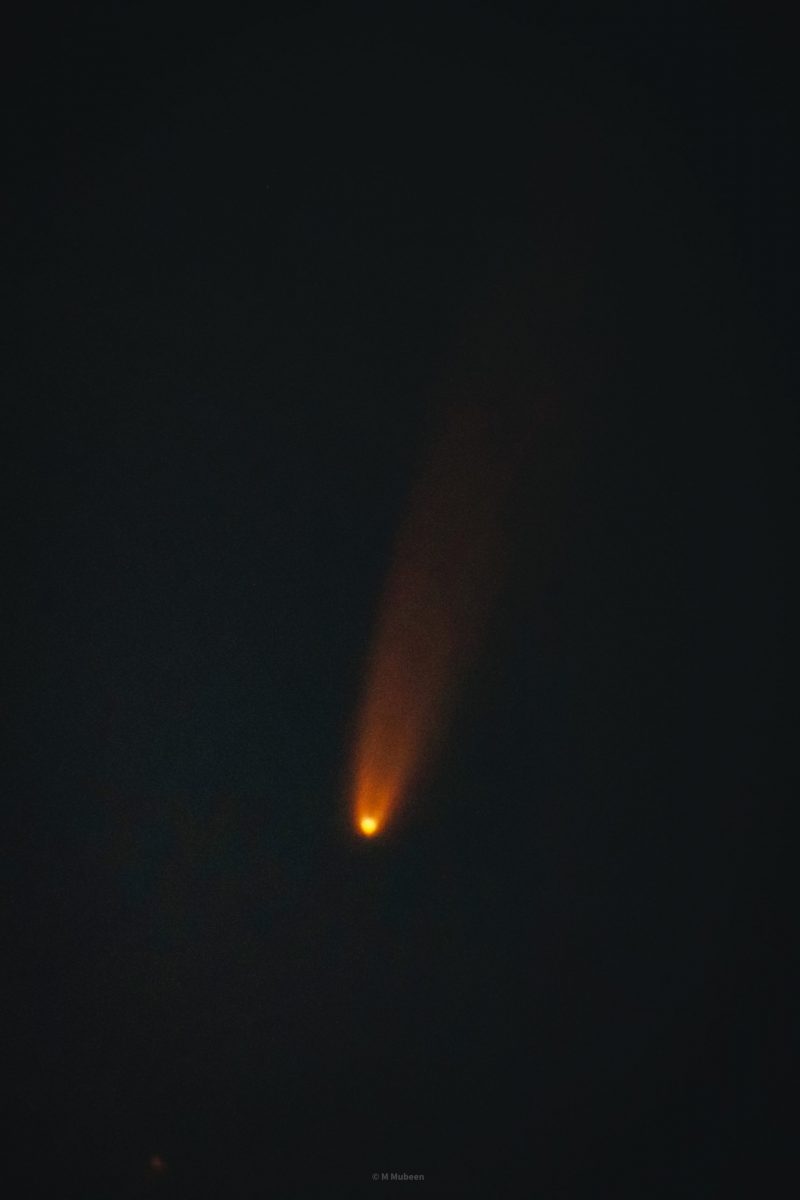
Comet Neowise, the naked eye spectacle, as I like to call it, has put up quite a show to the astronomers and nature lovers out there. It has also made almost everyone in the Astro-world talk about it and hunt it, resulting in loss of hours of sleep.
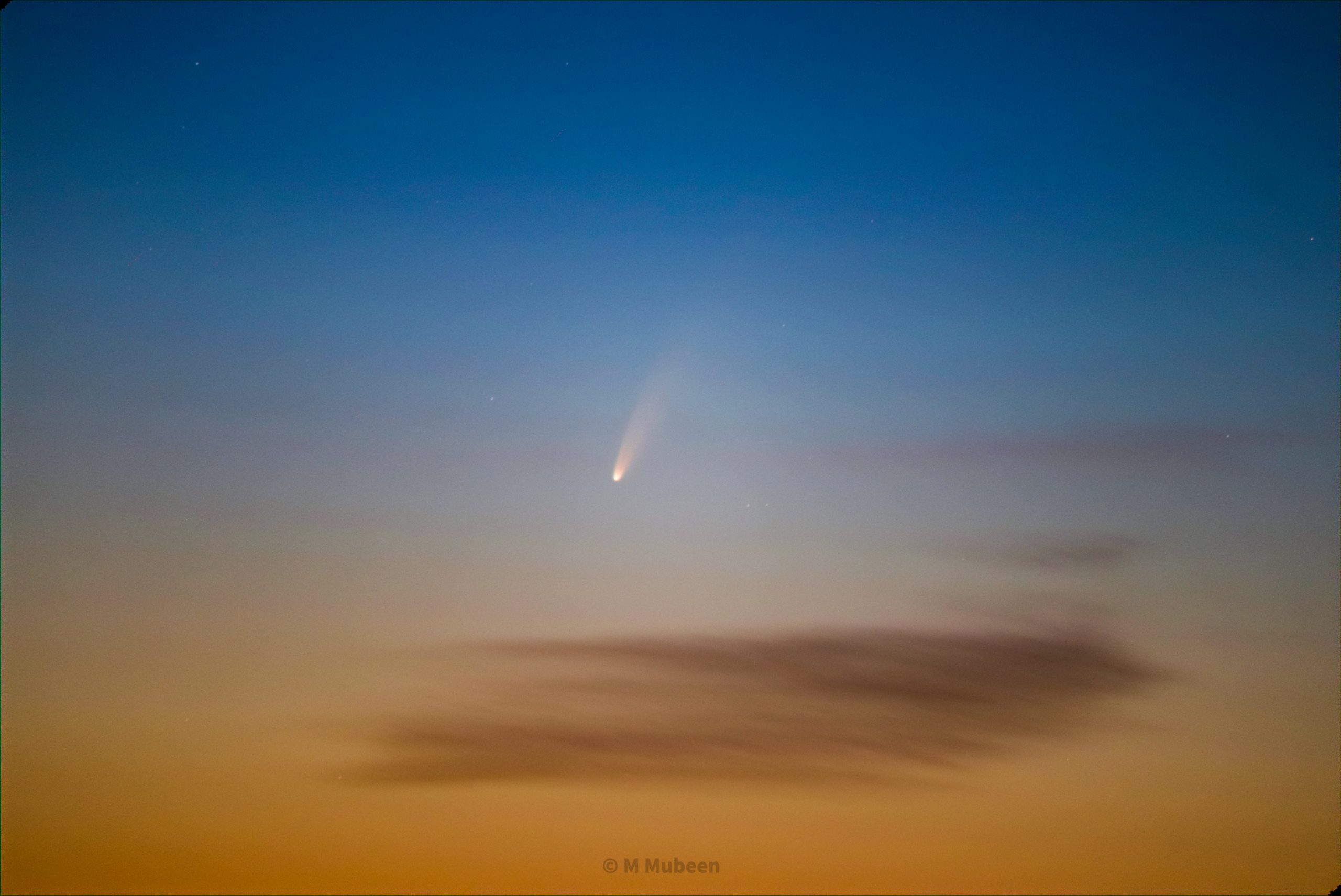
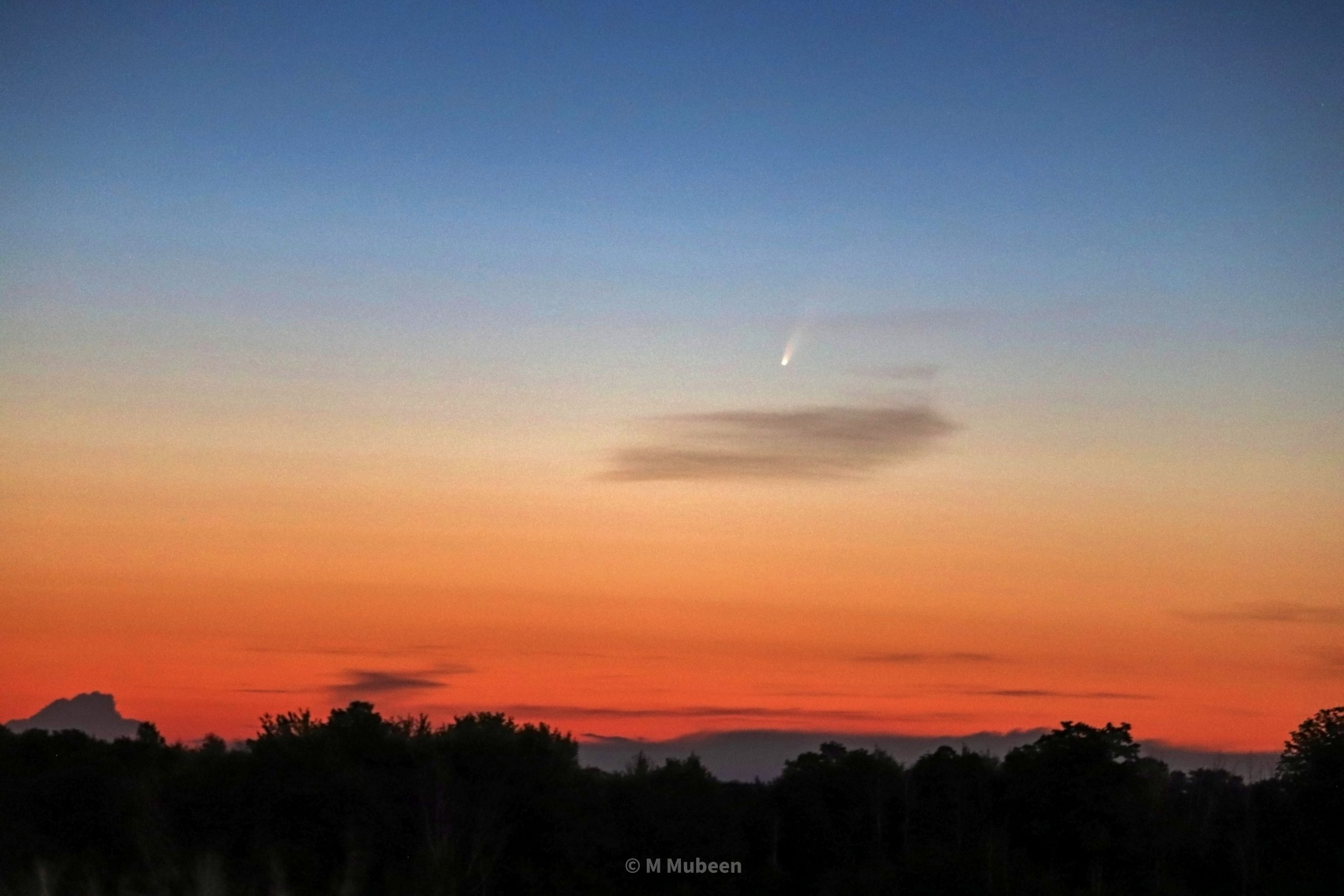
It’s clearly visible to the people from the northern hemisphere, and tons of images of this striking object shot by astrophotographers in various parts of the world are floating on social media.

Discovered in the end of March, this comet is officially known as C/2020 F3 and derives its popular name from the NEOWISE (Near-Earth Object Wide-field Infrared Survey Explorer) space telescope which was launched in December 2009 by NASA. WISE has also aided in discovering thousands of minor planets and numerous star clusters till now.

Comets consist mostly of ice, gas, and dust particles with the ice consisting mostly of frozen water but other frozen substances like ammonia, carbon dioxide, carbon monoxide, and methane, as well.

In some regions of its visibility, Neowise is now a naked eye object with a magnitude of 2, which means it’s as bright as the north star, Polaris. Astonishingly dramatic and unrealistic to see it in the sky, it is even easier to spot using binoculars.

Currently from Lahore, it is seen in the evening sky, about an hour after the sunset at the Northwest direction and sets around 10:30 pm. To visually observe the comet, use the stars in the ‘Ursa Major’ constellation to star hop and find the comet right below the big dipper asterism. Make sure there isn’t anything blocking your view like trees or buildings. It’s always an advantage to travel far out from the bright cities to escape the light pollution there. If you’re using a pair of binoculars, point it in that direction and just sweep across the area until you find the faint streak of light. Or if you have a good camera with you, place it on a tripod and start taking some long exposures. That would reveal the two-tailed comet, giving you an idea of where to look.

Comets can change quickly as they outgas as they move closer to the Sun hence it’s particularly hard to predict their orbit. This comet unbelievably has an orbit of 6.800 years and so if you miss this chance, it’s highly unlikely that you’ll observe it again!

It’s currently at a distance of approximately 111 million kilometers from Earth which is less than the distance from Earth to the Sun (150 million kilometers). This comet’s diameter is said to be 3 miles in diameter and its core is presently green in color. The green color is said to be due to the gases present in the nucleus, possibly Cyanogen or Carbide. When viewed visually, we usually only the dust tail but there’s another tail too called the Ion tail which can be seen in photographs. They are electrons ejected off from the particles in the core out by the Sun’s ultraviolet radiation.

Naked eye comets like this one are a rare phenomenon and occur only up to four times in one’s lifetime. So, when astronomers around the world say that it’s once in a lifetime opportunity, they mean it. A combination of factors is responsible for the apparent lengthening of the tail, including waning moonlight, the comet’s current visibility in a dark sky, and its increasing altitude and proximity to Earth. The closest approach occurs on July 23rd at a distance of 103 million kilometers. Southern Hemisphere stargazers, will get finally get their chance around July 28-30.

With the naked eye, it looks like a feather plume on a free fall and it’s stunning to see something like that in the sky. It’s an out of ordinary experience to try catching a glimpse at the naked eye spectacle. With so much chaos and confusion around, this is the best thing that has happened in 2020 till now and must not missed out.

Wishing you clear skies and happy comet hunting!

The writer can be reached on Instagram @infinity_seeker96.

Filed Under: Trending Tagged With: trending

Submit a Comment


Primary Sidebar


Latest News

Pope criticizes US-Israeli war on Iran

Turkish trawler sunk in Black Sea attack

Israeli strike threatens fragile Lebanon truce

Pakistan, Russia sign major security accords

Saudi Arabia condemns Iran missile attacks

Pakistan

Pakistan, Russia sign major security accords

Five killed in South Waziristan firing

PM Shehbaz reviews Tehran visit with Naqvi

No talks with agitators, says AJK PM

Pakistan urges UN action on Kashmir

More Posts from this Category

Business

Govt considers tax relief for salons, gyms in Budget 2026-27

PESCO approves one-month salary bonus for employees

SBP’s ‘Go Cashless’ campaign saw Rs 34bn in digital transactions on Eid

Short-term inflation down by 0.56%

Saudi-Pak Business Council shows interest in infrastructure investment

More Posts from this Category

World

Pope criticizes US-Israeli war on Iran

Turkish trawler sunk in Black Sea attack

Israeli strike threatens fragile Lebanon truce

More Posts from this Category


Footer

Home
Lead Stories
Latest News
Editor’s Picks

Culture
Life & Style
Featured
Videos

Editorials
OP-EDS
Commentary
Advertise

Cartoons
Letters
Blogs
Privacy Policy

Contact
Company’s Financials
Investor Information
Terms & Conditions

Facebook
Twitter
Instagram
Youtube

© 2026 Daily Times. All rights reserved.

Manage Consent
To provide the best experiences, we use technologies like cookies to store and/or access device information. Consenting to these technologies will allow us to process data such as browsing behavior or unique IDs on this site. Not consenting or withdrawing consent, may adversely affect certain features and functions.
Functional Always active
The technical storage or access is strictly necessary for the legitimate purpose of enabling the use of a specific service explicitly requested by the subscriber or user, or for the sole purpose of carrying out the transmission of a communication over an electronic communications network.
Preferences
The technical storage or access is necessary for the legitimate purpose of storing preferences that are not requested by the subscriber or user.
Statistics
The technical storage or access that is used exclusively for statistical purposes. The technical storage or access that is used exclusively for anonymous statistical purposes. Without a subpoena, voluntary compliance on the part of your Internet Service Provider, or additional records from a third party, information stored or retrieved for this purpose alone cannot usually be used to identify you.
Marketing
The technical storage or access is required to create user profiles to send advertising, or to track the user on a website or across several websites for similar marketing purposes.
  • Manage options
  • Manage services
  • Manage {vendor_count} vendors
  • Read more about these purposes
View preferences
  • {title}
  • {title}
  • {title}
We use cookies to ensure that we give you the best experience on our website. If you continue to use this site we will assume that you are happy with it.