
The Sindh government’s lockdown has already entered the third week, and at a time when the patience of the lower middle class is running out, there is a severe and incongruous squabble between the federal and the provincial government. There have been three uncoordinated relief programs announced by the government, the federal government coming up with the ”Ehsaas Emergency Cash Programme” by which 786,000 families in the 23 districts of Sindh will be awarded a four-month lump sum amount of Rs 12,000, while in the meantime the provincial government announcing an allowance of Rs 6,000 for 94,934 families of Sindh along with the ”Corona Emergency Ration Package”, under which ration is to be given to the needy at this hour of need.
 Clearly no major thinking has gone into these relief programmes and the bad blood between the federal and the provincial government has made it worst. There is just no structure to the programmes, families have been divided on the basis of union councils. Not much thinking is required to assume that not all union councils will have similar levels of poverty, clearly the poor would reside in a much higher quantity in Mehmoodabad than in Clifton, yet this has not been taken into account. In the same way all these programs are directed towards union councils, forgetting that Karachi is administratively divided in an eerie manner, what of the cantonments boards in the city which consist of wards and not union councils, will they get nothing? Also what about the equitable distribution of the relief? Who will get Rs 6,000 from the provincial government, who will get Rs 12,000 from the federation and who will get the ration? Can one person take all three, would it not have been better that some uniformity may have been introduced? Each one would get a combined Rs 9,000 from both governments, while the reach of these cash dispensation could have been increased by nixing the ration drive altogether? Clearly the federal and provincial government not being on one page by ‘quarantining politics’ for sometimes is doing more harm than good.
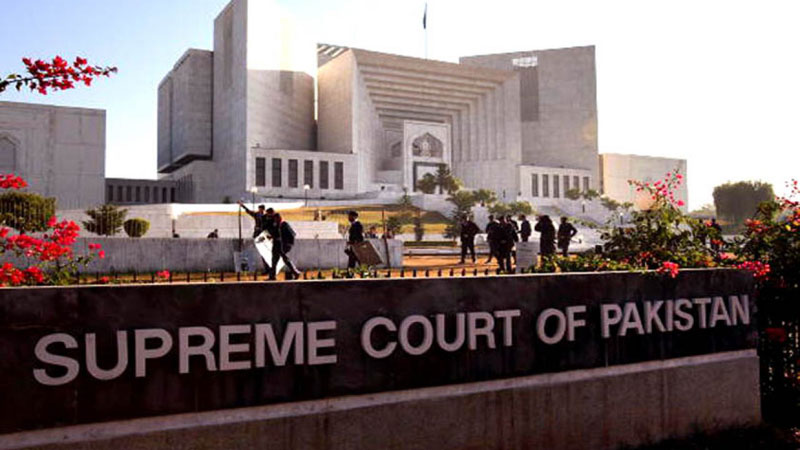
As if this battle of political point scoring between the federation and the province was not enough, Chief Justice Gulzar Ahmed took his first suo motu notice on the coronavirus crisis and the steps being taken by the federal government to curb it. All the chief secretaries and advocate generals of the four provinces have been asked to provide details of what has been done so far to contain the spread of the virus. This is not a satisfactory development in the fight against coronavirus.
As if this battle of political point scoring between the federation and the province was not enough, Chief Justice Gulzar Ahmed took his first suo motu notice on the coronavirus crisis and the steps being taken by the federal government to curb it
At the outset, clearly there are limits over judicial intervention over executive actions enshrined by our constitutional landscape; it is not for the courts to substitute their choice as to how discretion ought to have been exercised by the executive, especially so in the time of a pandemic. They should not intervene, reassess the matter afresh and decide, for example that the pandemic should have been managed taking some specific steps rather than those taken by the government. The basic conceptions of political, social and legal theories are against this approach, the allocations of governmental functions for all organs of the state have already been enshrined under our written constitution. Political and social decisions, including how to manage pandemics, have to be left to the elected wings of the government, with the executive taking the lead role of taking quick decisions and the legislature providing accountability and oversight. To sanction judicial intervention by the court because it sees itself as more intelligent or a better decision maker than the executive will ultimately lead to an abdication of political power by the elected branches of the government towards the court, the latter’s most important responsibility being deciding cases, the pendency whereof continues to rise. Yet the sou motu notice not only runs counter to our constitutional ethos, even practically it will hurt the governmental action, howsoever halfhearted, against the coronavirus pandemic.
The predecessor to the incumbent chief justice, Justice Asif Saeed Khosa, did not use his suo motu powers even once during his entire tenure. The country has experienced its worst constitutional setbacks because of the menace of suo motu, from the dam fund to the notice on an alcohol bottle at an airport. As Justice Khosa once said that there was no need for the judiciary to intervene in government affairs if the latter was performing its duties. Justice Khosa explained that there were times when an incident would take place in the evening and a notice was taken by the court in the night. In such cases all senior officers would be running to Islamabad to appear before the Supreme Court rather than going to the place of the occurrence to oversee the situation. Clearly now that the Supreme Court has taken a suo motu notice on a pandemic, officials will run to the Supreme Court rather than perform their duties. The judicial device cannot be used to manage a pandemic, but in Pakistan just anything can happen.
The chief secretaries are most of all right now required to be in their offices and on the field performing their duties, not before the Supreme Court defending the government while the court decides on how to proceed with the crisis, even though they do not have any expertise on the matter. It would have been a hundred times better for the Supreme Court to come up with ideas to introduce technology and preserve the constitutional rights of the citizens. This has been a long standing demand of the members of the bar as well. The suo motu notice on introducing technology in the courts, especially in the face of the citizens not being able to knock the doors of the courts in this time of the lockdown would have served Pakistan in the true meaning of the word.
The writer is a barrister, who has an interest in Pakistani current affairs, economy, constitutional developments, foreign policy and international law