Much has been written in the praise and importance of the Lahore resolution aka Pakistan Resolution, but a few people shed light on the critical side of the resolution. Therefore, this writing makes an effort to accentuate all the controversies surrounding Lahore resolution and tries to answer them effectively.
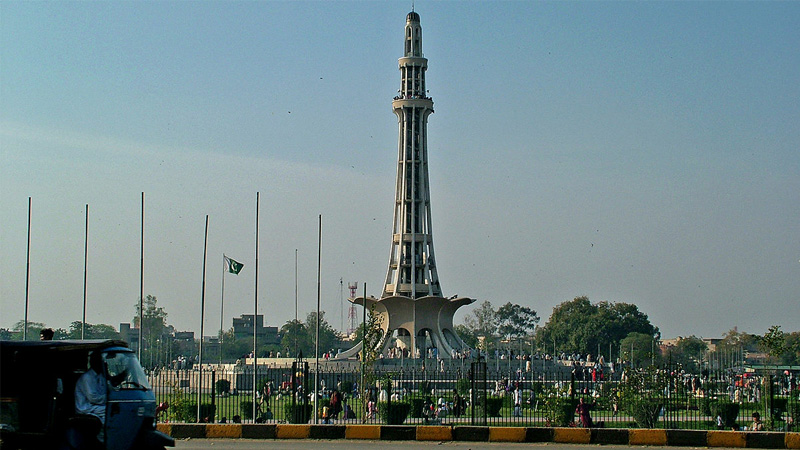 There is no doubt in the fact that the passage of the resolution was a historic event in the political life of Indian Muslims because the resolution is commonly interpreted as a demand of a separate state for the Indian Muslims. But the question is whether the framers of the resolution had the same objective in mind as it is interpreted today. As Dr Waheeduz Zaman writes in his book titled ‘Towards Pakistan’, “The Lahore Resolution was inspired by mixed motives in the minds of those who framed it”. The next question is whether the resolution demanded one state or more than one state because the original text of the resolution used the word “states” (plural) which made it ambiguous and got the commentators to consider it a demand of many states instead of one. The next controversy surrounds the actual motive of its framers. For example, Ayesha Jalal wrote in her book ‘The Sole Spokesman’ that “Lahore resolution should be seen as a bargaining counter (something that can be used to gain an advantage when trying to make a deal or an agreement)”. The final question is whether the resolution was the Britain’s last attempt to divide India as few Indian authors termed it as British conspiracy to disintegrate India.
Nevertheless, all this criticism and controversies do not hold water when one analyzes them rationally and compares them with historical events. For instance, Jinnah, answering the controversy of one state or many states, made it clear during Jinnah-Gandhi talks of 1944 that units (states) mentioned in Lahore resolution would be the provinces of a single state instead of separate states. I think, this explanation is enough to end this controversy.
However, many scholars raise another question at that point that if it were a matter of life and death to Indian Muslims, why Jinnah had accepted Cripps and Cabinet missions of 1942 and 1946 knowing that the proposal of these missions did not contain any thing like Pakistan (Partition of India)
Similarly, replying to the accusation of bargaining chip, the founding father said on March 2, 1941, “I said very often that it is a matter of life and death to Muslims and it is not a counter for bargaining”. However, many scholars raise another question at that point that if it were a matter of life and death to Indian Muslims, why Jinnah had accepted Cripps and Cabinet missions of 1942 and 1946 knowing that the proposal of these missions did not contain any thing like Pakistan (Partition of India). The answer of these questions is simple: read and understand the missions again, simple. For instance, the Cripps Mission contained the proposal called “accession clause” which allowed the provinces to decide whether to join the union of India or not. Similarly, the Cabinet Plan contained the feature of grouping of states which had absolute provincial autonomy. So Jinnah accepted the mission and considered it as a stepping stone towards higher objective: the Creation of Pakistan. Many prominent authors including IH Qureshi also discuss this point in his book “Struggle to Pakistan”.
Finally, the allegation of British conspiracy looks fragile by the fact that all major British high officials from Lord Linlithgow to Lord Wavell to Pethick-Lawrence opposed Partition and termed the resolution as extreme and preposterous demand. This argument could also be verified from the fact that after arrival in India in 1947, the last viceroy, Mountbatten made every effort to get Jinnah agreed on united India but could not succeed. This whole Mountbatten-Jinnah episode was discussed in detail by Larry Collins in his book “Freedom at Midnight”. One can counter check it from this source.
All these arguments proved that the Lahore resolution was a brainchild of Indian Muslims who reached the point of no return and felt that nothing except separate state was indispensable for them to shield their distinct identity and creative genius.
The writer is industrial and manufacturing engineer and CSS 2019 qualifier