Mussolini’s Italy awarded medals to women as an incentive to have more children-future soldiers for its fascist army. China, on the other hand, introduced an aggressive one-child policy in order to ensure its economic success. Throughout human history population planning has been either a war strategy or an economic policy. Fortunately, governments later acknowledged that without a human rights approach, no family planning program or population policy can work.
 This rights based approach was first adopted in 1968 during the International Conference on Human Rights at Tehran, which stated that “[…] couples have a basic human right to decide freely and responsibly on the number and spacing of their children and a right to adequate education and information in this respect.” This right in its essence is linked to women empowerment and poverty alleviation. It guarantees a woman’s independence to choose how many children she’d have, and when she’d have them. A violation of this right directly impacts the health of a woman and her role in the society.
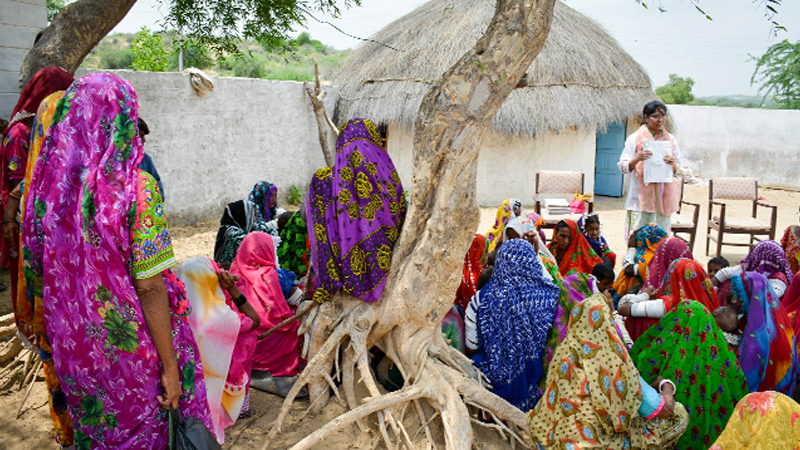
Despite various global commitments, the right of a woman to freely decide the number and spacing of her children has remained under attack. In Pakistan, for instance, most women are either unaware of their right to decide their family size, or lack access to the right information and services needed to effectively plan their families. This situation has led to an unprecedented population growth in the country, which is estimated to double in the next thirty-five years. This population explosion will not only drain the country’s resources, but also nullify government’s capacity to respond to citizen’s demands. The need to address the population situation of the country is therefore, anything but urgent.
Surprisingly, Pakistan was one of the world’s first countries to initiate a family planning program. After its birth, successive governments showed interest in promoting population control. However, those programs failed to produce the desired results, especially in the country’s rural areas. Then came the notorious government of the eighties-dominated by a fanatic religious ideology-which completely denounced the very idea of family planning. Luckily, governments in the 90s and early 2000s realized family planning’s significance for economic prosperity, and made efforts to reduce the prevailing fertility rates. Though they were successful in bringing these down from 6.02 births per woman in 1990 to 3.86 births per woman in 2010, this achievement is nothing compared to the magnitude of the problem.
In 2012, Pakistan pledged at the London Conference to make its contraceptive prevalence rate-measuring the use of at least one contraceptive method-55% by the year 2020. More recently, in 2018, the Supreme Court interpreted the right to family planning to be a part of the right to life guaranteed under the constitution. The apex court also ordered the government to create separate federal and provincial population task forces. This was followed by the Council of Common Interest (CCI) recommendations on population welfare and family planning. Since, the eighteenth constitutional amendment puts provinces in the front seat for all population related matters, so all the recommendations and commitments are to be implemented by the provinces and their task forces.
Among the provinces, Khyber Pakhtunkhwa was the first to make a population policy based on the 2012 commitments, followed by Sindh and Punjab. However, Sindh took lead in this area by formulating more plans, policies and laws than any other province. For instance, it is the first province to increase the minimum age of marriage from 16 to 18 years in order to empower women and to push fertility rate down. Moreover, last year the Sindh Assembly unanimously passed a very sound piece of legislation: The Sindh Reproductive Health Care Rights Bill. This law recognizes family planning as an inherent right of the individual. It bans forced abortions and birth control, while empowering women to make decisions about their reproductive health themselves. It also aims to include population planning in school curriculum under the umbrella of life skills.
So far, the situation in Sindh looks very promising, but the real challenge lies in implementation-the Achilles’ heel of the Sindh government. Over the years, it has produced countless laws and policies, but one fails to see any actual change on the ground. Like the rest of the country, its departments are marred with inefficiencies, red tape, and needless procedures. Poor monitoring and accountability traditions make it difficult to trace progress of any policy or sanction an act of non-compliance. More importantly, this policy framework is not responsive to the needs of women: the key beneficiaries. Their voices need to be heard in the policy annals, for any measure which is likely to affect them should be shaped in line with their demands and executed with their consent.
In a nutshell, the people of Pakistan have to realise that birth spacing is their right, which the government must guarantee. It improves the physical and mental health of a family, while adding socioeconomic benefits to the household. It is especially empowering for women as it raises their status from being mere child bearers to decision makers about their reproductive health. On this International Women’s Day let’s hope that Pakistani women are able to achieve and enjoy their right to family planning.
The writer is a public policy and governance analyst