There are more than forty thousand prisoners in ninety-nine prisons in Pakistan. Juveniles-prisoners below the age of eighteen years-constitute a minor share in the overall prison population across the country. In Sindh, juveniles constitute about one percent of the total prisoners in the province.
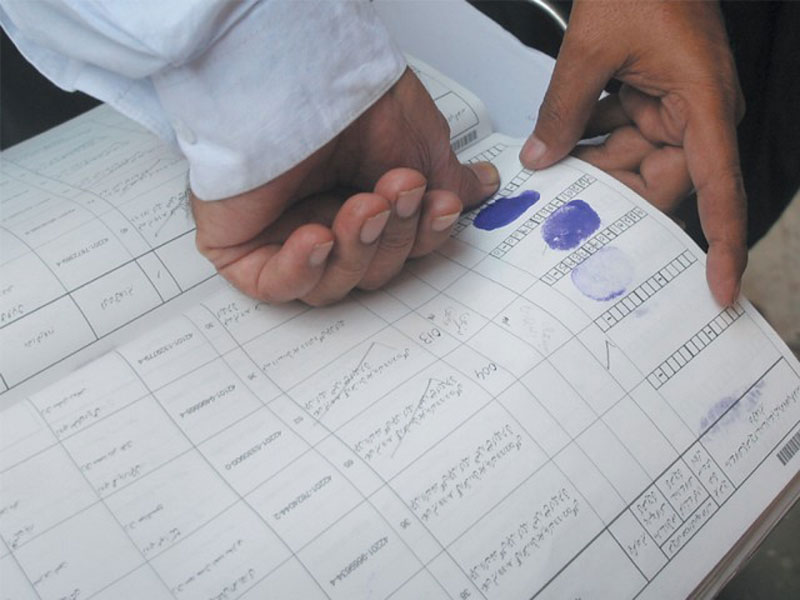 In the absence of data on the status of registered prisoners with the Election Commission of Pakistan (ECP), it is difficult to say how many prisoners are eligible to vote. However, it seems that a large number of prisoners in Pakistan is eligible to vote in general and local government elections. The voting right for prisoners in local government elections in the legal and procedural framework is not clear though.
According to Article 51 of the Constitution of Pakistan, a person shall be entitled to vote if he is a citizen of Pakistan; he is not less than eighteen years of age; his name appears on the electoral roll; and he is not declared by a competent court to be of unsound mind. The eligibility parameters set for the voting right in the constitution do not exclude prisoners. According to Section 93 (d) of Election Act 2017, a person detained in a prison or held in custody can cast vote through a postal ballot.
The Election Act rules, 2017 and the Handbook for Returning Officers 2018, published by the ECP provide the procedure for voting through a postal ballot. This process can be summarised as following: 1) a prisoner [vote registered] has to send an application to the concerned Returning Officer (RO) via prison authorities to send him/her a postal ballot and other required documents. The deadlines for such application and casting vote through postal ballot are notified by ECP. It sends those details to prisons too; 2) returning officer then has to send to him/her the postal ballot paper along with other relevant documents; 3) he or she has to fill all the required sections of the ballot paper and send back it along with copy of Declaration (form 38), Envelopes (Form 39 and Form 40) and Instructions (Form 41).
Unlike the usual ballot paper that needs a voter’s thumb impression, a prisoner has to write the name of the candidate whom he/she likes to vote for on a postal ballot paper. This declaration has to be signed by him/her and by the gazetted officer of 17 grade or above. Prisoners can request the relevant prison official to sign this declaration. If he or she is illiterate and cannot write the name of the candidate whom he/she likes to vote for, he/she can take ask someone for help. That person has to sign the declaration too. There is a separate section on the declaration form for this purpose. There are two envelopes with Form A and Form B. After filling the ballot paper, he/she is to put that into envelope (Form A). He/she has to put all other documents including Form A into a large envelope called Form B.
During the election time, a prisoner can request the relevant prison administration to assist him/her about the status of the registration of his/her vote.
All of this shows that the procedure for prisoners to vote in Pakistan is clear. However, it involves various issues in the actualisation process.
ECP should devise a mechanism to safeguard against possible fraud and violation of the secrecy of the vote in prisons
The European Union Election Observation Mission in its final report on the general elections of 2018 in Pakistan states: “Advanced postal voting was available for people in government service; members of the Armed Forces, their spouses and children stationed outside the area where they were registered as voters; polling staff and security personnel on election duty; voters with physical disabilities; and prisoners and detainees. However, procedures for application, including deadlines, and voting with postal ballots are insufficiently elaborated in the law. In addition, there is a lack of safeguards against possible fraud and violation of the secrecy of the vote.”
The report also says:”ECP did not duly inform all those entitled to postal voting including persons with disabilities, prisoners, detainees, and polling and security staff on election duty about the compressed timeframe that in combination with cumbersome procedures reduced the number of voters to deliver their postal ballots on time.”
ECP thus should provide a sufficient timeframe to prisoners to complete their voting process. It should also set the deadline and inform the prison authorities well in advance. Furthermore, ECP should devise a mechanism to safeguard against possible fraud and violation of the secrecy of the vote in prisons.
There are some other things to be taken into consideration so that prisoners could exercise their constitutional and legal right to vote. All the provinces must write to NADRA authorities to set camps in prisons to help those prisoners who do not have CNICs or have expired CNICs. ECP should also set camps in prisons to register votes of prisoners. Prisons authorities should also raise awareness amongst prisoners on their right to vote and its procedures.
The writer is a freelance columnist