Honour killing is one of the most debatable topics, especially in Pakistan. Which we often tend to link with religion, however, it has got nothing to do with the religion, rather the society that we live in seems to have the catalytic effect. In recent times, we have seen several cases, most of them still unsolved due to the involvement of the influential, game-changer feudal lords since most of the cases reported are from the rural areas that have little or negligible access to the courts or even police in some cases.
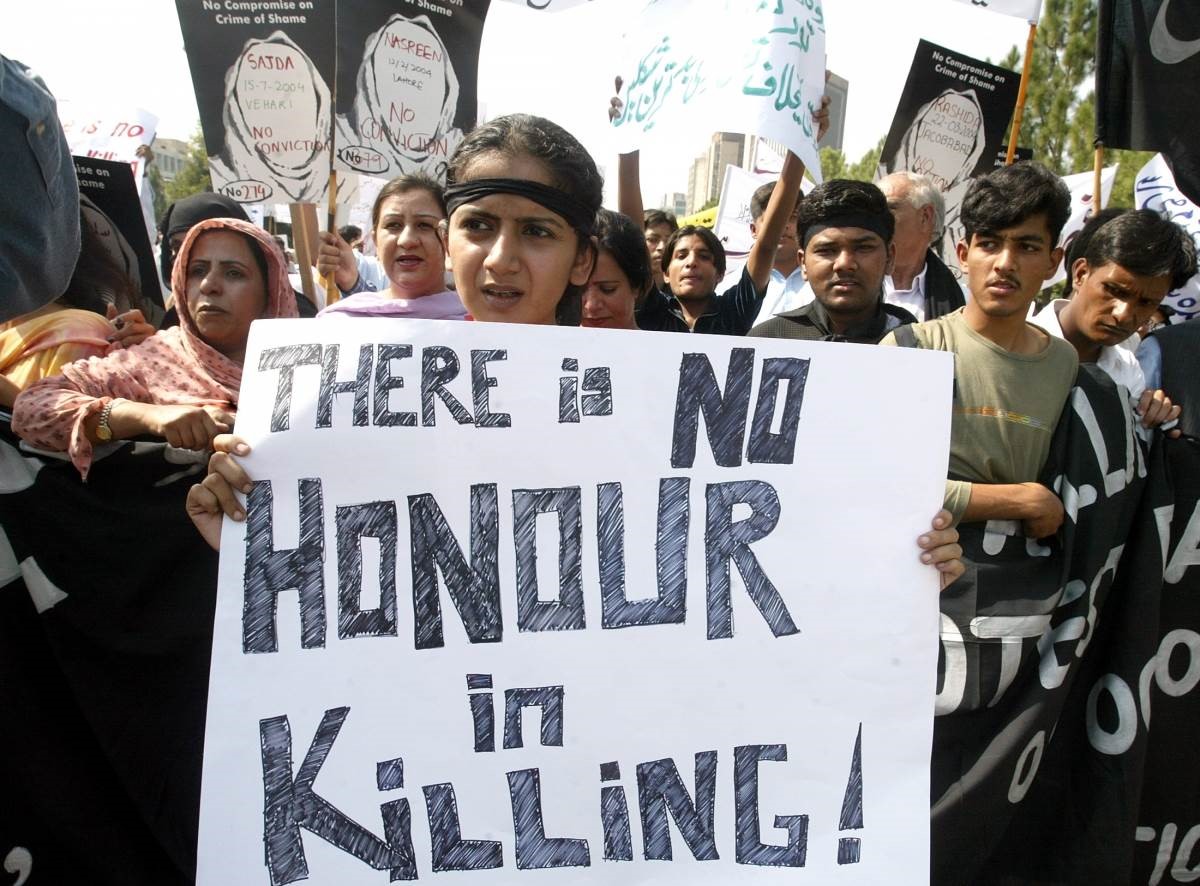 Saba’s case played a pivotal role in the introduction of laws to protect the rights of women and received much attention globally because rarely do we get to hear the perspective of a “survivor” in honour killing cases. Sharmeen Obaid Chinoy in an interview with The Guardian says “The problem with “honour” killing is that it’s considered in the domain of the home. People hush it up: a father kills a daughter, and nobody ever responds, nobody ever files a case. The victim remains nameless and faceless, and we never hear about them. People feel, “if we register a case, it will bring shame to the family”. So this [film] is a way for us to bring it out in the open, to have a national discourse about it, for us to say this is a crime, it has nothing to do with honour; it’s premeditated, cold-blooded murder.”
Maslow’s hierarchy of needs tells us how an individual tends to go through several different stages before reaching the stage of self-actualization. Saba’s father claims, he had been fulfilling all her needs then why did she have to take this step and bring shame to the entire family.
But had he been actually fulfilling “all” of her needs? Maslow tells us there are several stages of human needs, starting off with the basic ones that include our physiological needs “breathing, food, water, sleep, etc”. Saba’s father might have been fulfilling those needs, but there’s a long way to reach the level of self-actualization, which the social and cultural aspects prohibit a girl from even having the desire to fulfill those needs. We live in a repressive society, where our needs tend to be fulfilled by curtailing our freedom.
Pakistan stands on a staggering 140th position in the world human freedom index 2018. In a report co-published by the Cato Institute, the Fraser Institute, and the Liberales Institut at the Friedrich Naumann Foundation for Freedom, it is stated “Human freedom is a social concept that recognizes the dignity of individuals and is defined here as negative liberty or the absence of coercive constraint. Because freedom is inherently valuable and plays a role in human progress.” If we co-relate that with Saba’s case, she did not have the freedom to what Maslow mentions in the third stage of his hierarchy of needs; Love and belonging.
Saba did not have the freedom to choose her life partner as it could “tarnish the reputation of her father in the society” as claimed by her father and uncle. Here, again we can sense the level of repression permeated in our society that led to the brutal action taken by her father and uncle to satisfy their esteem. Chinoy shows what Griffin (n.d., p. 126) calls deficiency of the prepotent need of Saba in A girl in the river. According to Griffin, “Maslow claimed that everyone has a prepotent need, but the need will differ among individuals. You might be motivated by a craving for love, while I may be motivated by a desire for esteem. In Saba’s case, clearly she needed to be loved, wanted to have a sense of belonging. She tried to marry a guy she loved, which seemed to have challenged the ego of her uncle and father.
Chinoy shows how Saba felt insecure even after she survived the murder attempt because her father seemed to have no sense of realization or regret what he had done. The community and elders poured to have the parties reach some sort of compromise. In this scenario, Saba was left with no option but to toe the line with the satisfaction that her in-laws were fully prepared for what might come their way after the release of her father and uncle (another murder attempt).
Surviving this attack brought a warrior out of Saba making her a strong independent woman, who knew how to stand by her decision, although she forgave them in the court of law for the sake of community and her mother since the father was the only breadwinner of her family but she still knew she had not forgiven her uncle and father nor would she give forgive them for what they did. She had risen to the level of esteem surpassing love/belonging, safety and physiological needs in Maslow’s hierarchy.
In contrary to modern-day women, who have all the right to choose their career, life partner and make their own decisions without anyone having an influence, Saba did not have that level of freedom. With reference to Karl Marx’s theory, where richer are getting richer and poor is getting poorer, the urban areas tend to be getting more independence and freedom with years passing while pushing the people living in villages and their freedom further down the rabbit hole by legalizing Jirga/ panchayat systems subsequently cutting down the access to district courts.
The crime committed by Saba’s father and uncle should’ve had awarded them a symbolic punishment rather than forgiving them and making it look like a kid stealing ice cream. Saba did have some sort of self-actualization in the end, as Chinoy portrays it. Her desire to have a daughter in a society where having a daughter is actually considered bad luck seems to have given her the strength to survive in this society with all the prejudice permeated. She seemed to now have a meaning in life that is somewhat different than that of other girls who grew up in the same environment as hers.