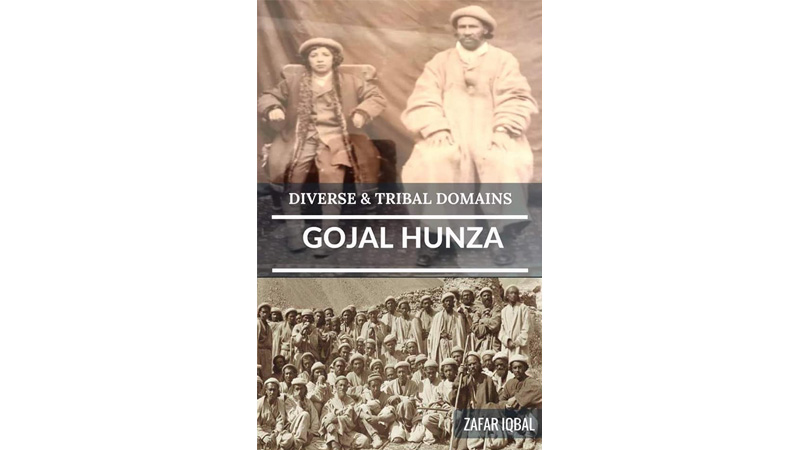
 The focal point of the great game which engaged the great powers; mainly the Great Britain and Russia for around a century has been the tiny independent and later princely state: Hunza.
Even in modern time the ex-state is the starting point of China Pakistan Economic Corridor and has been important junction in the international politics and trade due to its strategic location.
Historically, the state has been home to different ethnic and linguistic groups namely, Brushaski, Wakhi, Shina and Domaky. The analysts and writers who mostly gathered intelligence information, wrote about politics and played key role in the great game had also great contribution on documenting considerable information on the social lives and history of the area.
They have recorded useful information in the form of reports, books and left behind with photographic evidences which have provided the basis for subsequent researchers. Since their prime objectives were political manoeuvring, intelligence gathering, and checking the Russian influence from penetrating the in the domain of British India. Therefore, they were naturally, more focused on their mission and their documentations reflected the same.
Accessing and extracting required information from those documentations required lots of energy and means. Being an ex-bureaucrat, Zafar Iqbal had the means and opportunity to travel to different parts of the world, which enabled him to meet intellectuals as well as access important documents and archival records from the libraries in different countries. Besides, he has been able to work with a renowned scholar Ahmed Hasan Dani during his research on the history of the northern areas. These exposures and experience enabled the author of the book under review to put rigor in his research. The book covers the history and origin, of the Wakhi people of Gojal in particular and their settlement and traces in other areas of Pamir region in general.
Besides, it also briefly mentions to settlement of Brushaski speakers in the Gojal. He has also discussed how living on the high mountains and boarder demarcations affected the people speaking Wakhi which is now declared as an endangered language by UNESCO. He has extracted the history of the people their origin and settlement after analysis and evaluation of different sources, books, annals, archaeological and geographical records and information.
Being an ex-bureaucrat, Zafar Iqbal had the means and opportunity to travel to different parts of the world, which enabled him to meet intellectuals as well as access important documents and archival records from the libraries in different countries. Besides, he has been able to work with renowned scholar Ahmed Hasan Dani during his research on the history of the northern areas
The writer has research well, by gathering evidence from diverse sources in the form of personal and official correspondence.
The most important thing for any author is to not make tall claims and I am glad that the author’s approach is purely academic as he has not made any tall and unsubstantiated claims. The analyses are very good and substantiated with lots of letters and official correspondence. Moreover, he is cognizant of his limitations which he has expressed in the preface of the book.
The book is comprises on five chapters and is spread over 514 pages. He has endeavoured to situate and contextualize the Wakhi people in the broader framework in Chapter One under the title of Tajik people and Tribe comprising 24 pages. Chapter Three covers Boundary settlements of Hunza comprising 69 pages while Chapter Four: The System of Taxation in Hunza, consists of 67 pages of which the author has made only one pager write-up. The rest of the pages are documentation related to taxation mostly in Persian while some in English language. Part of the Persian documentation is translated in English while some are left without translation, which is likely to make it difficult to fully comprehend the chapter. Similarly Chapter Five, which consist of 65 pages, contain only a page and half write up by the author while the rest comprise on the letters to and from Mir of Hunza and other official and correspondences. These chapters could have been better analyzed on the basis of the documents the mentioned chapter contained. Putting every document as part of the chapters makes it difficult to make sense. Instead he could have put the correspondence and other documents in the appendices.
The second Chapter: The Kingdom of Gojal is the longest chapter which consist of 267 pages where they author has very thick and in-depth analysis of settlement of different tribes their cultural, economic and historical backgrounds and relations with neighbouring areas and regions. Even information and analyses of this chapter can organized in additional chapters to make it more reader friendly.
The author has highlighted the difficulties a researcher comes across while making sense of the work of Chinese scholars in the following word: “Unfortunately the European authors and scholars had misunderstood the actual names as pronounced by the Chinese and never tried to understand such names from the local inhabitants: rather than to correct name of the places and commanders, the [sic] had translated name of the places and persons. Because of this reason…names of places, commanders and persons have been misconceived and misinterpreted…(p.162).”The writer has rightly pointed out the issue of mispronunciation and misspelling names of different areas by non-locals and scholars, yet he himself has ignored certain terms and names such as “Sust” instead of “Sost” and “Yarfa” instead of writing “Yarpa”. Sost being the actual name pronounceable has been distorted by non-locals and even the name of the dry port situated in the area has been given name of “Sust” Dry Port”, which shows lack of consideration for the local culture.
Though the author has spent ample time in researching the book, however, at some points it appears that he has kept limited audience in mind while writing the book. Therefore, certain terms remained without definitions which need to be explained. For example the term Jamat has many connotations, which pop up on page 85 of the book. Similarly, there are certain definitions that need to be brought at the earliest part of the book eg Taghdumbas an area frequently discussed in the book but it is defined too late at page 319 which can make it difficult for readers to discern.
Finally, the definition of key terms and names at the beginning of book along with the improved and legible map could have further increased the worth of the book. I think now the author should aim to bring a revised edition while considering the mentioned points.
The writer is an educator, based in Hunza and can be reached at [email protected]