Colonialism is an illegal occupation of a land, resource or property. The occupant is called the colonizer and the victim the colonized. An adequate understanding of the phenomenon requires introducing some more words. These include colonialism, post- colonialism, de-colonising and re-colonising.
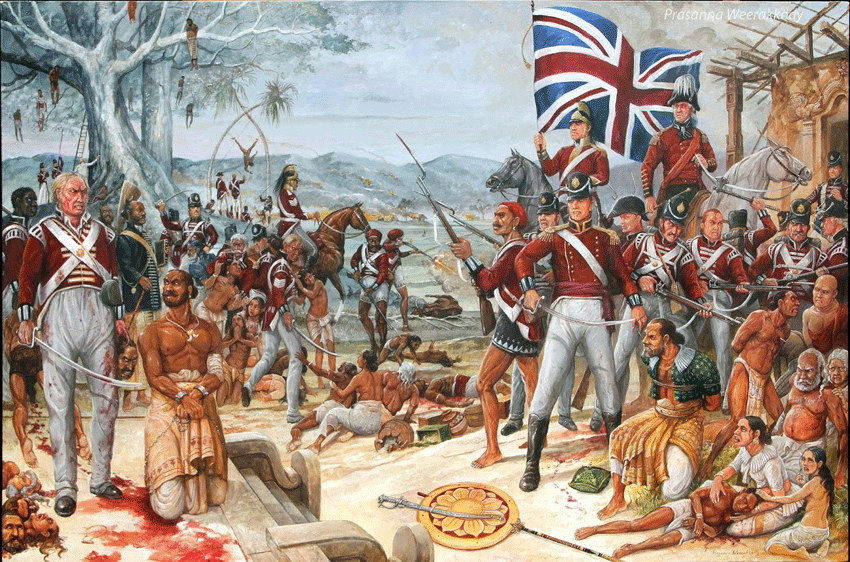
The oppressors have used all kinds of advantage, from intellectual to military, to colonize other people. Colonised people have had to suffer unspeakable atrocities.
No animal on earth has been as dangerous to the human species as man itself.
In the beginning people lived in groups to hunt or collect food. For this purpose they developed tools made out of rock or baked clay.
Gradually humans developed more skills and started living alongside rivers. Woman learnt to sow seeds and started agriculture. Such communities were led by women.
Man eventually snatched the leadership from woman using their superior physical strength. Slavery, the practice of using other people’s labour without sharing its fruits with them began and became endemic.
Colonialism started with missionary delegations sent to properous countries. The missionaries spied for the colonising armies that attacked, killed and subdued the indigenous peoples.
The Indian subcontinent was colonised by the British. Portuguese, French, Dutch, Norman and Arab armies colonized other lands and exploited their resources and their people. China was long the imperial tormentor of Japan. Native Americans were colonized by European invaders.
English colonialism:
When the British occupied India it was the richest country on earth, rich in all kinds of resources, literate and prosperous. When they left India, it was among the poorest countries in terms of GDP and life expectancy.
The New Virginia Company started the colonization of what is now the USA. They brought slaves from African countries because they were the cheapest. For a long time the sun never set on the British Empire.
When the British left the ruled colonies they handed them over to a ruling elite that continued in their practices. They owned uncountable wealth, land and resources. They creted a narrative of good governance, justice, equity and fairplay which was basically an illusion. The colonial governments had dug canals and laid railway lines to allow them to carry away the wealth of the colonies. They now claimed that these were meant to promote common good
After systematic exploitation for decades the colonisers started leaving some of the colonies. There were now two types of colonies: ruled and settled. Australia, New Zealand and Canada are examples of settled colonies. The Caribbean, African and Indian colonies were ruled.
Post-colonial times
When the British left the ruled colonies they handed them over to a ruling elite that continued in their practices. They owned uncountable wealth, land and resources.
They creted a narrative of good governance, justice, equity and fairplay which was basically an illusion.
The colonial governments had dug canals and laid railway lines to allow them to carry away the wealth of the colonies. They now claimed that these were meant to promote common good.
Many enlightened people denounced the British occupation and started movements for emancipation of the oppressed people. Ng?g? wa Thiong’o, – an Africa writer, has said that the languages of the colonized people were most affected by their experience.
The British established the Fort William College in Kolkata to acquaint themselves with the langauages of the colonized. Lord Macauley was to suggest in his famous note that education should be so organisd as to turn the educated into virtual British.
The indigenous languages were rich and many had literature going back centuries. However, English was promoted as language of power, wisdom and knowledge.
English medium schools were established and became the key to being employed. This has not changed in the post-colonial times. English remains the medium of instruction and for examinations given to candidates for central superior services.
It has been pointed out that there is no refernce to British colonialism in the textbooks taught for O- and A-Level examinations.
It has been argued that McDonaldization of the world is the latest form of recolonization. Its tools are the establishement of consumerism and indoctrination of the power elites.
The writer is an assistant professor in English at Mehran University of Engineering and Technology, Jamshoro