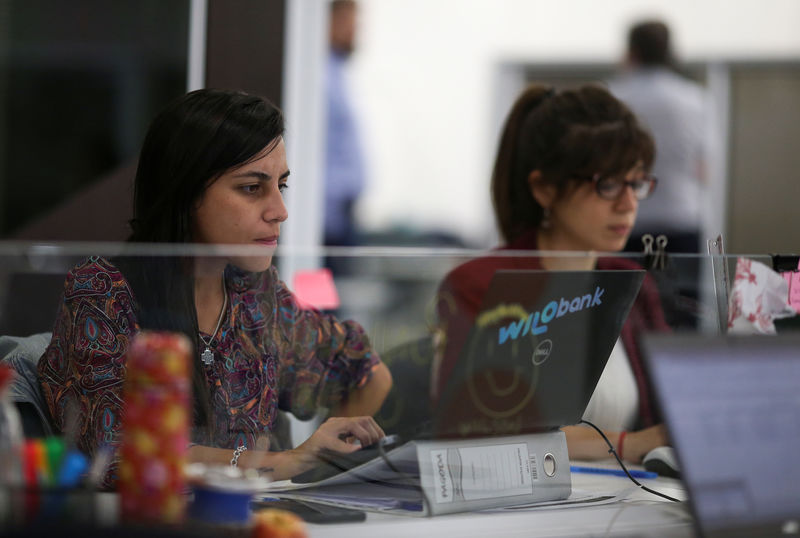
María Rosales, 39, is one of millions of less affluent Argentines locked out of the traditional financial sector. The former cruise ship worker lost her job in 2015 and has relied on her family for financial support to stay afloat since.
Now her small pot of savings is in demand from a new group of lenders: digital banks on the hunt to mop up funds from the country’s huge shadow economy.
The nascent shift could shake up how people save their money in a market noticeable for a heavy reliance on cash, a paucity of bank savings and little trust in traditional banks or the volatile local peso, which lost half its value against the dollar last year.
Argentine bank deposits as a portion of gross domestic product are just 18.8 percent, according to a recent OECD report, which said the country had a “scarcity of domestic savings.”
That compares to nearly 60 percent in neighboring Brazil. In Mexico, which has also been promoting alternatives to traditional banking, it is almost 30 percent.
“I do not know if there is a sector in Argentina as behind as the financial one,” Stefano Angeli, chief executive of Rebanking, a digital bank which will start operations in May, told Reuters.
“We believe digital banking will be the way to develop this business in the long term.”
As well as start-ups, international lenders are looking at getting into Argentina’s digital banking market. Banco Santander has said its digital bank will launch in the country soon, while Brazil’s Itau Unibanco said last year it was looking at opening online-only accounts in Argentina.
When Rosales became unemployed her former bank started to charge her to keep her old account open and she did not have the paperwork such as payslips and utility bills needed to open a new one.
Instead, she turned to local digital lender Wilobank, which touts easy access and gives her some interest on her savings – important with inflation running at 50 percent annually.
“You become a client in minutes without going anywhere,” Wilobank says on its website.
Rival Brubank says, “You will need a few minutes. Have your national identity document at hand and that’s it.”
Lucas Llach, a former vice president at Argentina’s central bank who focused on financial inclusion, said the shift was logical, with so many people unable to access brick-and-mortar banks.
“There is a population that does not feel welcome (in traditional banks),” he told Reuters, adding the advent of digital lenders could help the government by bringing more funds out of the unregulated shadow sector.