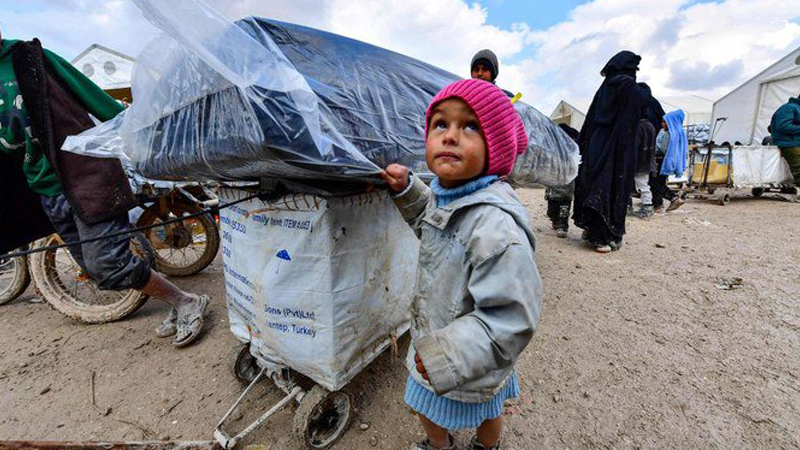
 Young children nursing severe facial burns, others suffering from malnutrition — an exodus of jihadist families and civilians from the Daesh group’s vanquished final enclave is overwhelming eastern Syria’s hospitals.
A handful of health facilities in the Kurdish-administered northeast receive dozens of patients every day, often including young victims who are terribly disfigured, some allegedly by mortar fire.
Most arrivals are women and children from Al-Hol, a camp for the displaced that has swelled far beyond its capacity to house more than 70,000 people during a months-long offensive against the last scrap of the jihadists’ “caliphate.”
“The situation here in the hospital is tragic,” said Aydin Sleiman Khalil, who manages the main health institution in Hasakah, some 40 kilometers (25 miles) from Al-Hol.
Many of the victims, including young ones, are terribly disfigured, some allegedly by mortar fire
To cope with the influx, the semi-autonomous Kurdish region’s hospitals are desperately seeking support from the international community and aid agencies.
“We lack equipment, medicine, finances and medical personnel,” Khalil said, urging humanitarian groups and the United Nations to help.
Lit by neon strips, long and clean corridors led to a succession of hushed rooms inhabited by women clad in black from head-to-toe, caring for their sick and wounded offspring.
In one room, several women slept on iron beds, their newborn babies in nearby cots, wrapped in thick blankets.
On another floor, Iraqi mother Badreya Kamel said she arrived a few days ago with her three children.
One of them, Rowayda, died at the hospital on Monday from severe burns.
“She was two years old,” said the 24-year-old, her voice barely audible behind her face veil, long black robes draped over her frail figure.