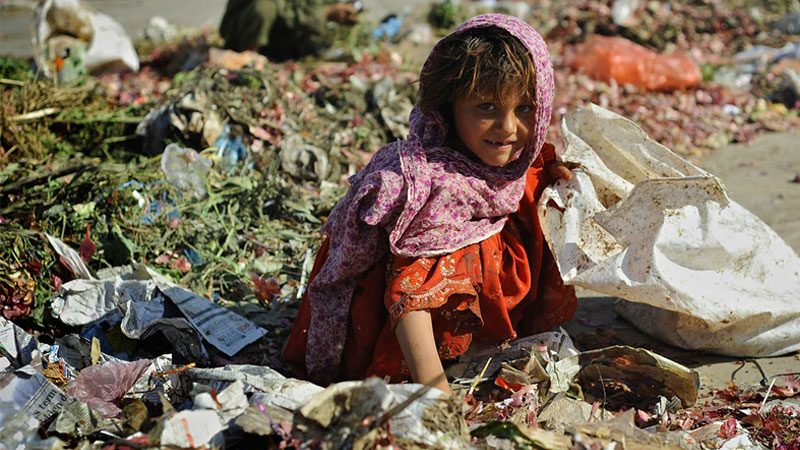
 Balochistan is full of natural resources. People may think that the children in Balochistan are sleeping with gold, but they never try to know that these very children are passing their lives on the streets. In the last one decade, the number of street children in the province has increased rapidly. The conditions for them are getting worse owing to the negligence of the concerned authorities. The street children sleep on streets and wake up on the streets. They pass their entire day picking up garbage. On the opposite side of the road, there are children happily going to schools, but the other end shows a dreary picture of how most children reside.
According to a survey, the number of street children in Pakistan has reached 1.2 million. From this, Karachi is called the city of street children where more than 30,000 street children are present. After Karachi, Quetta is the second city where a large number of street children are available. Around 20,000 street children are present in Quetta, and they are called garbage collectors, carpenter or working in automobile shops. Thousands of street children are sexually abused in only Quetta, but the children fear to share their stories.
The Society for the Protection of the Rights of Children estimated that population boom, urbanisation and poverty are one of the main causes of street children in Balochistan. Nearly 43 percent among the total population under 15 years of age including around 48 adults live under the poverty line earning less than $1 a day. The other reasons are called child labor and poor quality of education which is compel the children to come out from their family’s financial burden, however abusive environment at homes and corporal punishment in schools add to their miseries. These children become susceptible to whole form of violence and easy prey for all types of abuses.
The young, poor, illiterate and defenseless, children are abused and exploited, sexually, verbally, emotionally and psychologically. Violence could range anything between harassment to pedophilia, sexual abuse to sodomy, coerced to join groups of criminals and used as drug traffickers or turned into beggars by the beggars’ mafia. The police is totally failed to protect the children from such violence so police is called among the leading enemies of street children as no fear of reprisal from the law or the society against the indiscriminate violence.
The Society for the Protection of the Rights of Children estimated that population boom, urbanisation and poverty are the main causes of homelessness for children in Balochistan. Nearly 43 percent among the total population under 15 years of age including around 48 adults live under the poverty line earning less than $1 a day
Some other survey have been conducted which have proved that 80 to 90 percent of the street children are victims of sodomy, sexual and physical abuse, not only by elders but older children within their own gangs. The street children are at the risk of health problems such as tuberculosis, jaujaundice and kidney disease. Among the street children, 54 percent left their home at the age of 10 to 12 years, around 45 percent living on street are enrolled in crimes and 49 are at the risk of HIV and AIDS. Be it economic or social factors, street children leave their homes for an uncertain future.
The street children does not have rights of health, education or food. In many areas of Balochistan, the stench of urine pervading the all places, children as young as five take part in groups of 8 to 10 for warmth and security at night. Still no legislation is available regarding the children rights in Balochistan. A question has been raised that when the street children will be ensured to have a safe and healthy future in Balochistan.
It is the provincial government’s responsibility to provide fundamental rights of the children, but they totally neglect these duties. A child needs support to survive, but no one is willing to help out. The government has left the street children to suffer and die, instead of helping to bring them back to their homes and enrol them into schools.
The writer is a student at Turbat University and can be reached at [email protected]