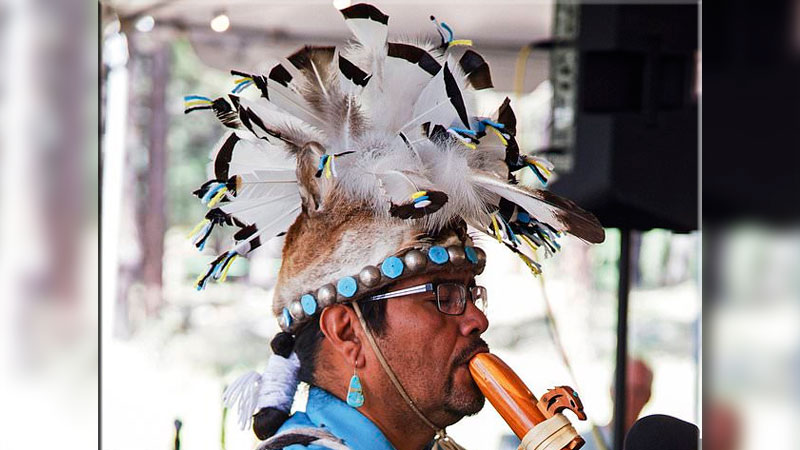
 Arizona Native American tribes on the hunt for animal hides, antlers, teeth and other parts for cultural and religious use have a unique new resource: the state’s wildlife agency.
A recently launched program allows Arizona’s nearly two dozen tribes to make requests to the state Game and Fish Department for animals that have died from poaching or natural causes, or after being hit by a vehicle.
Agency game managers, researchers and other employees then keep an eye out for the carcasses as part of their regular work.
“It’s all just opportunistic collection of what we find out in the field,” said the department’s tribal liaison, Jon Cooley, who grew up on the Fort Apache reservation in eastern Arizona.
So far, the program’s biggest customers are the Navajo Nation, which has collected bear and mule deer carcasses, and the Hopi Tribe, which has requested turtle shells, and turkey and water fowl feathers. The agency also gathered turtle shells for New Mexico pueblos, often used as ankle or hand rattles in ceremonial dances.
The animal parts – as long as they are not badly decayed – are taken to several freezers across the state for pickup. Typically, they would be left for scavengers, thrown away or even burned.
The Game and Fish Department had been working informally with tribes for years to deliver animal parts, and Cooley said it’s become more formal now with an established shopping list of sorts, and better communication with tribes and wildlife officials. Native American tribes traditionally have made use of all parts of an animal. Bones and antlers were crafted into spoons, knife handles and weapons. Clothing and shoes were made from animal hides and pelts. Glue could be drawn from hooves. Tribal regalia is adorned with feathers, bone breast plates and necklaces made of animal teeth. Parts of the animal were eaten as soon as they were killed, and some was dried and saved for later.
The repository doesn’t distribute feathers from eagles or other federally protected migratory birds. The federal government has a repository in Denver for tribes to legally obtain eagle feathers. The Comanche Nation in Oklahoma and a wildlife rescue organization near Phoenix distribute feathers from hawks, falcons and other birds to members of federally recognized tribes.
In Arizona, the items highest in demand are tortoise shells. Also on the tribes’ lists are mountain lions, bison, deer, antelope, and game birds like turkeys. The requests are specific, so Cooley said the department doesn’t want the public donating animals or gathering them from the roadside. “What we don’t want to become is a depot for dead critters. That’s not the intent,” Cooley said.