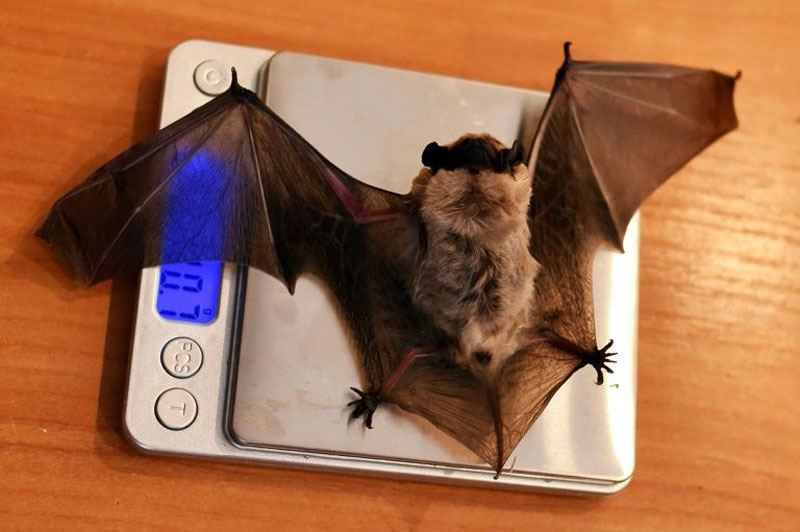
 After spending the winter months hibernating inside a fridge at a rescue centre in Belarus, a group of bats awaken and are released into the wild.
To ensure a good winter’s sleep, each bat was tucked up inside a cloth bag by volunteers at the centre, then hung up inside an ordinary domestic fridge — giving them just the right amount of moisture and cold.
The Kozhanopolis centre, which is located in Minsk, takes in bats that are found by members of the public after struggling to find a safe place to hibernate.
“In winter, bats fall into a very deep sleep and for hibernation, they need fairly cold and moist environments,” says the centre’s head, Alexei Shpak.
“They fly into people’s balconies, into apartment block entrances, ventilation shafts, cellars and so on. Sometimes people just find them on the ground in the snow.”
The right conditions for a bat to hibernate are temperatures between zero and five degrees Celsius (32 to 42 Fahrenheit) and moisture levels of more than 50 percent, and the bat shelter has found an easy way of providing these.
“That’s exactly what a fridge does. Just the most ordinary fridge,” says Shpak. The centre only has one fridge but it has enough space for the 32 bats the spent the winter hung up in bags.
Some of the bats at the centre are “old-timers” who have been sleeping in the fridge since mid-December, he says.
The bats are two different types found across Europe: parti-coloured bats and serotine bats.
The centre has no state funding but has premises provided by a state educational facility and equipment paid for by crowd-funding.
With the arrival of spring and as outside temperatures rise above 10 degrees Celsius (10 degrees Fahrenheit), Shpak and the three other volunteers at the centre carefully remove the bats from their cloth bags so that they wake up naturally.