
It was 10:25 pm on Saturday, September 11, 1948, when the father of the nation Quaid-i-Azam Mohammad Ali Jinnah passed away. The country that he had founded was left bereft. It was hard to come to terms with the fact that he was dead, all the more so because his illness was kept a closely guarded secret. On the next day, almost a million mourners attended funeral prayers to catch one last glimpse of their beloved Quaid.
The dynamic personality of Quaid-i-Azam was a combination of the characteristics of the eminent leaders of the world. He had the acumen of Ataturk, the charisma of Churchill, the dignity of De Gaulle, the frankness of Faisal, the greatness of Gandhi, the magnetism of Mandela and the rationality of Roosevelt. The former United States (US) President Clinton at the Chief Executive’s lunch in Islamabad in 2001, described Quaid-i-Azam as the greatest constitutional lawyer of the Commonwealth. Dr. B.R. Ambedkar, the Architect of the Indian Constitution, wrote that “It is doubtful if there is a politician in India to whom the adjective of incorruptible can be more fittingly applied”. Quaid-i-Azam was the ambassador of Hindu-Muslim unity, a great constitutionalist, a distinguished parliamentarian, a brilliant strategist and politician, and above all, he was one of the great nation-builders of modern times. He stood for justice, for freedom, for equal rights, for the rule of people in Pakistan. Quaid-i-Azam devoted the last two decades of his life to make Pakistan an independent state.
Quaid-i-Azam only served for 392 days as the governor-general of the newly born state, but this period is considered a landmark in Pakistan’s history. Immediately following Pakistan’s birth, the country had to face a number of problems, internal and external. It had to tackle the Jammu and Kashmir issue, the accession of princely states to Pakistan, an influx of Refugees and the formation of a new constitution as well as the setting up of provincial governments.
Since 1937, the Quaid devoted himself to building the strength of Muslim League, advancing it from a few thousand members at Lucknow to half-a-million by March, l940, demanding the creation of Pakistan. Renan — the French philosopher rightly said that “Man is enslaved neither by his race nor by his religion, nor by the course of rivers. An aggregation of man, sane of mind and warm of heart, creates a moral consciousness with which he infuses an idea in the masses of reasserting their hegemony, and helps them to achieve their lost empire”.
Quaid-i-Azam’s dignity and strength of character marked him as a true leader. To him character was not a thing to talk about; it was the basis of all human conduct. He was an advocate of people’s welfare, human rights and a bonded Pakistan. Addressing the Constituent Assembly of Pakistan on 11 August 1947, Quaid-i-Azam said “Now, if we want to make this great State of Pakistan happy and prosperous we should wholly and solely concentrate on the well-being of the people, and especially of the masses and the poor.
You may belong to any religion or caste or creed-that has nothing to do with the business of the State”. In an interview given to Mr. Weldon James of the Collier’s Weekly Magazine on 25 August 1947, the great Quaid said “We expect to evolve a progressive democratic government in line with the Muslim belief in the equality of all men and to work for international peace. As I have said many times before, Pakistan guarantees the just and equal treatment of all citizens, Muslim or non-Muslim, with freedom of worship, speech, press and assembly. The position of women is already equal in law to that of men. It may be expected that their participation in civic affairs and in the professions will increase”.
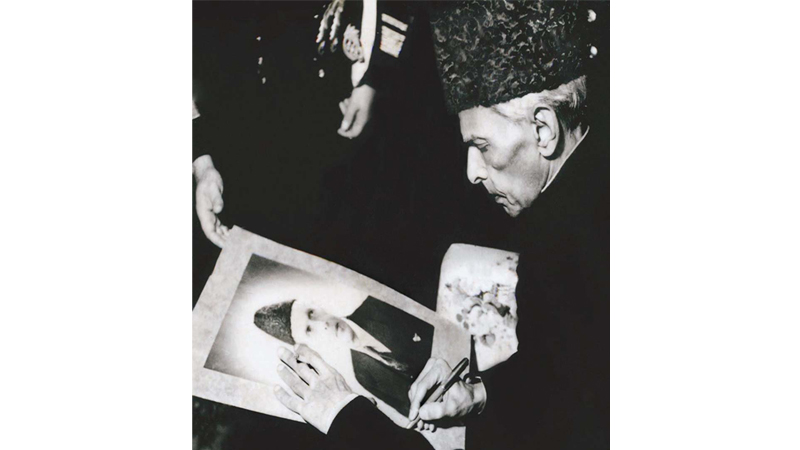
Quaid-i-Azam’s dignity and strength of character marked him as a true leader. To him character was not a thing to talk about; it was the basis of human conduct. He was an advocate of people’s welfare, human rights, and a united Pakistan. Addressing the Constituent Assembly of Pakistan on 11 August 1947, Quaid-i-Azam said, “Now, if we want to make this state great, we should wholly and solely concentrate on the well-being of the people, and especially of the masses. If we work together regardless of colour caste and community, and make the state our priority, we will prosper as a nation.”
To quote Lord Pethick Lawrence “Gandhi died by the hands of an assassin, Mr. Jinnah died by his devotion to Pakistan”. Every Pakistani must remember that the Quaid would never sanction terrorists or murders, nor the violent abuse of any man, woman or child in the Land of the Pure.
The Writer is PhD in Political Science, and a civil servant based in Islamabad. He can be reached at [email protected] and tweet@zafarkhansafdar
Published in Daily Times, September 11th 2018.