• Skip to primary navigation
  • Skip to main content
  • Skip to primary sidebar
  • Skip to footer
Trending:
  • Kashmir
  • Elections
Friday, June 5, 2026

Daily Times

Your right to know

  • HOME
  • Latest
  • Iran-Israel war
  • Gilgit Baltistan Election
  • Pakistan
    • Balochistan
    • Gilgit Baltistan
    • Khyber Pakhtunkhwa
    • Punjab
    • Sindh
  • World
  • Editorials & Opinions
    • Editorials
    • Op-Eds
    • Commentary / Insight
    • Perspectives
    • Cartoons
    • Letters to the Editor
    • Featured
    • Blogs
      • Pakistan
      • World
      • Lifestyle
      • Culture
      • Sports
  • Business
  • Sports
  • E-PAPER
    • Lahore
    • Islamabad
    • Karachi

AFP

Who built Stonehenge? Cremation ashes yield clues

Published on: August 3, 2018 12:28 PM

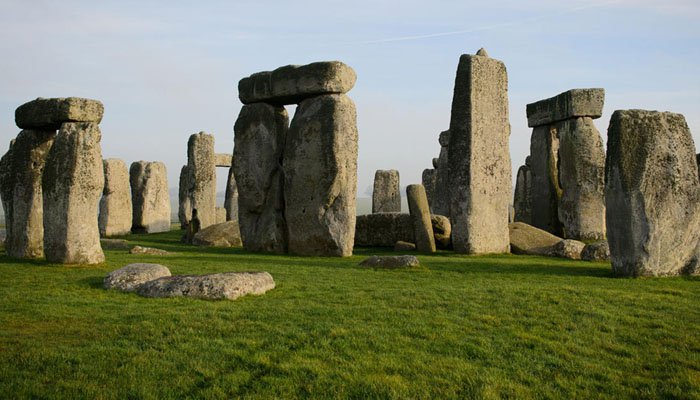
Despite a century of scientific scrutiny, the 5000-year old Neolithic monument in southern England known as Stonehenge has yielded few secrets about the people buried amidst its ring of towering rocks.

Most of their remains were cremated, leaving only ashes, a few bone fragments, and an archeological dead-end.

But a eureka moment discovery by Christophe Snoeck, a University of Oxford graduate student at the time, revealed that many probably came from as far afield as Wales in western Britain, source of the bluestone used to carve Stonehenge´s mysterious and entrancing monuments.

Some of these pre-historic wayfarers — who may have helped transport the massive stones — were cremated before their ashes were laid to rest, Snoeck and colleagues reported in a study published Thursday in Scientific Reports.

Others may have died on the job, or settled near Stonehenge to finish their days.

What Snoeck discovered in the lab is that strontium, a heavy element found in bone, resists the high temperatures of a funeral pyre, which can top 1000 degrees Celsius (1832 degrees Fahrenheit).

Indeed, extreme heat seals the element´s unique signature, isolating it — even over thousands of years — from contamination by surrounding soil.

For scientists trying to tease out data from human remains burnt to a crisp, this opened up a gold mine.

Cremation destroys all organic matter, including DNA.

“But all the inorganic matter survives, and there is a huge amount of information contained in the inorganic fraction of human remains,” Snoeck explained.

By measuring traces of strontium, he told AFP, “it is possible to evaluate the origin of the food we eat, especially the plants.”

From the forests of Wales

Plants absorb strontium from the soil, and that strontium is then incorporated into our bones, reflecting the place where the plants grew.

The researchers examined skull bone fragments from 25 people buried during an early phase of Stonehenge´s history, around 3000 BC.

Ten of them, they determined, had spent at least the last 10 years of their lives in a different region.

Archeologists already knew that Stonehenge bluestone came from Wales, so when the strontium profile of these ten outsiders matched what is known of the region´s flora, it seemed reasonable to assume they did as well.

The scientists were also able to tell whether the wood used in funeral pyres was from the Wessex area around Stonehenge, or from trees typical of the forests in Wales.

This enabled them to conclude that some of the people buried at the site had probably been cremated in western Britain before their ashes were transported.

Archaeologists who excavated the site in the early 1920s — before reburying the remains — reported that cremated matter had been deposited in organic containers such as leather bags, apparently brought from a distant place for internment.

Much remains unknown about the pre-historic humans who erected Stonehenge, including the beliefs and rituals that animated their culture.

But the new findings “suggest that people from the Preseli Mountains in West Wales not only supplied the bluestones used to build the stone circle, but moved with the stones and were buried there too,” concluded John Pouncett, a co-author of the study and Spatial Technology Officer at Oxford´s School or Archaeology.

All told, there are between 150 and 240 cremation burials at Stonehenge, according to a recent study in the journal Antiquity.

Filed Under: World Tagged With: Britain, Stonehenge, UK, world

Submit a Comment


Primary Sidebar


Latest News

Gulf crisis drives India-Venezuela oil partnership

Security forces kill four terrorists in KP

Saudi delegation explores Pakistan investments

NEPRA cuts electricity tariff nationwide

NDMA warns of floods and landslides across Pakistan

Pakistan

Security forces kill four terrorists in KP

Saudi delegation explores Pakistan investments

NDMA warns of floods and landslides across Pakistan

Shehbaz prioritises export-led economic growth

Foreign Office denies US information sharing

More Posts from this Category

Business

SBP reserves rise by $43 million

Business leaders distrust upcoming FY27 budget

PM Shehbaz orders pilot of automated tax system

Pakistan to unveil budget on June 10

PM Shehbaz pushes tariff reforms, orders AI upgrade

More Posts from this Category

World

Gulf crisis drives India-Venezuela oil partnership

Musk applauds Pakistan’s justice system

PM Shehbaz lauds strategic ties with Washington

More Posts from this Category


Footer

Home
Lead Stories
Latest News
Editor’s Picks

Culture
Life & Style
Featured
Videos

Editorials
OP-EDS
Commentary
Advertise

Cartoons
Letters
Blogs
Privacy Policy

Contact
Company’s Financials
Investor Information
Terms & Conditions

Facebook
Twitter
Instagram
Youtube

© 2026 Daily Times. All rights reserved.

Manage Consent
To provide the best experiences, we use technologies like cookies to store and/or access device information. Consenting to these technologies will allow us to process data such as browsing behavior or unique IDs on this site. Not consenting or withdrawing consent, may adversely affect certain features and functions.
Functional Always active
The technical storage or access is strictly necessary for the legitimate purpose of enabling the use of a specific service explicitly requested by the subscriber or user, or for the sole purpose of carrying out the transmission of a communication over an electronic communications network.
Preferences
The technical storage or access is necessary for the legitimate purpose of storing preferences that are not requested by the subscriber or user.
Statistics
The technical storage or access that is used exclusively for statistical purposes. The technical storage or access that is used exclusively for anonymous statistical purposes. Without a subpoena, voluntary compliance on the part of your Internet Service Provider, or additional records from a third party, information stored or retrieved for this purpose alone cannot usually be used to identify you.
Marketing
The technical storage or access is required to create user profiles to send advertising, or to track the user on a website or across several websites for similar marketing purposes.
  • Manage options
  • Manage services
  • Manage {vendor_count} vendors
  • Read more about these purposes
View preferences
  • {title}
  • {title}
  • {title}
We use cookies to ensure that we give you the best experience on our website. If you continue to use this site we will assume that you are happy with it.