
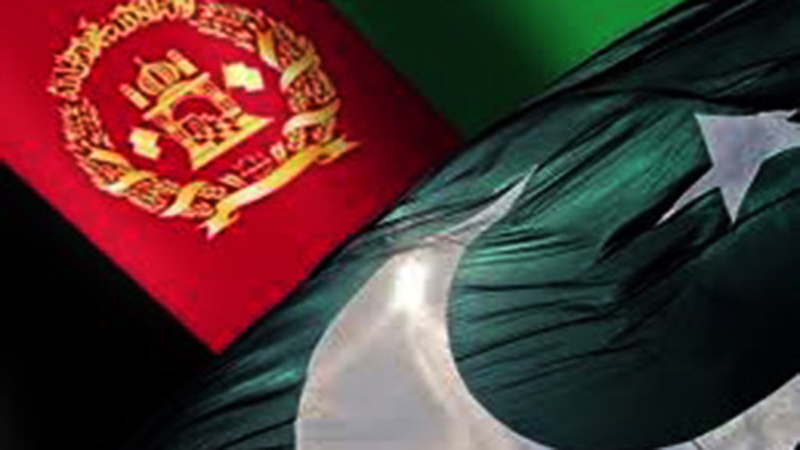
Asia – from East to the West – is in the grip of intense diplomatic activity.
The Army Chief Gen. Qamar Javed Bajwa spent a day in Kabul Monday to discuss with President Ashraf Ghani the progress in the rejuvenated bilateral dialogue. Only a day earlier a landmark meeting between the Pak-Afghan Directors General military operations of the two countries at Rawalpindi took place to finalise deployment of liaison officers (LOs), establishment of Ground Coordination Centres (GCCs) for intelligence sharing and monitoring of cross-border movement of militants.
The same day the US President Donald Trump courted the north Korean leader Kil Jong Un for the much hyped summit on possible denuclearization of N.Korea.
A few days earlier, the US Secretary of State Mike Pompeo’s phone call to Gen. Bajwa to discuss the “need for political reconciliation in Afghanistan”, preceded by US Vice President Mike Pence’s telephonic conversation with the caretaker Prime Minister Nasir ul Mulk, the first major high-level US-Pakistan engagement since Donald Trump announced his strategy for South Asia and Afghanistan in August last year.
These coincided with a meeting between the Chinese President Xi and the Indian prime minister Narendra Modi ahead of the 18th Shanghai Cooperation Organisation summit in the coastal Chinese city of Qingdao. In this bilateral, the second within six weeks, Xi sounded “cooperation and accommodation.”
During the SCO summit, Xi called for further carrying forward the Shanghai Spirit to surmount difficulties, defuse risks and meet challenges.
Without any reference to the US-led NATO, Xi delivered a firm No to the western geopolitics disguised in the “narrative of security.”
“We should reject the Cold War mentality and confrontation between blocks and oppose the practices of seeking absolute security of oneself at the expense of the security of other countries, so as to achieve security of all,” said President Xi, and announced that China will set up a 30-billion-yuan ($4.7 billion) equivalent special lending facility within the framework of the Inter-Bank Consortium of the Shanghai Cooperation Organization. Increasingly, the Chinese leadership’s outward thrust is enveloped in the talk of the Shanghai Spirit ( shared future, move toward a new type of international relations, and build an open, inclusive, clean and beautiful world that enjoys lasting peace, universal security and common prosperity).
And this possibly also provides the context not only for the unusual warming of the Indo-China relations but also the revival of formal contacts under the Afghanistan-Pakistan Action Plan for Peace and Solidarity (APAPPS), a new mechanism for bilateral engagement.
Based on recent interactions with officials in Beijing and Islamabad, one can easily decipher the context of this extraordinary string of diplomacy from East to West Asia in many ways.
Firstly, President Xi seems embarked on a charm offensive to win over as many friends as possible around China, meaning securing his country’s surroundings, and hence his two high-profile meetings with Modi
Secondly, Pakistan has been urged to pursue structured engagement with Afghanistan – regardless of what India or the US does there. Meaning thereby tightening the lose ends of its relations with the conflict-battered country.
Thirdly, stick to APAPPS mechanism, which rests on a commitment by President Ashraf Ghani to refrain from the one-way blame-game.
One would assume that Ghani and his colleagues realized that their policy of undermining Pakistan did not deliver the results they had expected. Nor did it benefit Afghanistan in any way.
Officials opine that the Afghan leadership possibly also saw through that that – together with India – they may have done some damage to Pakistan internationally but this did not help Afghanistan either, a country that itself has been a victim of violence for decades but was being used against Pakistan.
Fourth, the Pak-Afghan-China trilateral meetings at the highest foreign ministry levels do point to the buffer that Beijing has provided beween Afghanistan and Pakistan. China is indeed playing a mitigating role in the region.
President Xi’s engagement with the Indian premier Modi is one indication of the Chinese strategy to soften India’s opposition to Pakistan and get them on board for the BRI projects and the Afghan reconciliation.
No surprise therefore that after a long time Ghani in particular has begun talking about the need to “close the conflict” and not about winning the war against Taliban.
Fifth, all stakeholders are puzzled by the fact that, while the US dumps the blame of violence on Taliban and the Haqqani Network, Daesh/Islamic State of Khorassan Province continues to stage spectacularly deadly attacks, including the one on June 11 that killed at least 17 and left over dozen injured. The group has in fact claimed most of the high-profile attacks in Kabul, Mazar, Helmand and Ghanzi in the last 14 months.
What is Daesh and who is its driver, is the big enigma not only for outsiders but also the Afghans themselves.
Sixth, the US – if secretary Pompeo’s call to General Bajwa is any indicator – has come around the point that instead of peddling the “Taliban-Haqqani Network” unidirectional theme, it needs to take into account what the US Inspector General John Sopko and former US-ISAF commander General John Allen say about the internal dynamics of the Afghan conflict and on Pakistan’s role in it. Speaking at a Brookings Institution seminar on May 24, both essentially rubbished the decade-old allegations that single-out Pakistan for the ills of Afghanistan. They spoke of the billions of US dollars that has thrown up a deadly nexus comprising corrupt officials, warlords, insurgents, terrorists and organized criminal syndicates.
Seventh, as evidenced at a security seminar end of May in Islamabad, almost all Central Asian states are expecting President Ghani and other members of his government to act as a bridge, and not a barrier in the way of peace and regional trade connectivity.
Last, but not the least China, Pakistan and the central Asian states recognize the need to work on the internal reconciliation between Taliban and Kabul through a regionally coordinated approach involving all the direct and indirect stakeholders in regional peace.
Little doubt that the road to peace in Afghanistan goes not only through Pakistan but also India and Kabul itself, which needs to be insulated from negative Indo-US influences through a construction, cooperative multi-lateral engagement.
Published in Daily Times, June 13th 2018.