
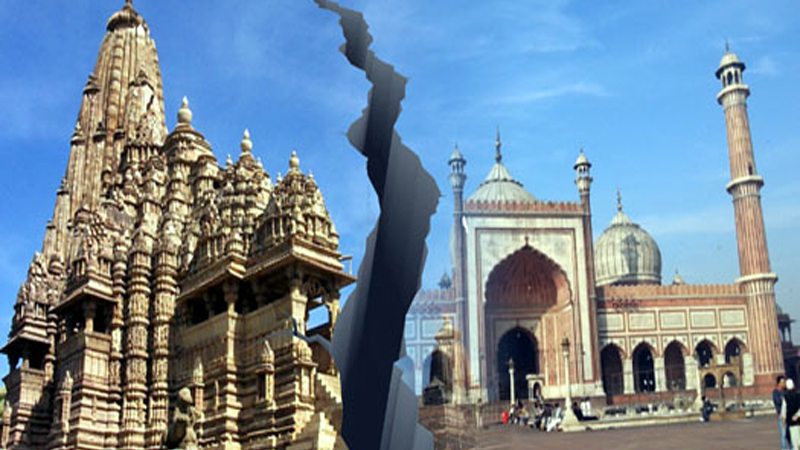
The Second World War had bankrupted the United Kingdom. It was in no position to continue holding on to the British Empire. The first to go would be India, home to 400 million of the 500 million subjects of Her Majesty.
Prime Minister Clement Attlee surprisingly defeated the war hero Winston Churchill in the elections of 1945. After reviewing the options for giving dominions status to India, Attlee concluded that there was no way to reduce the communal hatred that had erupted between the warring communities in India. In Churchill’s phrase, a ‘shameful flight’ happened as the British panicked, divided India, and quit.
The partition of 1947 dislocated more some 10-15 million people and killed between 1-2 million. Writers continue to analyse why partition happened, assess its immediate consequences, and apportion blame.
In ‘Midnight Furies,’ Nisid Hajari pushes the envelope by asking why partition instituted perpetual enmity between India and Pakistan.
Jinnah, the man who had passionately advocated the creation of Pakistan, had said that the only way to end the communal hatred in India was to put the warring communities into two countries, Hindustan and Pakistan. He had argued they would live in peace.
In putting forward the concept of Pakistan and negotiating its creation with the Congress on the one hand and the British on the other, Jinnah faced an unenviable task. It was made more difficult by the aloof nature of his personality.
The only advisor Jinnah had was apparently Jinnah himself. In one meeting, Jinnah had said once Pakistan was created, his followers would regard his word as the word of God. A premier of Punjab had said that a better name for Pakistan would be Jinnistan.
His successor, Khizar Hayat Khan, continued the long running battle with Jinnah. He had ruled Punjab through an inclusive “unionist” government comprised of Muslims, Hindus and Sikhs. The League’s two-nation theory was exclusivist. Jinnah tried without much success to turn him around because he knew there would be no Pakistan without Punjab.
In Kashmir the popular Muslim leader, Shaikh Abdullah, ‘had rejected the demands for Pakistan, insisting that Hindus and Muslims were one people, and India one nation.”
The carnage that followed the partition was comparable to what had happened during the horrific battle of Somme in the Great War. In one part of Punjab, ‘the killings stopped when there was no one left to kill.’ In another area, ‘Vultures feasted so extravagantly that they could no longer fly’
Even the Aga Khan had voiced his concerns: “The bitter enmity now raised by the League and its leaders will have to be paid for a hundred percent.’
At the end of March 1946, Jinnah had consulted with Lt.-Gen. Sir Arthur Smith, the deputy commander-in-chief of the British Indian Army, about the security of Pakistan. The general had stated unequivocally that without a full Punjab and a full Bengal, Pakistan wouldn’t survive. This gave Jinnah pause and ‘barely a year before independence, Jinnah essentially gave up the demand for Pakistan.’
But soon the Pakistan fever returned. Among other initiatives, he started a secret correspondence with Winston Churchill who ended up putting his support behind the idea of Pakistan, turning around many skeptical members of parliament. This has led Alex von Tunzelmann to call him Pakistan’s uncle.
To push his argument, Jinnah famously declared to much applause among the Muslims: ‘We will have India divided or India destroyed.’ Eventually the Crown granted his wish. But what he got was a ‘moth-eaten’ Pakistan.
The carnage that followed the partition was comparable to what had happened during the horrific battle of Somme in the Great War. In one part of Punjab, ‘the killings stopped when there was no one left to kill.’ In another area, ‘Vultures feasted so extravagantly that they could no longer fly.’
People who had lived together as neighbours for centuries, who spoke the same language, ate the same food, played the same games, and dressed in the same clothes, people who had fought together as comrades in arms during the two world wars, turned on each other with a ferocity that would put wild beasts to shame.
Saadat Hasan Manto, the great Urdu writer who migrated from India to Pakistan, wrote graphically about the horrors of partition. He lamented that in his mind, he ‘could not separate India from Pakistan, and Pakistan from India.’
After independence, concerned about the menace of provincialism, Jinnah imposed Urdu as the official language of Pakistan. At Dacca University on 24 March, 1948, Jinnah stated that ‘the state language of Pakistan is going to be Urdu and no other language. Anyone who tries to mislead you is the real enemy of Pakistan.’
The Bengali students jeered and “leaped onto their seats and shouted, ‘No, no!’ as he spoke. The Quaid seemed taken aback, and paused for a moment before resuming his speech. He held no other public meetings before returning to Karachi at the end of the month. It was his first and last visit to East Bengal.”
In 1952, language riots erupted in East Pakistan, the first signs of a fissure between the East and the West. In the decades that followed, relations deteriorated as the Bengalis felt discriminated against and exploited by the West. When they won the national elections in 1970, the army, drawn almost entirely from the West, refused to transfer power to them. The ensuring civil war and subsequent war with India resulted in the secession of East Pakistan where 55 percent of the population resided. The Muslims of India were now divided across three countries.
In October 1947, war broke out in Kashmir. What appeared to be an independent incursion by a few thousand tribesmen who had embarked on a holy war to seize Kashmir quickly turned into a full-scale war between the armies of Pakistan and India a few months later, with Jinnah’s authorisation.
The UN mediated a ceasefire on January 1, 1949, with the understanding that a plebiscite would be carried out in Kashmir once both parties had withdrawn their forces. Since neither side was willing to withdraw its forces, the plebiscite was doomed never to see the light of day.
Maj.-Gen. Akbar Khan, who had led the campaign in Kashmir under the code name of General Tariq, became frustrated with Prime Minister Liaquat Ali Khan, Jinnah’s deputy, and sought to depose him in 1951. The coup failed and he was arrested.
However, in 1958 another army general pulled off a coup. Ayub, ‘the man of steel,’ said he was the true heir to Jinnah and imposed martial law, which would have been anathema to Jinnah. Ayub created a new capital, Islamabad. He would be followed by three other men of steel making similar claims of being saviours of the nation and fight losing wars with India.
When creating Pakistan, Jinnah had not anticipated that the country would be governed by the military or that it would turn into an Islamic Republic. He did not anticipate that wars with India would become a fixture of daily life. Nor did he imagine that East Pakistan would secede.
He had thought that India would be called Hindustan after partition. But it retained its name and Pakistan was viewed as the seceding country.
Jinnah did not live to see that the nation he had created turn into a totally different nation. The phrase, ‘two nation theory,’ had acquired yet another meaning.
The author has written Rethinking the National Security of Pakistan. [email protected]
Published in Daily Times, March 7th 2018.