
UNICEF’s report titled Every Child Alive: the urgent need to end newborn deaths published last week highlighting the startling situation for newborn children revealed staggering statistics of newborn deaths. According to the report, globally, 2.6 million babies die every year before they turn one-month old. Around, one million children die within 24 hours after their birth and 2.6 million are stillborn. Pakistan with deaths of 46 newborns of every 1,000 babies within the first month of their lives, has been called the most dangerous place for children. The matter of a great concern is that though 80 percent of these deaths are preventable through making adequate healthcare easily accessible to mothers, yet we have failed to secure precious lives of little angel.
The undeniable fact is that, for Pakistan, to tackle health problems of newborn babies is a colossal challenge because a huge number of children are dying due to a lack of continuity between maternal and child health programmes. The majority of them die during the first four weeks of their life (neonatal period) because they and their mothers are not provided the required healthcare at the time of their birth. Reportedly, 50 percent of the neonatal deaths occur after a home delivery where unknowingly no any health care is given to mother and child.
A report reveals that when the United Nations set Millennium Development Goals (MDGs) in 2000, massive investment into health care for women and children was made that resulted in more swift progress for the survival of mothers and under-five infants. On account of taking this constructive initiative, newborn death rate had come down from 4.6 million in 1990 to 3.3 million in 2009 but due to the lack of Pakistan government’s will, the death rate started to increase again from 2011 to onwards. Currently, neonatal deaths account for 41 percent of all child deaths before the age of five and they are likely to soar further, if the government continued to fail improving healthcare system.
Reportedly, billions of dollars have been spent on maternal and newborn health in Pakistan but effective strategies for provision of healthcare to women and children have not been worked out yet
UNICEF’s another report shows that newborn deaths have been alarmingly very high in the world’s poorest countries and very low in high-income countries. Children taking birth in Japan, Iceland and Singapore have the best chance of survival, while newborns in Pakistan, the Central African Republic (CAF) and Afghanistan undergo the worst odds. And even among the two worst countries, Pakistan is most dangerous place for newborns.
One in every 22 newborns die in Pakistan, one in every 24 in CAF, and one in every 25 in Afghanistan. However, in Japan, just one in every 1,111 babies dies and in Iceland one in every 1,000. Prematurity, complications during birth or infections such as pneumonia and sepsis are said to be the main factors for more than 80 percent newborn deaths.
According to UNICEF, though some of the deaths can be prevented after well-trained midwives, potable water, disinfectants, breast-feeding within the first hour, skin to skin contact and adequate nutrition have been made easily accessible, yet many countries have been failed to manage the provision of these things to many of the newborns for their survival.
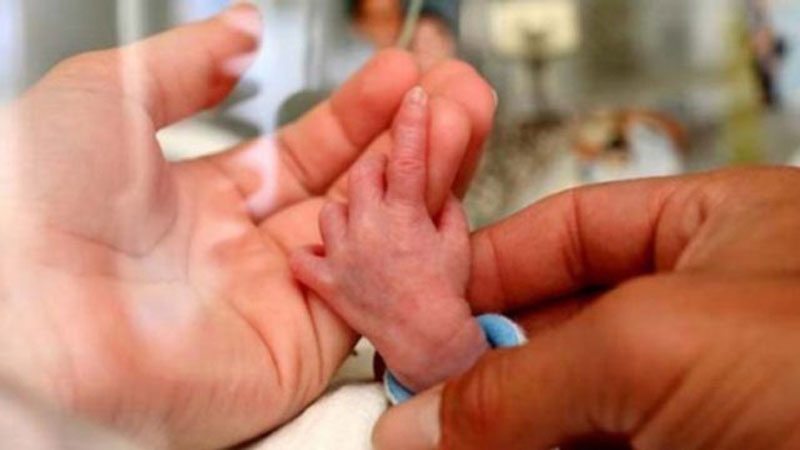
Reportedly, billions of dollars have been spent on maternal and newborn health in Pakistan but effective strategies for provision of healthcare to women and children have yet not been worked out. The lack of awareness training programmes, professionalism and effective health management system, and the poor healthcare quality, unavailability of drugs in public hospitals, inadequate access to women to obstetric care and poor knowledge of obstetric complications among mothers are the real challenges Pakistan still has been facing. Amidst many other factors, the challenges are the leading factors responsible for the unrelenting number neonatal and maternal deaths in the country.
With objective to improve reproductive, maternal, newborn and child health, in Pakistan with the financial and technical assistance of WHO, UNFPA and UNICEF, capacity-building training programmes including Pregnancy, Child and Postnatal Care (PCPNC), Essential Newborn Care (ENC), Nutrition Stabilization Centre (NSC) and Integrated Management of Newborn and Childhood Illness (IMNCI) were initiated to provide health workers with the state of the art skills and concepts. Hundreds of the workers have been trained under the training programmes but, regrettably, the programmes have not proved to be beneficial and fruitful for women and children in rural areas of the country because these updated health care concepts have not been implemented in the regions.
If Pakistan is serious to save lives of newborns, it will have to provide mothers and newborns in rural areas with effective, affordable and quality health equipped with the latest healthcare approaches round-the-clock at rural healthcare centers, basic health care units and district hospitals.
The writer is an academic, and can be reached on Twitter @ARShykh
Published in Daily Times, March 1st 2018.