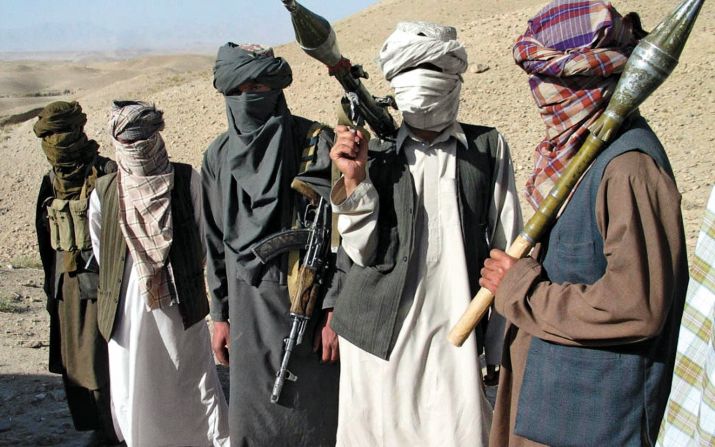
ISLAMABAD: The United Nations Thursday issued a new report on civilian casualties, holding the Taliban responsible for 42 per cent of the civilian casualties during 2017.
More than 10,000 civilians lost their lives or suffered injuries during 2017, according to the latest annual UN report documenting the impact of the armed conflict on civilians in Afghanistan.
A total of 10,453 civilian casualties – 3,438 people killed and 7,015 injured – were documented in the 2017 Annual Report by the UN Assistance Mission in Afghanistan (UNAMA) and the UN Human Rights Office. Although this figure represents a decrease of 9% compared with 2016, the report highlights the high number of casualties caused by suicide bombings and other attacks using improvised explosive devices (IEDs).
“The chilling statistics in this report provide credible data about the war’s impact, but the figures alone cannot capture the appalling human suffering inflicted on ordinary people, especially women and children,” said Tadamichi Yamamoto, the Secretary-General’s Special Representative for Afghanistan, according to a press release posted online.
Yamamoto, who also heads UNAMA, expressed deep concern at the increased harm to civilians caused by suicide attacks. “I am particularly appalled by the continued indiscriminate and unlawful use of IEDs such as suicide bombs and pressure-plate devices in civilian populated areas. This is shameful,” he said.
The second leading cause of civilian casualties in 2017 was ground engagements between anti-government elements and pro-government forces, although there was a decrease of 19% from the record levels seen in 2016.
The report attributes close to two-thirds of all casualties (65 per cent) to anti-government elements: 42 per cent to the Taliban, 10 per cent to Daesh/Islamic State Khorasan Province (ISIL-KP), and 13 per cent to undetermined and other anti-government elements.
Pro-Government Forces caused a fifth of civilian casualties: 16% were attributed to the Afghan national security forces, 2% to international military forces, 1% each to pro-Government armed groups and undetermined pro-Government forces. Unattributed cross-fire during ground engagements between anti-government elements and pro-government forces caused 11% of civilian casualties.
Women and children remained heavily affected by conflict-related violence. UNAMA documented that, in 2017,359 women were killed – a rise of five per cent – and 865 injured. Child casualties – 861 killed and 2,318 injured – decreased by 10% compared with 2016.
Attacks where anti-government elements deliberately targeted civilians accounted for 27% of the total civilian casualties recorded in Afghanistan in 2017 – mainly from suicide and complex attacks directed at civilians or civilian objects.