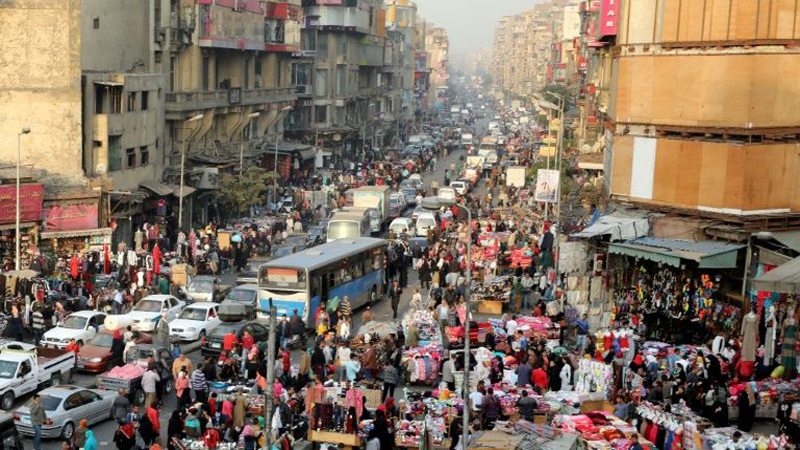
 Threats to sustainability in Pakistan: Particularly, since 1990, environmental damage in Pakistan due to development process i.e. damages of terrestrial ecosystem, depletion of the natural resources, deforestation, desertification, soil and land erosion, water logging posed serious threat to wide range of animal and plants species resulted in massive pollution.
Syed has discussed the issue of Pakistan’s energy consumption over world level, that Pakistan’s population is a little over 2 per cent of the entire world’s population, its energy consumption is a more 0.29 percent, i.e. less than even half of one per cent.
Some of the major environmental issues that the developing countries including Pakistan are facing include the following: increased population pressure, unsustainable land use, air pollution, water pollution, noise pollution, climate change, natural resource depletion, unsustainable and high energy consumption, loss of biological diversity, degradation of freshwater, deforestation and unsustainable use of forests.
Baber et al studied how urban planning at the local scale resulted in fast growth of city-centre housing development in Birmingham, endangering sustainability. So Pakistan should focus on urban planning.
Won et al studied Ulsan Metropolitan City in Korea, a small town with rich historic and natural resources, was designed a special industrial zone in 1962. However, as they didn’t focus on environmental sustainability, Ulsan experienced high levels of environmental pollution until the mid 1980s. To reverse this degradation of the environment, the Korean government imposed strict environment regulations on Ulsan later that decade. So Pakistan government should impose strict environmental regulations.
Sustainable development of environment in Pakistan: Since the 1980’s Pakistan has paid greater attention to addressing the growing environmental challenges. Significant milestones include the establishment of the Environmental and Urban Affairs Division (EUAD), later upgraded as the Federal Ministry of Environment, the Pakistan Environmental Protection Ordinance (PEPO, 1983), subsequently revised as Pakistan Environmental Protection Act (PEPA, 1997), establishment of environmental protection agencies (EPA’s) at federal and provincial levels, setting up of environmental laboratories, environmental courts, National Environment Quality Standards etc. Pakistan has sought to implement fourteen multilateral environmental agreements (MEA’s), and actively participates in global environment-related meetings held under the MEA’s. Pakistan has been actively participating in the annual meetings of the Commission on Sustainable Development (CSD) and the Governing Council of UNEP.
Furthermore, since 1990’s Pakistan has emphasize four additional priority objectives to some degree in promoting sustained and equitable economic development, particularly, over the last few years and present government planning, Pakistan’s sustainable development strategies to cope the problem at the national level has presented the Pakistan governments reforms saying environment friendly that the government of Pakistan has started National Cleaner Production Program to help the industries and tanneries to tackle environmental issues. The “multi-sectoral” programme will build the capacity of the industrial sector adopt cleaner production methods by providing policy
It is the growing commitment to well-being within the mainstream business of higher education that universities act as a perfect catalyst to influence a process of coordinated action to address climate change and impact positively on the sustainability agenda.
The relationship between environment and economic growth, whether negative or positive, is not fixed along a country’s development trend; as it may change towards a positive nature as a country acquires a significant level of income and a cleaner environment over a period of time. In addition, to continue with the current global pace of development and preserve the interest for the future generation sustainable development is essential for Pakistan. Though the world is acting quickly and creating global understanding in favor of environmental protection and has already been shown responsiveness for Global Environmental Governance through COP21, it is not sufficient.
Pakistan, as a developing country, is faced with adverse environmental conditions and has scarce financial resources. It has limited political resources to address the environmental degradation challenges, hence threatening the sustainable development.
There has been a growing concern inside the Pakistan government to protect environment as well as to maintain the development. A focus on development of sustainable environment-development should be the government’s main priority, as it is central to achieving a green economy envisioned in Vision 2025 plan for sustainable socio -economic development in the country.
Green growth strategy: Green Growth is a strategy to achieve the sustainable development in environment. United Nations Economic Social Commission for Asia and Pacific (UNESCAP) defines green growth as, “Green growth advocates growth in GDP that maintains or restore environment quality and ecological integrity, while meeting the needs of all people with the lowest possible environment impacts. It is a strategy that seeks to maximize economic output while minimizing the ecological burdens”. It is a growth that is efficient in its use of natural resources and that minimizes pollution and environmental impacts;
Green growth in the context of Pakistan means efficient, appropriate and affordable use of our natural resources and reduces the vulnerabilities of climate change. The environmental taxation has a positive influence on green innovations because the government imposes the taxes on the polluters to reduce the level of emissions and provide the clean environment to the people. Due to the tax regimes emissions are decreases and taxes are the base of new technologies and innovations that should make monitoring easier and must cost effective. Environmental taxes are the key policy instruments for providing clear and sustain incentives to reduce the environmental damage.
A greener economy improves human social equity and well?being, while significantly reducing ecological scarcities and environmental risk.
Conclusion: There is need to upgrade the environmental sustainability in Pakistan because the most significant challenges in next decades developing countries like Pakistan will be related to traded goods, human resources and environment etc. The importance of these sustainability measures can be seen by the international agreement on sustainable development (Rio-Earth Summit and Agenda-21) Building more effective knowledge systems for sustainability takes time and patience. Strategies to promote such systems require a sufficiently long-term perspective that takes account of the generally slow impact of ideas on practice, the need to learn from field experience, and the time scales involved in enhancing human and institutional capital necessary for doing all these things. A decade or more thus seems the minimal period over which efforts to harness S&T for sustainability should be planned, implemented, and evaluated. The “new contract” for science and engineering that is being called for in many sustainability discussions thus needs to be seen as a truly radical contract, not just for individual studies or projects, but for whole professional careers. Review of literature suggests that the sustainable development planning in Pakistan is urgent desire of our nation.
Published in Daily Times, January 28th 2018.