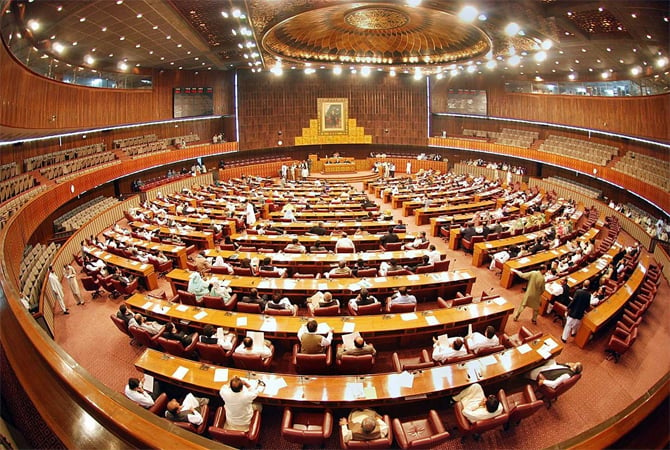
 The Senate on Thursday approved the recommendations on the Finance Bill 2026, containing the annual budget statement.
These recommendations were presented in the Senate by Chairman of the Standing Committee on Finance and Revenue, Senator Saleem Mandviwalla in form of a report. Total 123 recommendations have been made for National Assembly for consideration.
The upper house of the parliament adopted these recommendations. Chairman Senate Syed Yousaf Raza Gilani who was in the chair.
The approved report contains a set of recommendations and proposals concerning the federal budget for the upcoming fiscal years.
Following the Senate’s approval, these recommendations will be forwarded to the National Assembly for consideration as part of the budgetary process.
Sharing details of the recommendations, Chairman of the Standing Committee on Finance and Revenue, Senator Saleem Mandviwalla said that this was the eighth consecutive budget on which he was presenting recommendations as Chairman of the Senate Standing Committee on Finance.
“We should avoid repeating the mistakes made every year,” he said, adding that Pakistan needed measures to place its economy on a sustainable and stable footing.
Highlighting key observations and proposals contained in the committee’s report, Mandviwalla said that the reduction in income tax slabs had provided relief to the salaried class. However, he stressed that further measures were required to promote solar energy across the country.
He also called for the abolition of taxes on credit cards and ATM cards, saying such levies placed an unnecessary burden on consumers.
Mandviwalla informed the House that the Senate Standing Committee on Finance had submitted 108 recommendations relating to the budget, while the Senate Standing Committee on Planning had contributed 15 recommendations. In total, the Senate had put forward 123 recommendations on the federal budget.
He said the committee had proposed a minimum 15 percent increase in salaries of government employees and recommended reducing taxes on food items and the agriculture sector to provide relief to the public and support economic activity.
Expressing concern over social sector spending, he said allocations for health and education had been kept very low in the budget. He also noted that additional burden had been imposed on existing taxpayers instead of broadening the tax base.
The committee further recommended that climate-related levies should be utilized exclusively for environmental protection and climate improvement initiatives. It also proposed that books, notebooks, pencils and other educational materials be exempted from taxes to promote education and reduce costs for students and families.
Mandviwalla said the committee’s report contained several practical and effective proposals aimed at improving the budget and addressing public concerns.
Following the approval of the report and recommendations by the Senate, the proposals relating to the Finance Bill 2026 and the annual budget statements will be sent to the National Assembly for consideration as part of the constitutional budget process.