• Skip to primary navigation
  • Skip to main content
  • Skip to primary sidebar
  • Skip to footer
Trending:
  • Kashmir
  • Elections
Monday, June 15, 2026

Daily Times

Your right to know

  • HOME
  • Latest
  • Iran-Israel war
  • Gilgit Baltistan Election
  • Pakistan
    • Balochistan
    • Gilgit Baltistan
    • Khyber Pakhtunkhwa
    • Punjab
    • Sindh
  • World
  • Editorials & Opinions
    • Editorials
    • Op-Eds
    • Commentary / Insight
    • Perspectives
    • Cartoons
    • Letters to the Editor
    • Featured
    • Blogs
      • Pakistan
      • World
      • Lifestyle
      • Culture
      • Sports
  • Business
  • Sports
  • E-PAPER
    • Lahore
    • Islamabad
    • Karachi

News Desk

SJC allows judges to attend political, diplomatic functions with prior approval

Published on: June 14, 2026 5:03 AM

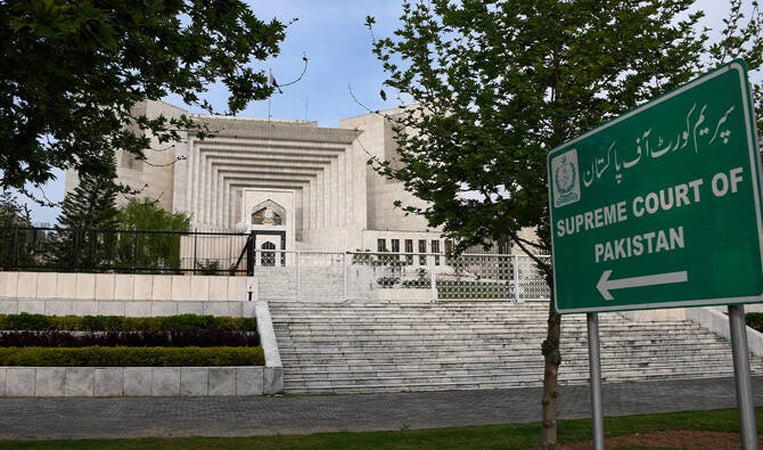
The Supreme Judicial Council (SJC), which approved amendments to the Code of Conduct for judges in its June 11 meeting, decided to allow judges of the superior courts to attend or preside over political or diplomatic functions after obtaining prior permission from the relevant chief justices.

Presided over by Chief Justice of Pakistan (CJP) Yahya Afridi, the June 11 SJC meeting decided to make certain amendments to the Code of Conduct for judges while considering the draft Rules Regulating Procedure and Conduct of Business of the Council.

The SJC meeting was also attended by Chief Justice Federal Constitutional Court (FCC) Justice Aminuddin as well as the chief justices of Lahore and Peshawar high courts.

According to an official announcement issued here on Saturday, one of the amendments made to the code provides that judges of the superior courts shall abstain from attending or presiding over any political or diplomatic functions, except with the permission of the relevant chief justices.

Earlier, Article XII of the Code of Conduct had imposed a complete ban on judges of the superior courts from attending or presiding over any social, cultural, political or diplomatic functions.

Likewise, in the definition of “superior court”, the newly established FCC has also been included, as a result of which the title of the Code of Conduct will now read: “Code of Conduct for Judges of the Federal Constitutional Court, the Supreme Court and the High Courts.” Earlier, the FCC was not included in the title.

Similarly, amendments have also been made in Article XV, which requires the judges to decide cases before them on merit alone, possess moral integrity and intellectual capacity to resist internal or external influence, and, where legal powers are lacking, seek an immediate institutional response.

“Judges must promptly inform, in writing, the CJP and the four most senior Supreme Court judges (via the registrar) of any such attempts (to influence); high court judges must also inform their respective chief justices.”

The amendment suggests that judges shall immediately inform, in writing, the chief justice of the relevant high court, the chief justice of Pakistan, the chief justice of the FCC or the Supreme Court, and the two senior-most judges each of the FCC and the Supreme Court through the respective registrars, in case such attempts to influence are made.

In the case of the FCC or the Supreme Court, the judge shall immediately inform, in writing, the chief justice and the four senior-most judges of the relevant court through the respective registrars.

The chief justice of the high court will place the matter before a committee comprising three judges within two days of the report by the judges.

The committee’s decision on the report will be made within a fortnight. In case it is referred for judicial determination, it should be decided as early as possible, in accordance with the principles of fair trial and due process.

If the chief justice or, in the case of the high court, the committee, as the case may be, fails to respond within the stipulated timeframe, the FCC or the Supreme Court, as the case may be, which was informed by the judge, shall take up the matter.

Earlier, the FCC was included in Article XV of the Code of Conduct.

The FCC was established as the apex court in Pakistan after the 27th Constitutional Amendment Bill was passed in November 2025. As a result, the Supreme Court (SC) was reduced to a final appellate court for civil and criminal matters.

Filed Under: Pakistan Tagged With: allows judges, Political, SJC, Supreme Judicial Council

Submit a Comment


Primary Sidebar


Latest News

US-Iran agreement

Senior Iranian Foreign Ministry Official Says Deal With US Possible Today

‘Obsession’ breaks new records with unstoppable box office run

Tyra files lawsuit against ‘Reality Check’ series

Seth Rogen gets candid about James Franco’s sexual harassment case

Hailey Bieber shows off game day look as Knicks marks major victory

Pakistan

Bilawal urges end to AJK sit-ins to protect country’s repute

Trump blames Israel for delay in signing Iran deal

Tarar calls for end to rift over AJK refugee seats via democratic means

Pakistan, Turkey and Egypt hope for lasting Mideast peace

Government invites opposition to sign Charter of Economy, defends proposed budget

More Posts from this Category

Business

CCRI issues heat stress advisory for cotton growers

Anwar Ratol emerging as premium mango brand

Govt, opposition trade barbs in NA over proposed budget

APPNA invites FPCCI trade delegation to US for trade, investment cooperation

Banking industry welcomes ‘growth-oriented budget’

More Posts from this Category

World

US-Iran agreement

Senior Iranian Foreign Ministry Official Says Deal With US Possible Today

Trump blames Israel for delay in signing Iran deal

Donald Trump

Trump Claims US-Iran Agreement Reached, Iran Yet to Confirm Deal

More Posts from this Category


Footer

Home
Lead Stories
Latest News
Editor’s Picks

Culture
Life & Style
Featured
Videos

Editorials
OP-EDS
Commentary
Advertise

Cartoons
Letters
Blogs
Privacy Policy

Contact
Company’s Financials
Investor Information
Terms & Conditions

Facebook
Twitter
Instagram
Youtube

© 2026 Daily Times. All rights reserved.

Manage Consent
To provide the best experiences, we use technologies like cookies to store and/or access device information. Consenting to these technologies will allow us to process data such as browsing behavior or unique IDs on this site. Not consenting or withdrawing consent, may adversely affect certain features and functions.
Functional Always active
The technical storage or access is strictly necessary for the legitimate purpose of enabling the use of a specific service explicitly requested by the subscriber or user, or for the sole purpose of carrying out the transmission of a communication over an electronic communications network.
Preferences
The technical storage or access is necessary for the legitimate purpose of storing preferences that are not requested by the subscriber or user.
Statistics
The technical storage or access that is used exclusively for statistical purposes. The technical storage or access that is used exclusively for anonymous statistical purposes. Without a subpoena, voluntary compliance on the part of your Internet Service Provider, or additional records from a third party, information stored or retrieved for this purpose alone cannot usually be used to identify you.
Marketing
The technical storage or access is required to create user profiles to send advertising, or to track the user on a website or across several websites for similar marketing purposes.
  • Manage options
  • Manage services
  • Manage {vendor_count} vendors
  • Read more about these purposes
View preferences
  • {title}
  • {title}
  • {title}
We use cookies to ensure that we give you the best experience on our website. If you continue to use this site we will assume that you are happy with it.