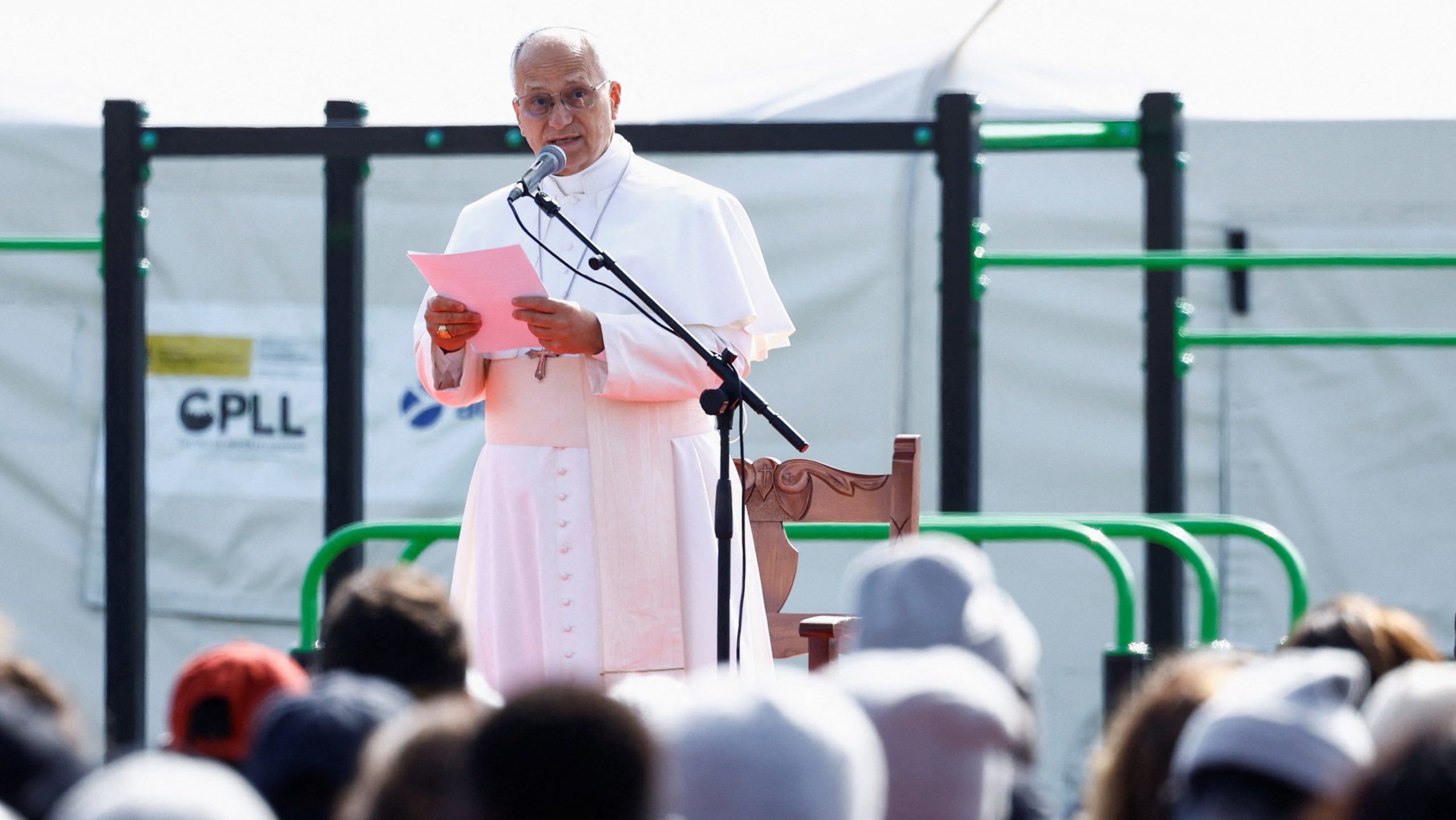
Pope Leo XIV delivered a strong message to migrant traffickers during his visit to Spain’s Canary Islands, urging them to stop exploiting vulnerable people and seek repentance. Addressing humanitarian organisations in Tenerife, he warned that those who profit from human suffering would ultimately face divine justice for their actions. The remarks marked some of his strongest statements yet on migration, a deeply divisive issue across Europe and beyond.
During the final stage of his weeklong visit, the pope repeatedly highlighted the dignity and rights of migrants, calling on societies to welcome and integrate those fleeing hardship. He stressed that people escaping war, poverty and climate-related crises deserve compassion rather than neglect. According to the pope, abandoning migrants after dangerous journeys creates what he described as a silent humanitarian tragedy.
The Canary Islands remain one of the main entry points for migrants attempting to reach Europe from West Africa and Morocco. Migrant arrivals reached nearly 47,000 in 2024, although the figure dropped significantly, with just over 3,000 arrivals recorded during the first five months of 2026. Despite the decline, experts continue to regard the Atlantic route as one of the world’s deadliest migration corridors.
Furthermore, Pope Leo directly addressed criminal networks that organise dangerous sea crossings and often charge migrants thousands of euros for passage. He condemned practices in which traffickers allegedly force migrants into exploitation and withhold documents to recover debts. The pope warned that every life lost, family deceived and worker abused would carry serious moral consequences before God.
The visit also carried strong symbolic significance as Pope Leo followed a path first highlighted by Pope Francis, who made migration a central issue of his papacy. Upon arriving in the islands, Leo honoured migrants who died at sea and later visited a migrant camp where he listened to personal stories of survival, loss and hope. His interactions reinforced the Church’s commitment to advocating for displaced communities.
Meanwhile, the pope’s return journey faced an unexpected delay after a technical issue prevented his aircraft from departing as scheduled. The problem forced him and the accompanying delegation to leave the plane before alternative travel arrangements were made. Despite the disruption, the visit concluded with renewed calls for governments to address migration challenges while protecting human dignity and expanding opportunities in migrants’ home countries.