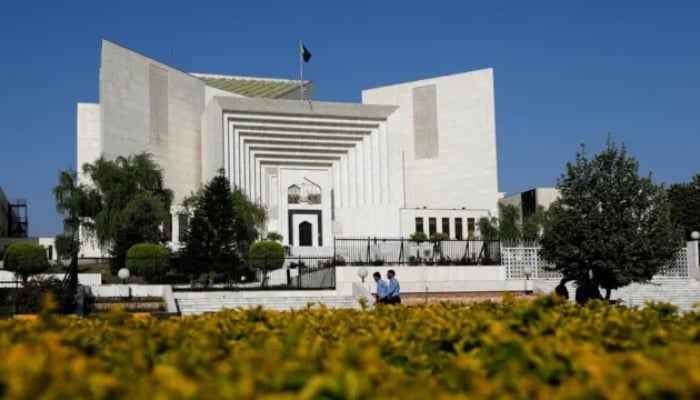
Pakistan’s Supreme Court has announced that it has cleared an 11-year backlog of death penalty appeals and a 17-year backlog of post-arrest bail cases, marking a major milestone in judicial reforms. The court said the progress followed the effective implementation of a policy prioritizing long-pending cases. The reforms have also reduced the average time required to decide cases involving life, liberty, family matters, taxation, and tenancy disputes.
According to an official statement, the Supreme Court was hearing death penalty appeals filed in 2015 as recently as October 2024. Since then, it has decided 608 death penalty appeals and has now begun hearing cases filed in the current year. Only 22 death penalty appeals remain pending, reflecting a significant reduction in the court’s backlog.
Read more: SC adjourns hearing on NAB jurisdiction case till July 16
The court also reported major progress in bail cases. It said a six-year backlog in pre-arrest bail petitions had been eliminated after 2,156 applications were decided, leaving only 23 pending cases. In post-arrest bail matters, the court cleared a 17-year backlog by deciding 2,303 petitions. As of July 2026, the Supreme Court is hearing post-arrest bail cases filed this year, with only 66 applications still pending.
Family, tax, and tenancy cases have also seen notable improvements. The statement said the court disposed of 1,065 family cases, reducing pending matters to 150, including 122 filed this year. Additionally, 506 tax cases were decided, and the remaining pending tax matters now mainly relate to 2025 and 2026, replacing much older cases.
Read more: SC advances digital transformation to strengthen justice delivery
The Supreme Court said its reforms are delivering measurable improvements in judicial efficiency and access to justice. It added that tenancy disputes, once delayed since 2011, have now advanced to cases filed in 2026. The court reaffirmed its commitment to prioritizing cases involving fundamental rights and ensuring quicker resolution of long-pending litigation across the country.