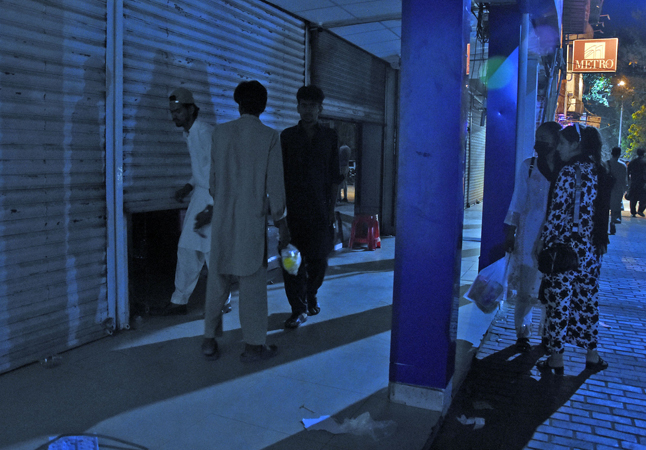
 Pakistan’s capital Islamabad has restored early market closures starting today, Monday, an official notification said as the ongoing US-Iran conflict prompts authorities to implement austerity measures to conserve expensive fuel.
The Punjab government on Monday decided to re-enforce the prescribed working hours for business centers across the province following the Eid holidays, ending the temporary relaxation granted under its energy conservation campaign.
According to officials, the concession extended to markets, restaurants and other businesses remained effective until June 1, 2026 (Monday).
From June 2, 2026 (Tuesday) commercial activities will resume according to the fixed schedule notified by the provincial government.
Under the revised timings, markets will be required to close by 8pm while restaurants, wedding halls and food outlets will be allowed to operate until 10pm.
Relevant authorities have been directed to ensure strict implementation of the decision.
However, certain sectors have been exempted from the restrictions, including gyms, indoor sports facilities, the IT industry and call centers.
Officials said the measure was part of the government’s broader strategy to promote efficient energy consumption and curb electricity wastage.
The policy aims to reduce pressure on energy resources and support conservation efforts across the province.
The provincial administration has instructed enforcement agencies to monitor compliance and take necessary action against violations of the prescribed business hours.
In April, Pakistan’s government ordered shops, markets and shopping malls to close by 8 p.m., while restaurants, bakeries, grocery stores and wedding halls were directed to shut down by 10 p.m. The move was part of an austerity plan to conserve imported fuel, as the US-Iran war continues to drive prices of petroleum products worldwide higher.
However, the government removed restrictions on timings of markets, shopping malls, bakeries, grocery shops and restaurants last month till May 31. The move came ahead of the Eid Al-Adha festival, and as traders complained that early market closures, coupled with surging inflation and high power tariffs, hurt their businesses.
“All shops, markets and shopping malls shall be closed at 08:00 p.m. throughout the week (including Saturday and Sunday),” a notification issued by the Islamabad district magistrate’s office said on Sunday.
The notification said pharmacies and medical stores, medical supply stores, medical laboratories, hospitals, petrol pumps and CNG stations were exempt from the restrictions. Milk and dairy shops, as well as sports facilities such as gyms, padel courts, call centers and IT companies engaged with international clients, were also exempt from the restrictions.
“All restaurants, food outlets, tandoors, grocery stores, kiryana stores, meat shops, fruit (including dry fruit) shops, vegetable vendors and bakeries shall be closed at 10:00 p.m. (there shall be no restriction on takeaway and home delivery services),” the notification said.
The notification added that marriage halls, marquees and other commercial places where “festive events” are held shall also be closed at 10 p.m. throughout the week.
“This notification will come into effect from 1st June, 2026 and shall remain in force till further orders,” it added.
The notification was issued on Sunday hours after a prominent Pakistani trade union warned of nationwide protests if the market restrictions were imposed again.
“With the end of the Iran-US war, there is no longer any justification for lockdowns,” Kashif Chaudhry, president of the Central Association of Traders in Pakistan, said in a statement.
“If a lockdown is imposed after June 1, we will relaunch a nationwide protest movement.”
Chaudhry said during the intense summer heat, requiring shops to close at 8:00 p.m., when the main trading activity resumes around 7:00 p.m. was “destroying businesses.”
Pakistan’s government has said that the restrictions were aimed at reducing energy consumption, controlling electricity production costs, and safeguarding lower-income segments of the population from higher fuel prices in Pakistan, which imports most of its energy needs.
Pakistan slashed petrol and diesel prices by Rs22 per liter on the third day of Eid, describing it as a gift for the masses on the Islamic festival.