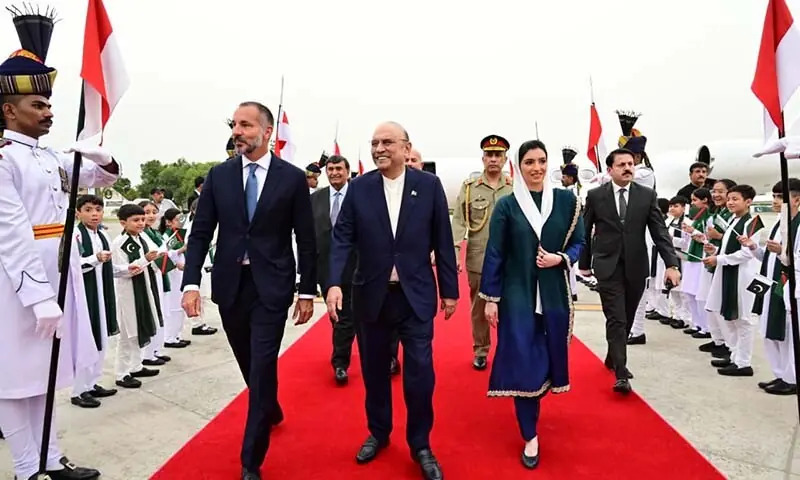
Prince Rahim Aga Khan V arrived in Islamabad on Wednesday for an official visit. President Asif Ali Zardari received him at Nur Khan Airbase. Moreover, he was given a ceremonial guard of honour at the President House. The national anthem was played during the formal welcome. His visit will continue from May 20 to May 26.
During the arrival ceremony, President Zardari and First Lady Aseefa Bhutto Zardari accompanied Prince Rahim. Furthermore, he was officially welcomed as the spiritual leader of the Ismaili community. Officials described the reception as high-level and symbolic. In addition, the visit reflects strong ties between Pakistan and the Ismaili leadership. The event highlighted diplomatic respect and cultural significance.
Read more: Prince Rahim Al-Hussaini named new Aga Khan
According to officials, Prince Rahim will meet government representatives during his stay. Moreover, he is expected to hold discussions with Gilgit-Baltistan authorities. Preparations have also been made for large gatherings in northern Pakistan. Meanwhile, multiple locations including Hunza and Gilgit are under arrangements. Authorities aim to manage public events smoothly and securely.
Security measures have been strengthened for the visit across key regions. Furthermore, the federal government has requested additional travel and protection support. Officials are considering route adjustments, including reopening Babusar Road. In addition, the National Highway Authority remains on alert for safety. These steps aim to ensure smooth movement during the visit.
Read more: Ismaili community celebrates 54th birthday of Prince Rahim Aga Khan
Prince Rahim recently became the 50th spiritual leader of the Ismaili community after his father’s passing. Moreover, he has served in several roles within the Aga Khan Development Network. His focus includes environment and climate-related initiatives globally. Finally, his visit highlights Pakistan’s long-standing engagement with the Ismaili leadership. The trip is expected to strengthen community and institutional relations.