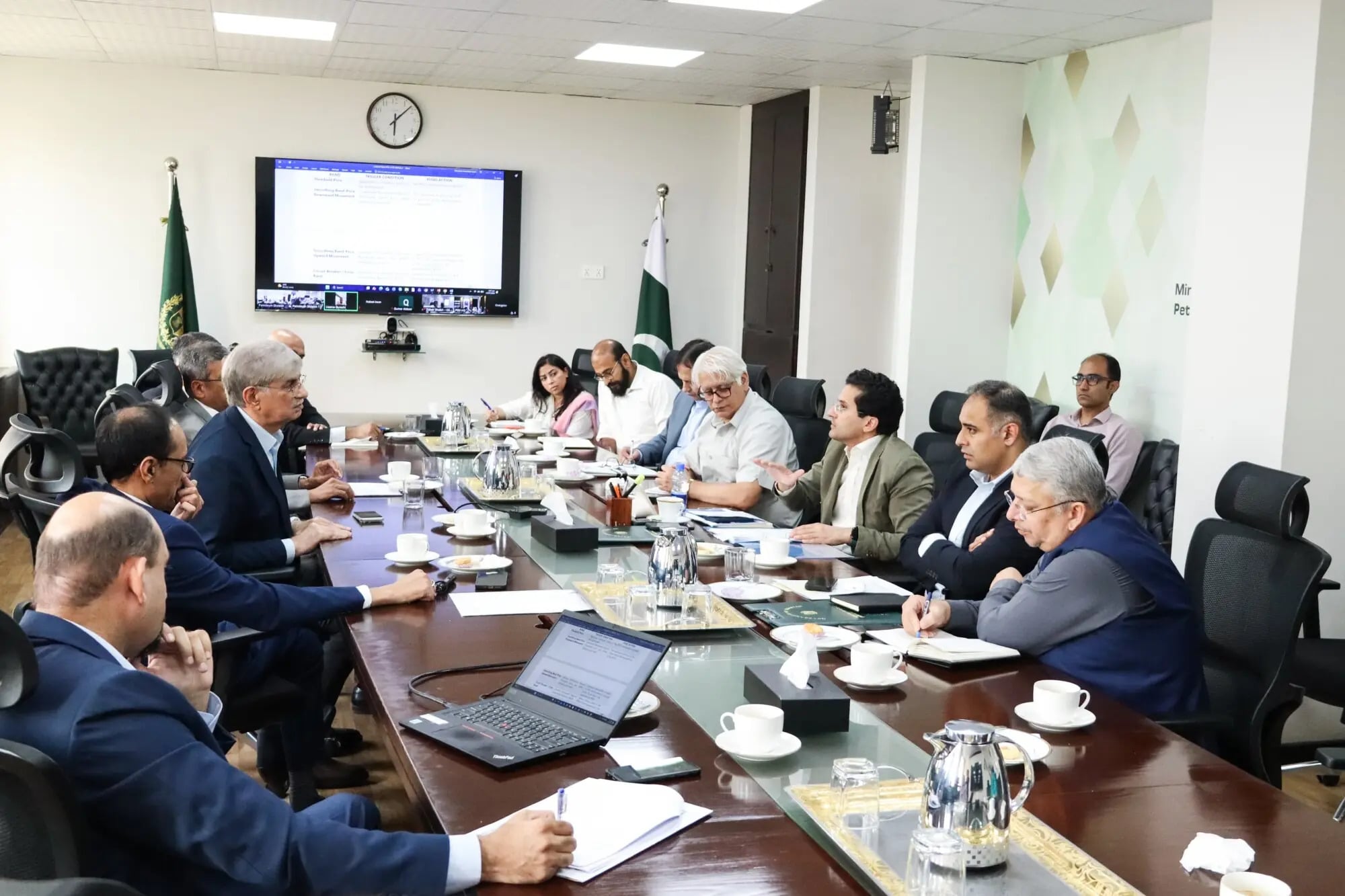
A high-level government committee on Monday proposed major reforms to Pakistan’s petroleum pricing mechanism to improve transparency, market stability, and energy security. The recommendations come as uncertainty in global oil markets increases following renewed disruption around the Strait of Hormuz. The proposed measures aim to make fuel pricing more transparent while strengthening public confidence in the system.
The committee, formed by Prime Minister Shehbaz Sharif, met under the chairmanship of Petroleum Minister Ali Pervaiz Malik. During the meeting, Malik said renewed uncertainty in global energy markets had increased the importance of the committee’s work. He also cited a KPMG study showing Pakistan’s petrol prices remain lower than those in Bangladesh, Sri Lanka, and Türkiye, while remaining broadly comparable to India.
Read more: Petrol, diesel prices rise by Rs13
Among the key recommendations, the committee proposed that the Oil and Gas Regulatory Authority publish daily Platts benchmark prices on its website. Officials said public access to the benchmark data would improve transparency in the calculation of petroleum prices. Members also recommended that the newly established petroleum price stabilisation fund operate under a fully rule-based framework with clearly defined funding and disbursement mechanisms.
The committee further recommended digitising Pakistan’s oil supply chain to improve operational efficiency, monitoring, and regulatory oversight. Meanwhile, the government is also considering amendments to the Refinery Policy to increase domestic diesel production and reduce dependence on imported fuel. Officials believe the measures would strengthen Pakistan’s long-term energy security.
Read more: Pakistan plans market-based petroleum pricing reforms
Petroleum Minister Ali Pervaiz Malik directed that the committee’s next meeting would be its final session before submitting recommendations to the prime minister. Senior officials from the Finance Division, OGRA, Pakistan State Oil, KPMG, the Ministry of Law and Justice, and other relevant institutions attended the meeting. The government will review the proposals before making a final decision on implementing the reforms.