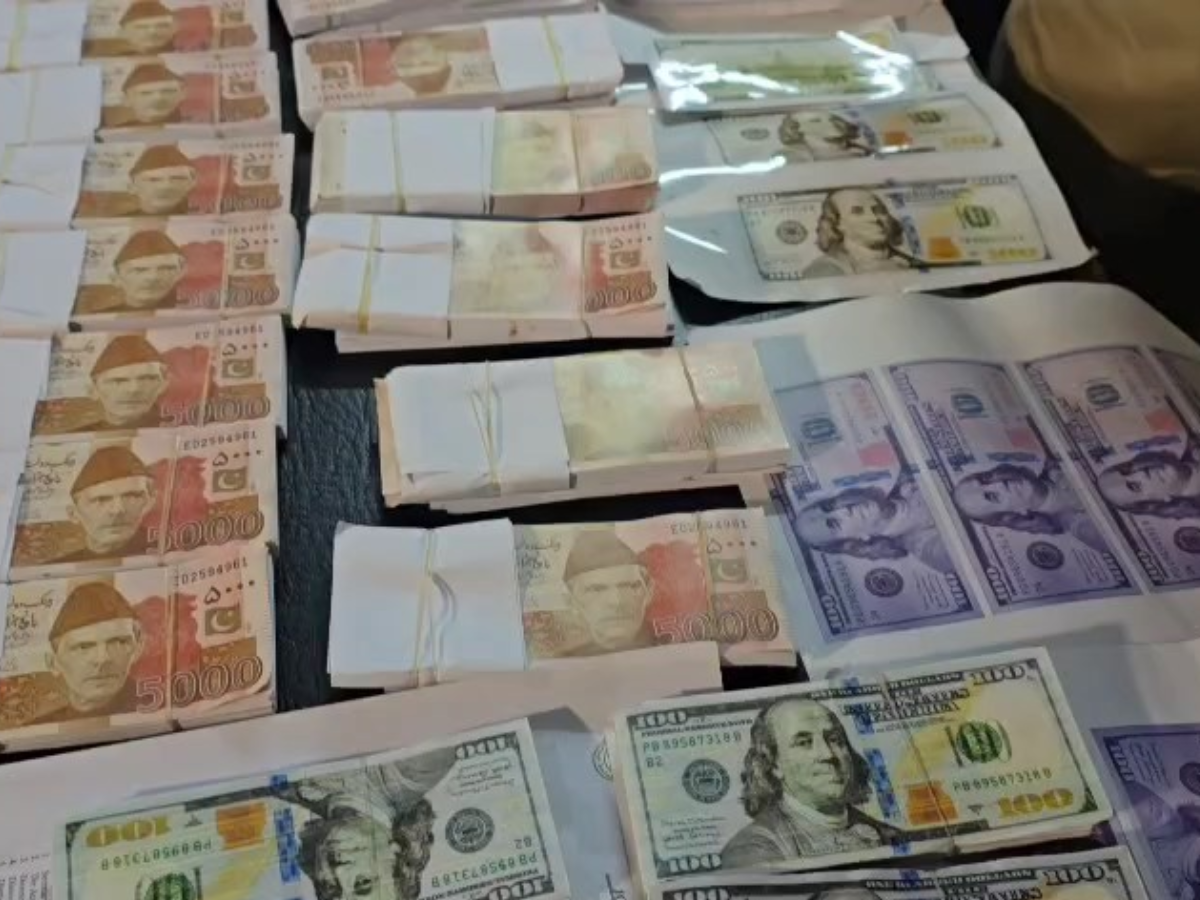
Police in Karachi have uncovered an alleged fake currency network accused of planning to circulate counterfeit banknotes in local markets ahead of Eid, raising concerns over financial fraud during the busy shopping season.
According to officials, the operation was carried out by the investigation wing of Al-Falah police after receiving intelligence about suspects involved in selling counterfeit notes at discounted rates.
Read More: Three police officials suspended for ‘mistreating’ Aurat March activists
Authorities said three suspects were arrested during the raid. The detained individuals were identified as Sajid Ali Shahani, Saddam Hussain Jatoi and Kumail Hamza. Police believe the group was involved in preparing and distributing fake currency to buyers seeking quick profits through fraudulent transactions.
SP Investigation Qais Khan said the suspects were offering counterfeit Rs5,000 notes at heavily reduced prices, allegedly selling one fake Rs5,000 note for Rs1,000. He added that the suspects had also planned to sell fake currency worth Rs100,000 for Rs30,000.
During the operation, police recovered counterfeit currency with a face value of Rs200,000. Officials claimed the seized fake Rs5,000 notes were designed with considerable sophistication, making them difficult to identify at first glance.
Investigators believe the counterfeit notes were intended to enter markets ahead of Eid shopping activity, when higher transaction volumes can make detection more difficult for both vendors and consumers.
Police said the suspects are being questioned and further disclosures are expected as the investigation continues. Authorities also revealed that two of the arrested individuals have prior criminal records, suggesting possible links to wider illegal networks.
Law enforcement agencies have announced plans to intensify operations against counterfeit currency networks in the city to prevent financial scams during the festive season.
Read More: Karachi police finalise security plan for week-long polio campaign
Officials have urged citizens and shopkeepers to remain cautious while handling cash, particularly large denomination notes, and to verify suspicious currency through available checking methods.
The case has highlighted ongoing concerns over counterfeit money circulation in urban markets, especially during major shopping periods when public demand for cash transactions rises significantly.