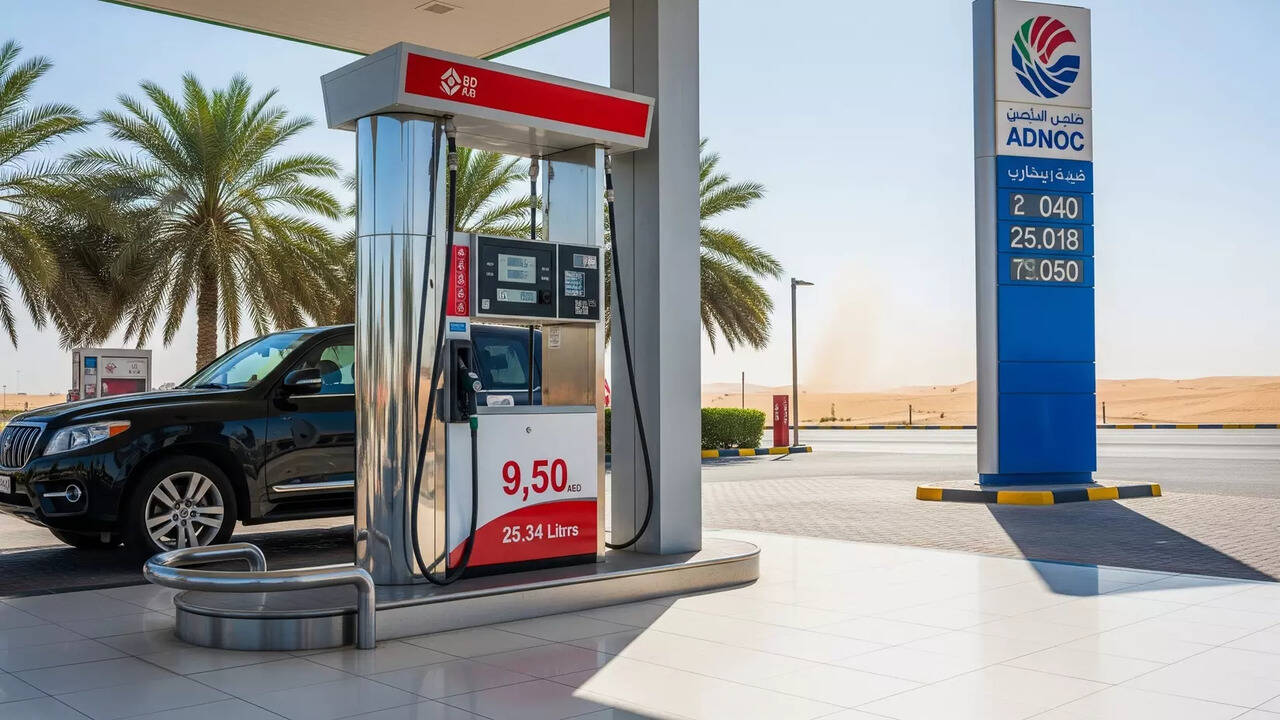
The United Arab Emirates (UAE) has announced new fuel prices for May 2026, increasing petrol rates by nearly 8% while keeping diesel prices unchanged, according to an official notification. The revision comes in line with rising global crude oil prices and ongoing volatility in international energy markets.
Read More: UAE fuel prices surge sharply in latest revision
Under the new pricing structure, Super 98 petrol has been set at 3.66 dirhams per litre, up from the previous rate of 3.39 dirhams. In Pakistani currency, this amounts to approximately Rs278 per litre. Similarly, Special 95 petrol has increased to 3.55 dirhams per litre, while E-Plus 91 now stands at 3.48 dirhams per litre. All petrol variants have seen an average increase of around 8%.
UAE petrol prices will increase in May for the third consecutive month, tracking elevated global oil prices driven by ongoing US-Iran conflict risks.
Super 98 will rise to Dh3.66, Special 95 to Dh3.55, and E-Plus 91 to Dh3.48. Diesel will remain unchanged at Dh4.69.
The… pic.twitter.com/c7VaOlX9RC
— The National (@TheNationalNews) April 30, 2026
However, the UAE Fuel Price Committee confirmed that diesel prices remain unchanged for the month. Officials said the revised rates reflect fluctuations in global oil markets, which have remained under pressure due to geopolitical tensions and supply concerns.
The UAE adjusts fuel prices on a monthly basis to align domestic rates with international benchmarks. This mechanism was introduced in 2015 to gradually remove subsidies and bring market-based pricing. The latest increase follows a period of sustained volatility in global crude oil markets, where prices surged amid concerns over supply disruptions and geopolitical uncertainty in key producing regions.
Read More: Petrol and Diesel Prices Increased Amid Global Oil Market Pressure
Energy analysts say the UAE’s pricing strategy continues to closely track international trends, making fuel costs more responsive to global developments. The announcement is expected to have a modest impact on transport and logistics costs in the country, although diesel stability may help cushion freight-related expenses.