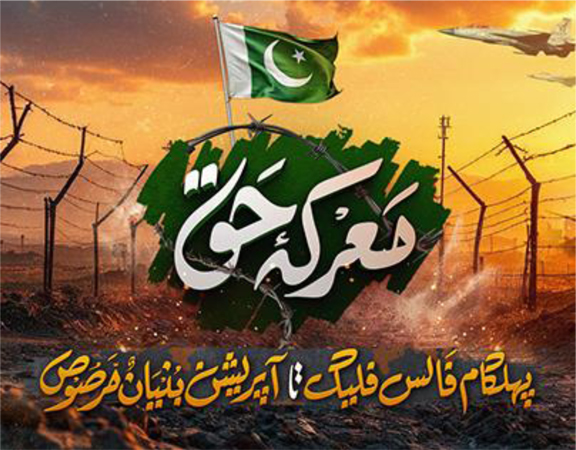
 Today marks the start of the anniversary of Maarka-e Haq! It is indeed a defining moment in contemporary South Asian history. This day commemorates the period when Pakistan’s civil and military leadership, backed by a resilient nation, successfully thwarted a massive hybrid and conventional threat from India. The conflict, sparked by the Pahalgam False Flag operation, culminated in a decisive victory for Pakistan, reinforcing its sovereignty and exposing the structural flaws in India’s regional strategy.
The Anatomy of a False Flag
The events leading to Maarka-e-Haq followed a predictable and dangerous pattern. Historically, the Indian government has utilized False Flag operations to achieve domestic political goals. False flag ops can be easily defined as orchestrated incidents designed to look like external attacks.
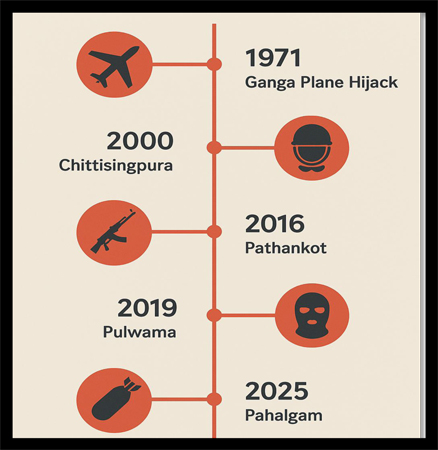
From the Ganga plane hijacking to Samjhautha Express incident, Uri and Pathankot incidents to the Pulwama attack, independent investigators and leaked communications (such as the Arnab Goswami WhatsApp chats) have often highlighted a specific pattern: an attack occurs, and within minutes, the Indian media names Pakistan without a shred of forensic evidence.
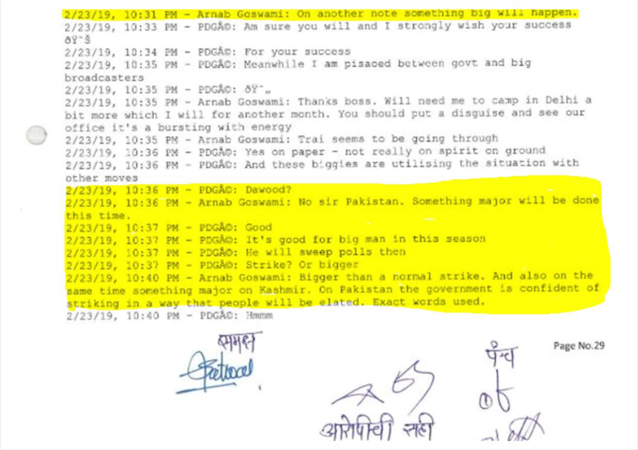
Following this playbook, the Pahalgam incident resulted in the tragic loss of innocent lives. However, the immediate externalization of the issue by New Delhi suggested the event was less about security and more about a pre-planned political maneuver.
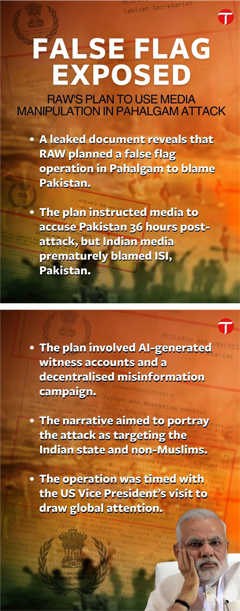
Electoral Desperation & Operation Sindoor
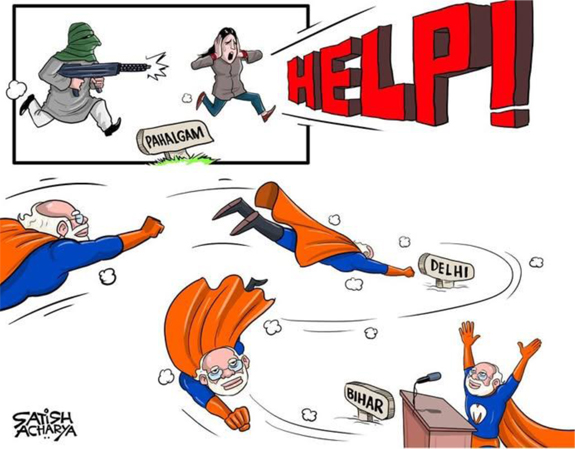
The timing of the Pahalgam incident was no coincidence. Just as with previous escalations, the Indian government faced a difficult political landscape ahead of the Bihar state elections.
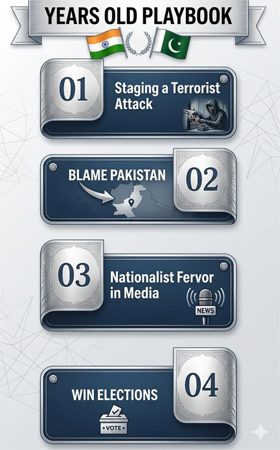
To consolidate a fractured vote bank, the leadership resorted to hyper-nationalism and years old sinister playbook.
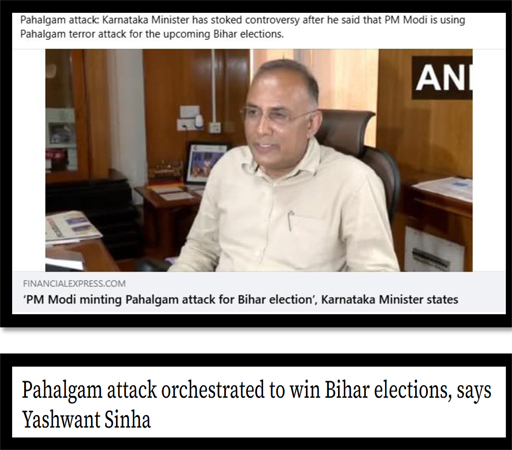
This culminated in the Operation Sindoor, a strategic blueprint aimed at diverting global attention from India’s internal failures, including human rights violations and economic instability, by creating a high stakes border crisis with Pakistan.

Propaganda Factory: Jingoism & Contradictions
The Indian “Godi Media” played its traditional role as a propaganda wing. Within an hour of the Pahalgam incident, newsrooms were flooded with scripted narratives.
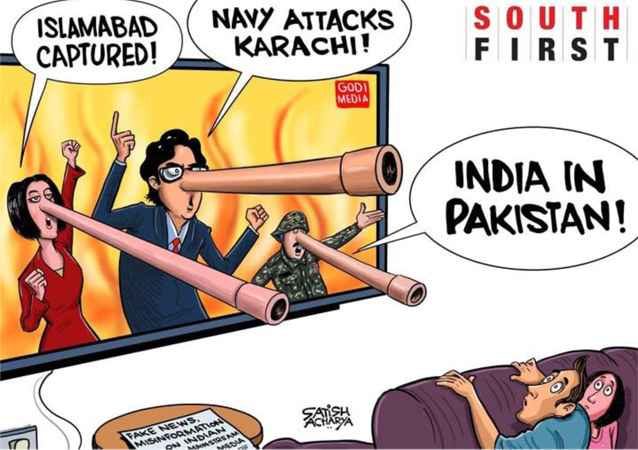
Despite Pakistan’s immediate offer of a neutral, third party investigation and its categorical condemnation of all forms of terrorism, India rejected diplomacy.

While the Indian media churned out fabrications, the United Nations and international observers noted Pakistan’s restraint. The lack of verifiable evidence provided by New Delhi eventually led to a diplomatic vacuum for India, as the world saw through the accusation-first, investigation-never approach.
Weaponizing The Indus Waters Treaty
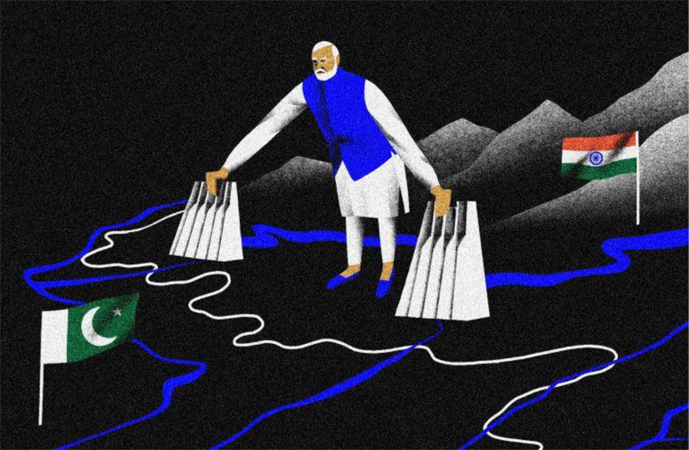
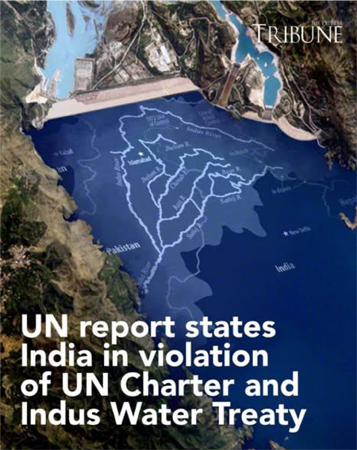
In an unprecedented move of diplomatic recklessness, India announced the unilateral abeyance of the Indus Waters Treaty (IWT), brokered by World Bank in 1960. By attempting to use water as a weapon of war, India violated decades of international law.
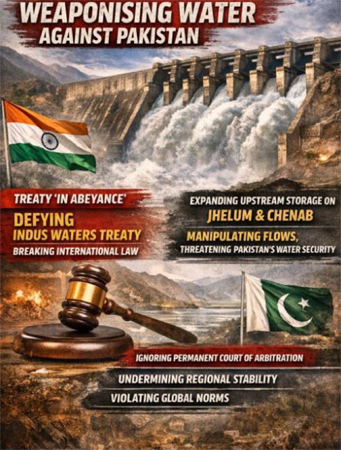
Pakistan’s legal team and diplomatic core successfully highlighted this water terrorism at the International Court of Justice and various international forums.
It is explicitly evident that India is an unreliable state actor that disregards binding international treaties.
Military Clash: Countering the Aggression
The conflict soon moved from the airwaves to the battlefield. India attempted to use its so-called technological edge through drone swarms and targeted airstrikes, but they were met with a wall of steel. Israeli made drones attempted to breach various sectors along the Line of Control (LoC). Pakistan’s integrated air defence systems successfully neutralized these threats, preventing any significant breach.
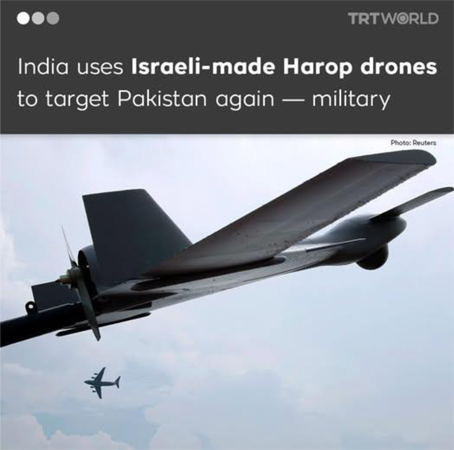
In a desperate attempt to cripple Pakistan, India launched a strike targeting the Nur Khan Airbase. The attempt was a categorical failure; the Pakistan Air Force (PAF) intercepted the incoming threats well before they could reach their perimeter, showcasing superior situational awareness and readiness.
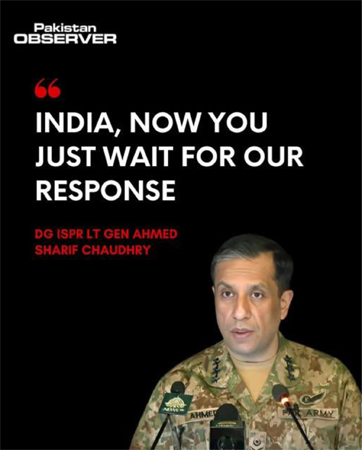
Operation Bunyan-un-Marsous
The turning point came with Pakistan’s counter offensive, codenamed Operation Bunyan-un-Marsous (The Solid Structure). Inspired by the Quranic ayat of a unified, unbreakable front, this operation was Pakistan’s kinetic response to Indian overreach.

During Maarka-e-Haq, Pakistan did not merely defend; it effectively engaged and neutralized multiple high-value targets across the border. The PAF and Pakistan Army demonstrated a synchronized display of Active Deterrence.
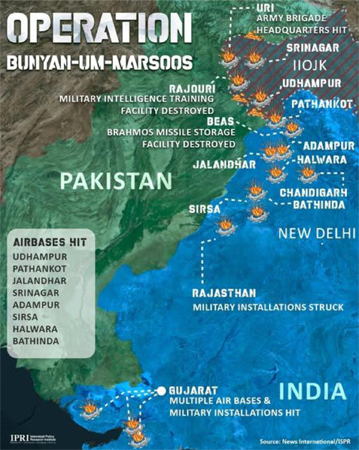
Unlike the indiscriminate Indian shelling, Operation Bunyan-un-Marsous targeted military infrastructure, ensuring minimal collateral damage while delivering a clear message: any aggression would be met with a stronger response. The success of Maarka-e-Haq was not just a military feat but a national one. The synergy between the public and the armed forces during the crisis effectively neutralized the psychological warfare (Fifth Generation Warfare) being waged by New Delhi.
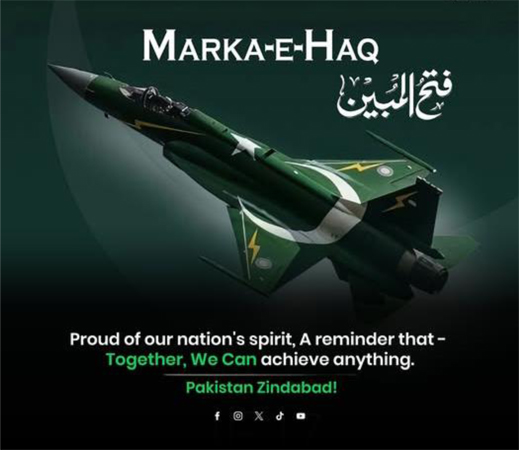
PAKISTAN HUMESHA ZINDABAD!
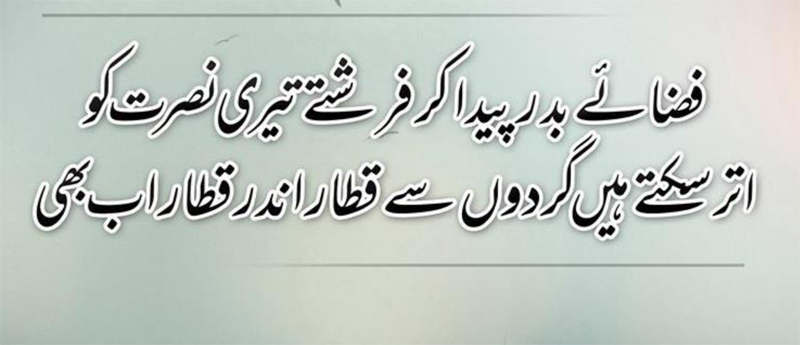
Maarka-e-Haq remains a testament to the fact that size does not dictate the outcome of a conflict; resolve, truth, and strategic clarity do. Pakistan’s prudent diplomatic stance, combined with a calibrated military response, forced a superior-sized neighbor to retreat from the brink of a full-scale war.
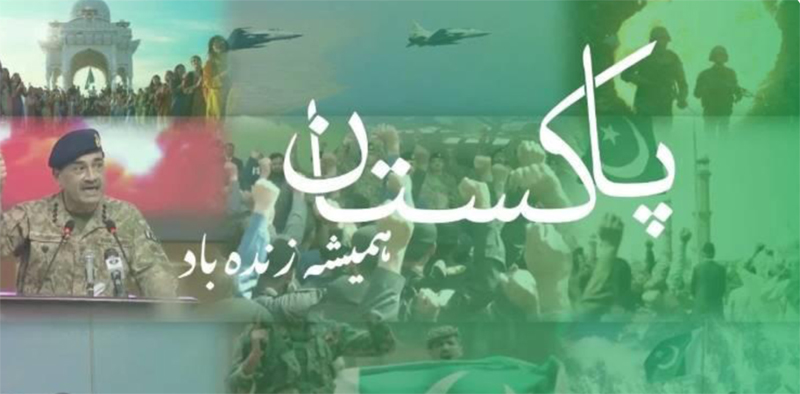
As we celebrate this anniversary, we remember the martyrs and the strategic brilliance that kept the nation safe. The Bunyan-un-Marsous of Pakistan’s defence remains unshaken, serving as a permanent deterrent against any future false flag adventures by India. Truth prevailed over propaganda, and the Maarka-e-Haq remains a bright chapter in the history of the defenders of the faith and the motherland.