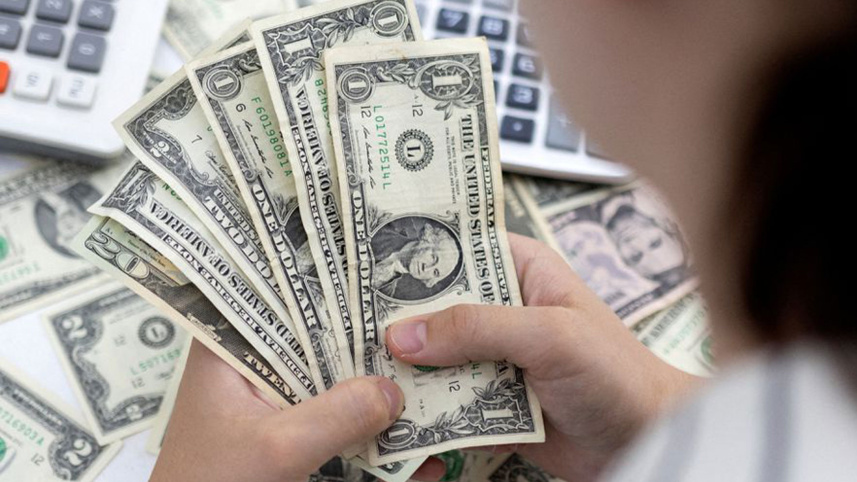
The US dollar strengthened to a one-week high against major global currencies on Monday as renewed geopolitical tensions in the Middle East pushed investors toward safer assets. Market sentiment shifted quickly after developments involving rising conflict risks between the United States and Iran. Consequently, traders reduced exposure to riskier currencies and increased demand for the dollar. The shift reflected growing uncertainty across global financial markets.
Tensions escalated after the United States reported the seizure of an Iranian cargo vessel attempting to bypass restrictions, while Iran warned of possible retaliation. Furthermore, Tehran indicated it would not attend a planned second round of negotiations with Washington. These developments increased fears that diplomatic progress could stall. Therefore, markets reacted strongly to the breakdown in dialogue and rising geopolitical pressure.
Read more : PM Shehbaz begins key Middle East diplomacy tour –
As a result, major currencies weakened against the dollar, with the euro slipping to $1.1746 and the British pound falling to $1.3479 during early trading. Meanwhile, the Australian dollar also dropped as risk-sensitive assets came under pressure. The Dollar Index rose to 98.38, recovering some recent losses. Consequently, analysts noted a clear shift back toward safe-haven demand.
In addition, oil markets reacted sharply to escalating tensions, with Brent crude rising 7 percent to $96.8 per barrel and US West Texas Intermediate climbing over 8 percent to $90.74. Traders linked the surge to fears over supply disruptions in key shipping routes. The ongoing instability around the Strait of Hormuz has intensified concerns about global energy security. Therefore, oil prices continue to reflect geopolitical risk premiums.
Read more : Middle East escalation drives Trump‑Modi dialogue
Experts noted that the conflict has created major uncertainty in energy supply chains, particularly as maritime restrictions and blockades affect shipping through critical waterways. Analysts warned that prolonged tensions could further disrupt global trade and inflation trends. Meanwhile, investor behaviour continues to fluctuate based on developments in diplomatic talks. Consequently, financial markets remain highly sensitive to any escalation or de-escalation signals.
Looking ahead, attention is also focused on central bank policy decisions, including the upcoming meeting of the Bank of Japan, where interest rate expectations remain uncertain due to global instability. In addition, cryptocurrency markets also showed weakness, with both Bitcoin and Ethereum recording slight declines. Therefore, investors are closely monitoring geopolitical and monetary developments for further direction in global markets.