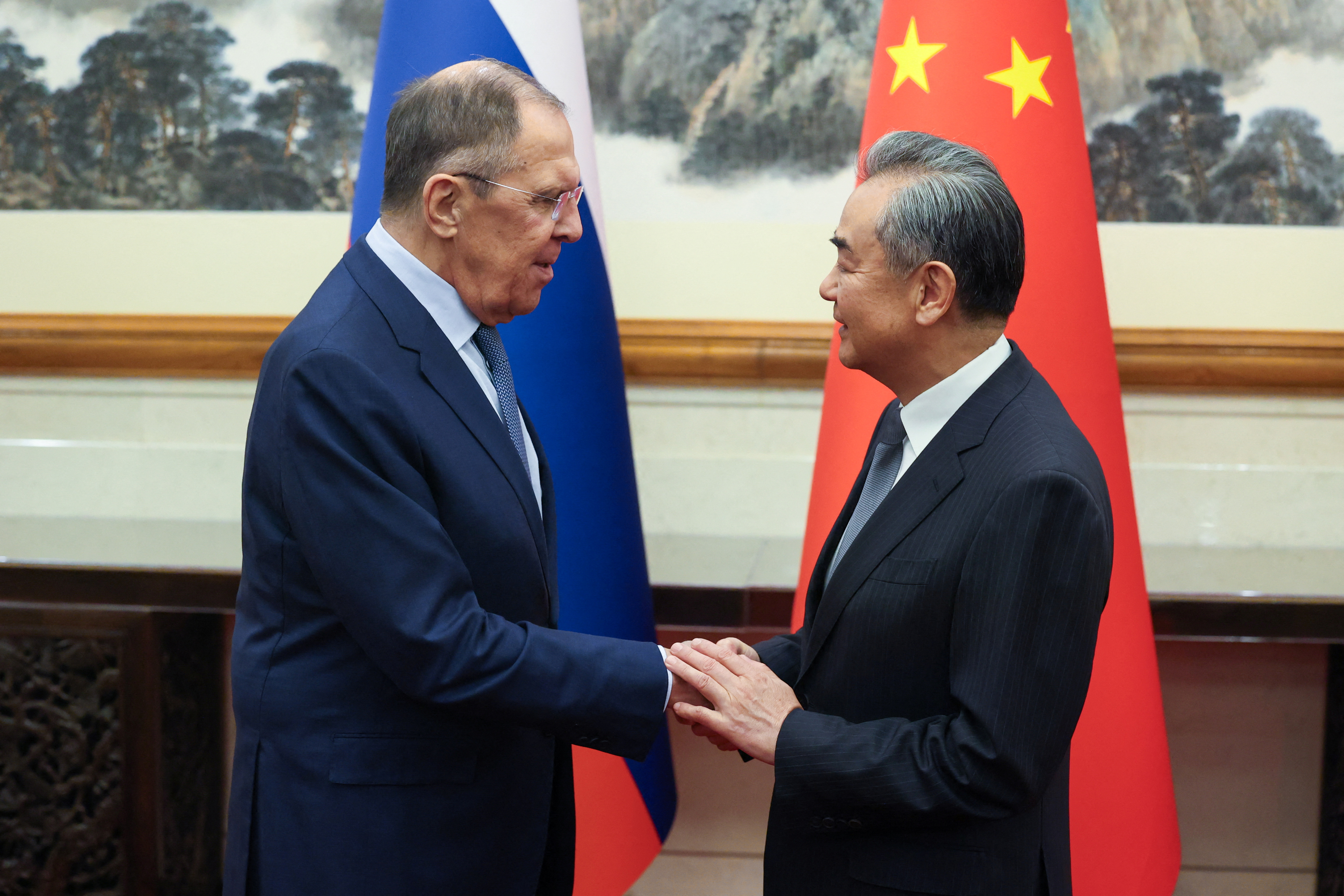
Chinese President Xi Jinping has met Russian Foreign Minister Sergei Lavrov in Beijing, as China intensifies diplomatic engagement with global leaders amid the ongoing Middle East conflict.
Read More: Russian foreign minister arrived in Beijing for Middle East talks
According to Chinese state media, the meeting took place at the Great Hall of the People and focused on bilateral cooperation, regional stability, and the evolving geopolitical situation. The discussions come as several international leaders, including Spain’s Prime Minister Pedro Sánchez and UAE Crown Prince Mohamed bin Zayed Al Nahyan, have also visited Beijing in recent days.
Chinese President Xi Jinping on Wednesday met with Russian Foreign Minister Sergei Lavrov in Beijing: Xinhua (Video: CCTV News) pic.twitter.com/YeMxBtSYPS
— Global Times (@globaltimesnews) April 15, 2026
During the meeting, Xi Jinping emphasised the importance of strengthening China-Russia ties and deepening strategic cooperation across multiple sectors. He said both countries should enhance coordination and support each other’s development while maintaining long-term stability in their relationship.
Lavrov, meanwhile, highlighted the stabilising role of China-Russia relations in global affairs and discussed expanding cooperation in energy supplies and economic exchange. He noted that Russia could help address China’s energy needs amid disruptions linked to tensions in the Strait of Hormuz, a key global shipping route affected by the Middle East conflict.
The talks also covered the ongoing US-Iran talks, as well as broader issues including the Ukraine conflict and Asia-Pacific security dynamics.
China has positioned itself as a potential mediator in the Middle East crisis, with Xi Jinping stating earlier in meetings with Gulf leaders that Beijing is willing to play a “constructive role” in promoting peace and dialogue. Analysts say rising energy prices and supply chain disruptions have increased the urgency of diplomatic engagement.
Experts note that while China and Russia maintain close ties, their interests may not always fully align, particularly regarding global energy markets and regional conflicts. However, both countries continue to deepen cooperation as part of their broader strategic partnership.
Read More: Russia vows response after Ukraine fires long-range US missiles
The latest high-level meetings reflect Beijing’s growing diplomatic activity as it seeks to expand its influence in global crisis management and energy security discussions.