
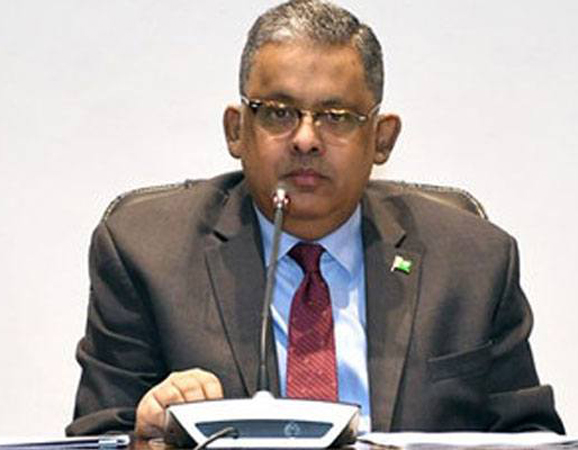
Pakistan’s Ambassador to the United States Rizwan Saeed Sheikh on Monday urged stronger economic engagement with Washington, saying bilateral ties were “not merely optional” but a necessity for both the present and the future, while also linking Pakistan’s recent diplomatic role in the US-Iran crisis to its wider regional relevance.
Addressing the Pakistan Conference at Harvard University, Mr Sheikh invited American businesses and investors to tap Pakistan’s economic potential and said Islamabad remained committed to facilitating foreign investment. The annual conference, held this year under the theme “From Potential to Performance”, featured Pakistani and international policymakers, academics and business leaders, with Finance Minister Muhammad Aurangzeb also in attendance.
Referring to Pakistan’s founding vision, the ambassador said Quaid-i-Azam had envisaged the country emerging as “the pivot of the world,” adding that Pakistan’s recent diplomatic role in regional crises reflected that long-standing aspiration.
The ambassador said Pakistan had been endowed with vast natural and human resources, especially a large youth population, and argued that the country’s future was bright despite the many difficulties it had faced since independence. He also said Pakistan’s performance should be judged in light of the challenges it has had to confront over the decades, particularly terrorism.
Describing Pakistan as one of the countries hardest hit by militancy, Mr Sheikh said it had paid a heavy price in the global fight against terrorism and remained determined to defeat the threat with resolve.
Mr Sheikh used the Harvard platform to place Pakistan’s diplomacy in the recent US-Iran crisis at the centre of his argument for deeper engagement with Washington. He said Pakistan had been selected to facilitate US-Iran negotiations because of its decades-long diplomatic role and thanked both sides for expressing confidence in Islamabad. Pakistan would continue sincere efforts for peace in the region, he maintained.
His remarks build on a series of recent media appearances in which he has cast Pakistan as a neutral facilitator trying to create space for dialogue. In an interview with NBC News, the envoy had pointed to “intense diplomatic efforts” underway on the US-Iran situation, while stressing that responsibility for any final settlement rested with the parties themselves.
In another interview, Mr Sheikh had said China had played a “quiet but persuasive” role before the truce and argued that diplomacy needed a degree of confidentiality so that the parties could make decisions without outside pressure. He said regional states including Saudi Arabia, Egypt and Turkiye had also supported the wider push for de-escalation.
Speaking to Fox News, the ambassador said the negotiations were complicated by conditions inside Iran. He nevertheless expressed hope that talks could move forward.
Pakistan’s mediation effort has come at a time when Islamabad seeks to recast its ties with Washington beyond a narrowly security-driven framework. Official US figures show that goods trade between the two countries reached an estimated $8.7 billion in 2025, giving fresh weight to Mr Sheikh’s call for stronger commercial ties.
According to well-placed sources in both Islamabad and Washington DC, Islamabad now wants to use its current diplomatic access to push for a broader relationship grounded in trade, investment and sustained strategic dialogue.