The Punjab government, under the directive of Chief Minister Maryam Nawaz, has implemented a series of austerity measures aimed at reducing state expenditures across the province.
Read More: PA implements comprehensive austerity measures
According to an official notification, shops, markets, and shopping malls across Punjab, including Lahore, will close by 8:00 pm, while wedding halls and restaurants will shut by 10:00 pm. These steps are part of a broader plan to conserve resources and optimize operational efficiency.
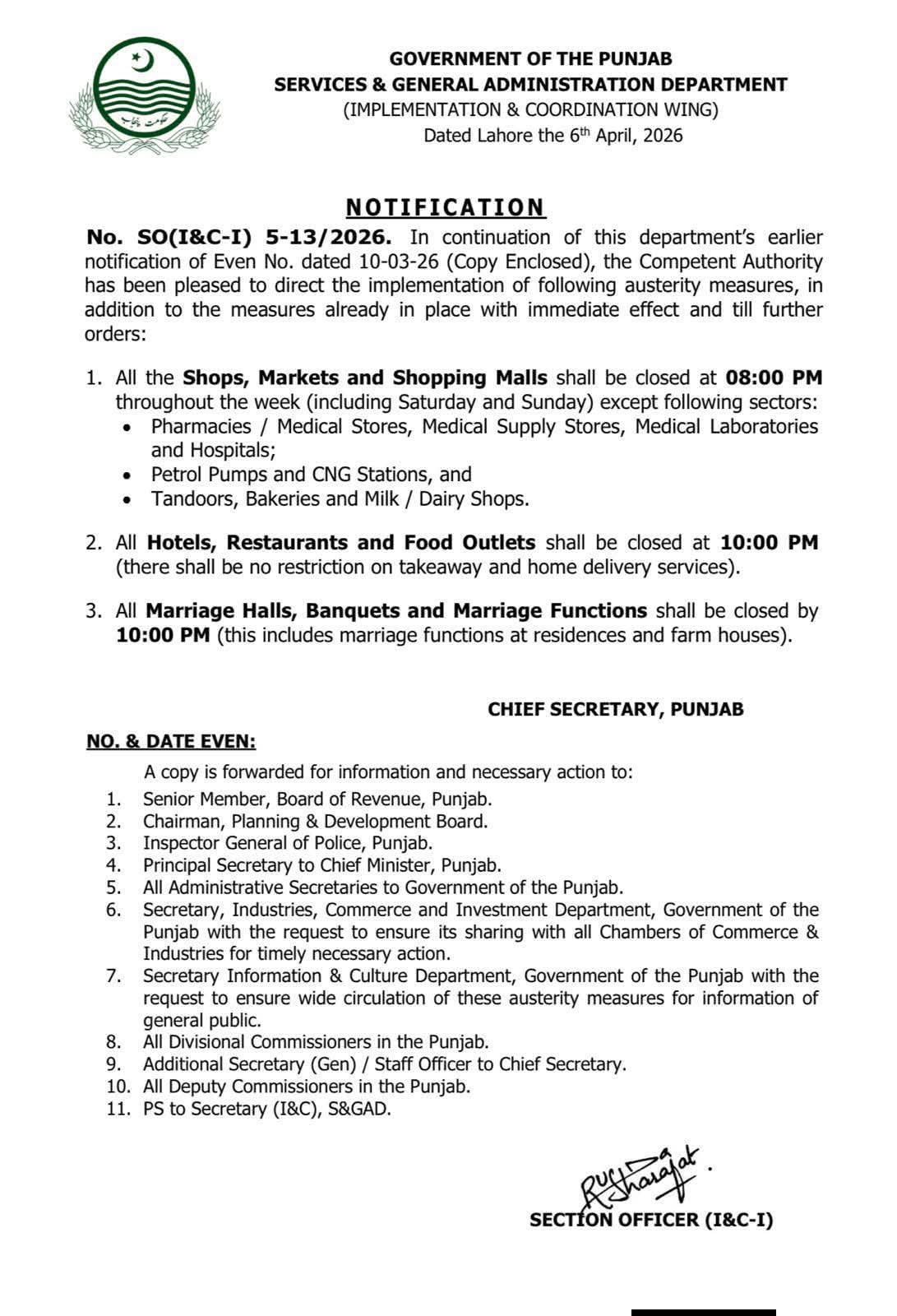
The notification also imposes a 50% reduction in fuel allocation for government vehicles. Purchases of new vehicles have been temporarily prohibited, and government meetings are being encouraged to take place via online platforms to limit costs and enhance efficiency. Security and protocol vehicles for officials are being restricted, while official banquets at the government level are suspended, with exceptions for foreign delegations.
Work hours for public offices have been capped at four days per week, reinforcing the push for austerity. The measures are aimed at rationalizing expenditures amid economic pressures while promoting responsible resource management.
Reactions from the business community have been mixed. Traders have expressed concern that citizens rarely shop early in the morning and that such restrictions could worsen already challenging economic conditions. However, the president of the Lahore Chamber of Commerce supported the decision, noting that markets would remain open during the day and that the business community will be encouraged to comply with the new regulations.
These austerity measures reflect a broader trend of fiscal prudence, aiming to reduce state expenditure and streamline government operations while attempting to maintain public and commercial functionality across Punjab.
Read More: Punjab cabinet to donate two-month salary to PM’s austerity fund
Authorities have emphasized that implementation and compliance will be closely monitored to ensure that the intended savings and efficiencies are realized without causing undue disruption to the public or the economy.