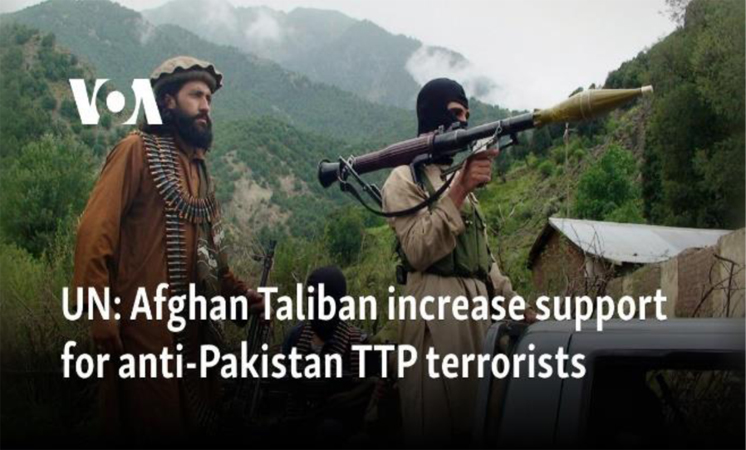
 Pakistan’s stance on cross-border terrorism from Afghanistan has hardened into a policy of “red lines” and “open war” following an understandable surge in attacks since 2021. As of April 2026, Islamabad maintains that the Afghan Taliban are providing sanctuary to the Tehrik-e Taliban Pakistan (TTP), which remains a direct threat to national sovereignty. These facts have been verified by numerous reports and assessments released by independent forums and regional stake holders. Surprisingly , in last week of past month some glaring contradictions have been noticed in statements of UN experts on the issue of cross-border terrorism hitting Pakistan from Afghanistan.
Astonishing Contradiction in UN OHCHR Stance
Press release of UN OHCHR clearly mentioned concerns about cross border terrorism with obvious linkage to present ruling regime. 8th para of press release available on OHCHR website is noteworthy! ” Pakistan claimed its attacks were in response to the Taliban authorities’ alleged support for TTP, a group under Security Council counter-terrorism sanctions. The de facto Afghan authorities deny supporting the TTP. Attacks by the TTP in Pakistan have escalated since 2021, with hundreds of deaths in 2025 and tens of thousands displaced in the ensuing conflict.” UN experts further said “All authorities, including the Taliban, must diligently prevent terrorist groups like the TTP from threatening the human right to life, including outside their own borders”. However , in same press release has referred reluctance of unnamed experts on linkage of terrorism with TTP and de-fecto Taliban regime amid lack of evidence. This contradiction in fact reflects a dangerous selectiveness of UN experts about menace of cross-border terrorism nurturing in Afghanistan with impunity as mentioned in significant reports and assessments.
International Endorsements: Afghanistan is
Hub of ITOs
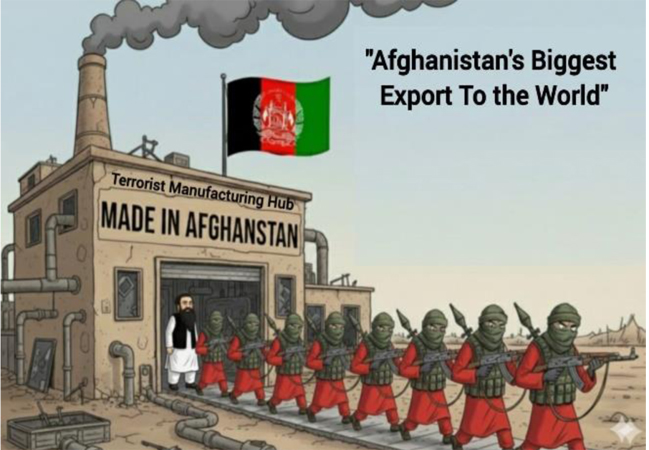
Collectively, all reports, assessments and statements highlight Afghanistan as hub of terrorism with 20+ ITOs, 13,000-23,000 foreign terrorists, including over 6000 TTP terrorists enjoying safe haven and operational freedom alongside continued Al Qaeda presence and leadership regrouping, active ISIL-K expansion. It also documented over 600 TTP attacks in Pakistan using Afghan soil. Taliban provide sanctuary, facilitation and logistical support enabling cross border attacks and regional instability.
8 35th, 36th, 16th & 37th UN Security Council Monitoring Team Reports (February 2025, July 2025, 08 December 2025, 04 February 2026)
8 SIGAR 66th and 68th report (January 2025).
8 Russian MFA Military-Political Assessment (Feb 2026);
8 CSTO Security Assessment (2026)
8 SCO Deliberations (September 2025) ? Quadrilateral Assessment Russia-China-Iran (Sept 2025)
8 Denmark Amb at UNSC (Nov 2025)
8 Russia Security Council Secretary Sergei Shoigu (2025)
8 Russia UN Amb Vassily Nebenzia (2025).
8 Russia FM Sergey Lavrov (August 2025)
Pakistan’s Stance : Key Points
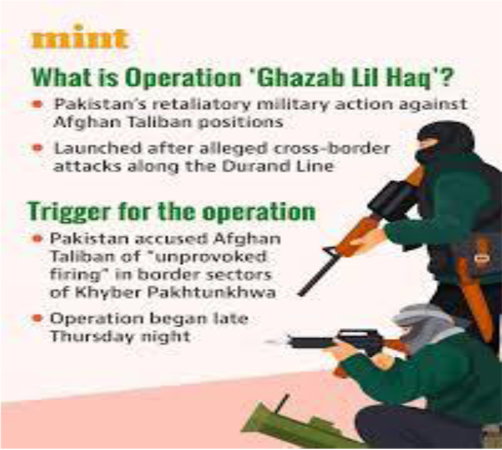
8 Military Retaliation & “Open War”: Pakistan has shifted from diplomatic appeals to direct kinetic action. In early 2026, Pakistan declared a state of “open war” against the Taliban regime after intense border clashes and multiple TTP suicide attacks. This includes unprecedented airstrikes targeting TTP hideouts in Afghan urban centres like Kabul and Kandahar.
8 Demands for Verifiable Action: Pakistan insists that any ceasefire or improvement in ties is contingent on Kabul providing “visible and verifiable” proof of a crackdown on TTP training camps and leadership. Islamabad is currently seeking written guarantees from the Afghan Taliban that their soil will not be used for terrorism.
8 Rejection of Negotiations: After failed attempts at mediation in 2021 and 2022, Pakistan has largely abandoned the policy of negotiating with the TTP, viewing past talks as a “policy of appeasement” that only allowed militants to regroup.
8 Economic & Diplomatic Levers: Border Management: Pakistan has accelerated the fencing of the 2,640km Durand Line and strictly regulates crossing points like Torkham and Chaman to prevent militant infiltration.
g Refugee Repatriation: Islamabad has linked the presence of undocumented Afghans to security threats, carrying out mass deportations of over one million Afghans to pressure the Taliban administration.
g Trade Restrictions: Pakistan has used its position as Afghanistan’s largest trading partner as leverage, occasionally suspending trade and closing border routes to demand counter-terrorism cooperation.
Final Words
8 Pakistan is rightly questioning the “Evidence Gap” pointed out unnecessarily by UN experts. Argument from Pakistan side merits due attention that the demand for more “proof” is redundant and obstructive. If the UN’s own specialized monitoring teams have already documented the threat, asking for more evidence suggests a political bias rather than a factual deficit.
8 Validation of Existing International Findings: Islamabad points out that multiple UN Security Council reports and international assessments already confirm the presence of over 20 terrorist groups in Afghanistan. Pakistan’s stance is that the UN is effectively ignoring its own data which highlights thousands of foreign fighters and the Taliban’s active support for proxies.
8 The Absurdity of “Physical Proof”: Pakistan dismisses the demand for further “on-ground” evidence as unrealistic. Diplomatically, it asks if the international community expects Pakistani leadership to physically enter insurgent-held Afghan territory to photograph TTP leaders like Hafiz Gul Bahadar or Mufti Noor Wali Mehsud just to validate a reality that is already causing daily casualties.
8 Challenging Institutional Credibility: Pakistan’s strongest counter-argument focuses on the UN’s internal logic. By questioning the reality of the TTP threat, these experts are inadvertently undermining the credibility of the very UN institutions tasked with monitoring global terrorism. Islamabad views this as a “crisis of confidence” within the UN’s own reporting mechanisms.