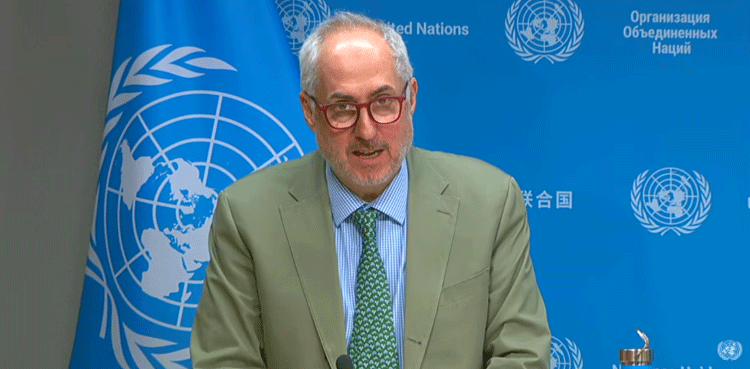
The United Nations has initiated efforts with Pakistan to establish a special task force aimed at ensuring safe passage through the Strait of Hormuz, as regional tensions escalate amid the ongoing U.S.-Israel conflict with Iran. The UN announced the task force on Friday, emphasizing the urgent need to protect humanitarian and agricultural shipments in the region.
Read More: UN chief warns situation spinning out of control in Middle East
UN Secretary-General Antonio Guterres said the mechanism is designed to develop practical solutions for the safe movement of essential supplies, warning that disruptions in maritime trade could create global ripple effects on food security and humanitarian operations. “Immediate action is essential to mitigate these consequences,” UN spokesperson Stéphane Dujarric told reporters at UN Headquarters in New York.
The task force will be led by Jorge Moreira da Silva, Executive Director of the United Nations Office for Project Services (UNOPS), and will include representatives from the UN Conference on Trade and Development (UNCTAD), the International Maritime Organization (IMO), and the International Chamber of Commerce (ICC). Pakistan has been contacted as a key partner in the initiative, reflecting its strategic role in regional stability.
The mechanism aims to facilitate trade in fertilizers and related raw materials while respecting national sovereignty and international law. Dujarric highlighted that successful operations could build confidence in diplomatic solutions and potentially contribute to a broader political settlement.
The UN Secretary-General’s personal envoy, Jean Arnault, will lead political engagement with member states to complement the task force’s efforts. The International Maritime Organization reports that approximately 2,000 vessels and 20,000 seafarers have been affected by the ongoing conflict, underscoring the scale of disruption.
Read More: Pakistan’s mediation push earns global recognition
In parallel, Iranian authorities have assured that “non-hostile” vessels will be granted safe passage. Meanwhile, global energy markets remain volatile, with Brent crude oil surging to $110.82 per barrel amid the conflict, highlighting the economic stakes of maintaining secure shipping routes.