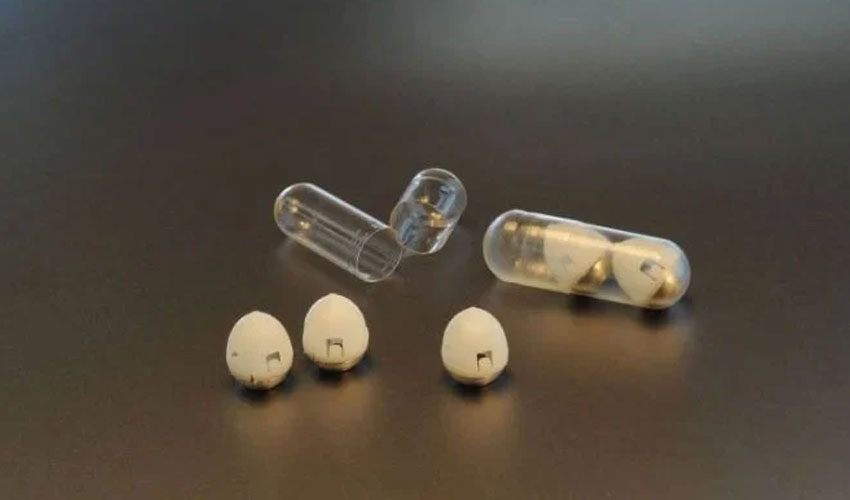
Researchers in Japan have made a promising breakthrough, creating insulin pills that could replace injections for diabetes patients. The oral system may simplify treatment, reduce pain, and improve daily management for millions. This development offers hope after decades of failed attempts to make oral insulin effective.
For over a century, scientists have struggled to turn insulin into a pill due to the digestive system breaking it down before it enters the bloodstream. Additionally, the intestines lack a natural mechanism to absorb insulin efficiently, making oral delivery extremely difficult.
Read more: New insulin effective over 24 hours introduced in Pakistan
Researchers at Kumamoto University may have found a solution using a cyclic peptide called ‘DNP peptide,’ which allows insulin to pass through the small intestine intact and reach the bloodstream. This innovation addresses one of the biggest barriers to practical oral insulin therapy.
The team tested two approaches: combining insulin with the peptide and chemically linking insulin to the peptide. Both methods successfully lowered blood sugar levels in diabetic mice, demonstrating significantly improved absorption compared to previous oral insulin attempts. Bioavailability reached 33 to 41 percent, a substantial improvement over earlier trials.
Read more: Open insulin can be stored at up to 37 C: study
While the findings, published in Molecular Pharmaceutics, are still in early stages, researchers are optimistic. The next step involves testing the system in larger animal models before moving to human clinical trials, bringing insulin pills closer to everyday use.