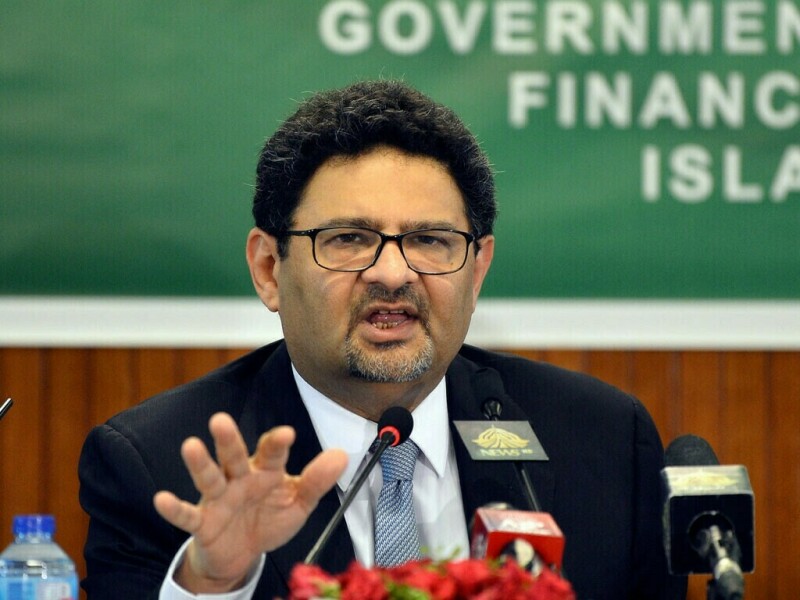
ISLAMABAD — Miftah Ismail has called for a careful and thoroughly researched approach to Pakistan’s ethanol blending policy, emphasizing that hasty decisions could create challenges for both the industry and consumers.
Read More: Sugar millers demand deregulation to boost industry growth and exports
Speaking to The News, the Awaam Pakistan Party (APP) leader noted that exploring ethanol blending is reasonable, but any policy adjustments should be made only after proper assessment. “It’s always good to evaluate things, but one should be careful in changing policy,” he said.
Miftah explained that if ethanol production proves commercially viable, sugar mills would likely enter the sector, creating a new market for their products. He also discussed potential implications for oil marketing companies, saying outcomes would depend on government regulations. If companies are mandated to blend a fixed percentage, such as 10%, and provided a set price, they could procure ethanol at lower costs and retain the margin as profit.
The former finance minister suggested that the Ministry of Petroleum, in collaboration with Pakistan State Oil and the sugar industry, could quickly conduct a basic assessment. “This can be studied within a couple of days, after which options can be worked out,” he said.
However, he expressed reservations about immediate implementation, citing practical challenges including blending mechanisms, infrastructure requirements, and timelines. Miftah linked the economic viability of ethanol blending to global oil prices, noting it becomes attractive when Brent crude trades above $100 per barrel, while it is less feasible at $60–$80 per barrel.
Read More: Dar chairs meeting on ethanol blending with locally refined petrol
Drawing comparisons with Brazil and the United States, he highlighted that both countries have strong ethanol industries supported by sugarcane and corn production, respectively, alongside policy incentives. While acknowledging that Pakistan’s current petrol prices could make ethanol blending seem financially feasible, he stressed that operational and logistical constraints may limit its short-term practicality.