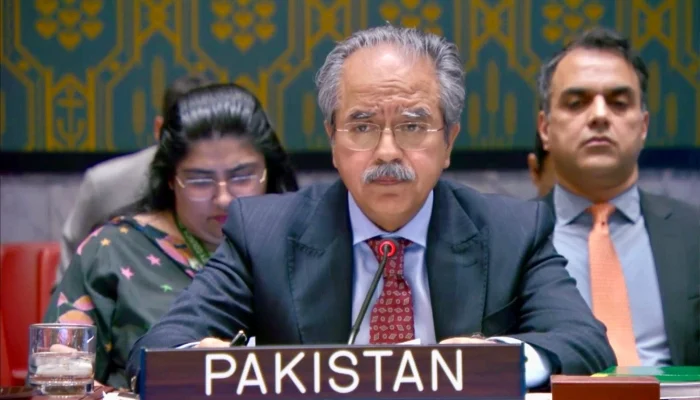
Pakistan has strongly rejected recent remarks made by India at the United Nations, accusing New Delhi of politicising water issues and attempting to undermine the long-standing Indus Waters Treaty. Officials described India’s statements as unfounded and warned that such narratives risk escalating tensions over a critical shared resource.
The response came during a high-level UN event marking World Water Day, where Pakistan exercised its right of reply following India’s remarks. During the session, India’s representative claimed that the treaty could remain in abeyance until Pakistan takes what it described as credible and irreversible measures against terrorism.
Read more : UN chief warns situation spinning out of control in Middle East
In her reply, Pakistan’s diplomat Aleena Majeed firmly dismissed these claims, stating that the treaty has endured wars, political disputes, and decades of tensions since its signing in 1960. She emphasized that the agreement contains no provision allowing unilateral suspension, making India’s position legally and historically inconsistent with established international commitments.
Furthermore, Pakistan warned that attempts to use water as leverage amount to the “weaponisation of water,” which could endanger millions who depend on the shared river system. Officials stressed that such actions undermine trust and violate the spirit of cooperation that has sustained the treaty through challenging geopolitical conditions.
Majeed also highlighted a recent supplemental award issued in 2025 by an international arbitration body, which reaffirmed the treaty’s validity and binding dispute resolution mechanisms. The ruling made it clear that neither country can unilaterally suspend or alter the agreement, reinforcing the need for full compliance by both sides.
In addition, Pakistan rejected India’s allegations related to terrorism, calling them baseless and politically motivated. Officials reiterated their commitment to international law and treaty obligations, urging constructive dialogue instead of confrontation, while emphasizing that sustainable peace depends on mutual respect and adherence to established agreements.