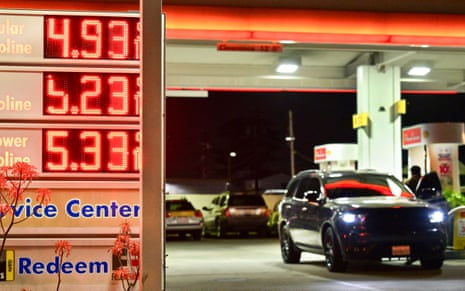
Fuel prices in California are rising faster than in the rest of the United States as global supply disruptions linked to the Iran conflict strain energy markets, with analysts warning that gasoline prices in the state could potentially reach $10 per gallon.
Read More: Iran war’s targets widen into civilian infrastructure
The surge comes as oil shipments through the Strait of Hormuz — a critical global energy route — face uncertainty due to escalating tensions in the Middle East. California’s fuel market is particularly vulnerable because of its limited pipeline connections to other U.S. regions and strict gasoline blending requirements, which isolate it from broader domestic supply networks.
According to data from American Automobile Association (AAA), the average price of regular gasoline in California reached $5.42 per gallon on Friday, significantly higher than the national average of $3.63 per gallon. Over the past month, fuel prices in the state have increased by more than 18%.
Energy economist Philip Verleger warned that California drivers could face both shortages and record-breaking prices if disruptions continue. He noted that the U.S. West Coast may become “the poster child” for the economic consequences of attacks linked to the Iran conflict.
Jet fuel prices have also surged sharply. In Los Angeles, a major aviation hub, jet fuel prices have climbed more than 47% in the past two weeks, reaching around $3.85 per gallon, according to market data from Oil Price Information Service.
California’s growing dependence on imported crude oil has made the region more susceptible to global supply shocks. Imports from countries such as South Korea and India have become critical sources of fuel, but refining disruptions in Asia and restrictions on exports from some countries have further tightened supply.
Read More: Inside the massive security plan for Oscar 2026
Refineries operated by Chevron and Marathon Petroleum are among the largest in the state handling imported crude, but operators say alternative supplies are limited as global demand intensifies.
Analysts say policymakers may consider emergency measures, including temporarily relaxing shipping regulations, to stabilise supply and limit further price increases.