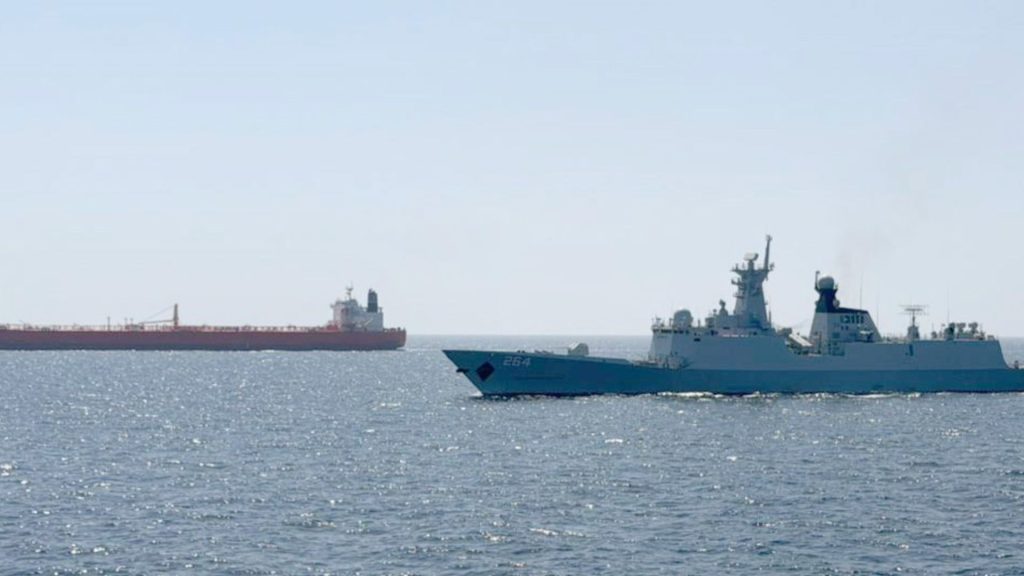
Iran has announced that ships passing through the strategically important Strait of Hormuz must coordinate with its navy to ensure safe navigation. Officials say the directive aims to maintain maritime security as regional tensions remain high. The statement came from the Iranian foreign ministry, which emphasized that the waterway’s security is closely linked to the stability of the broader region. Authorities stressed that the measure is intended to regulate ship movement and prevent potential security threats.
Foreign ministry spokesperson Esmaeil Baghaei stated that the Strait of Hormuz holds vital strategic importance for Iran. He explained that the country’s security is closely tied to the stability of this critical maritime route. Iran possesses one of the longest coastlines along the Persian Gulf and the Sea of Oman, which places significant responsibility on the country to safeguard the waterway. Therefore, officials argue that coordinating vessel movement helps maintain order and protect maritime trade routes.
Read more : Iran vows retaliation, keeps Strait of Hormuz closed amid escalating …
Meanwhile, Iran’s new Supreme Leader Mojtaba Khamenei delivered strong remarks regarding the ongoing regional tensions. He stated that Iran would continue resisting pressure from the United States and Israel and could use the Strait of Hormuz as leverage if necessary. The comments reflected Iran’s firm stance amid escalating geopolitical challenges in the region. His remarks have raised concerns among international observers about the stability of global energy supply routes.
Baghaei further explained that instability created by the United States and Israel in the region could affect the movement of ships in the strategic corridor. However, he stressed that Iran does not want the Strait of Hormuz to become unsafe for maritime traffic. Instead, authorities want vessels to coordinate with the Iranian navy when passing through the area to ensure smooth and secure navigation.
Read more : Attacks on ten vessels disrupt traffic in Hormuz Strait –
The developments have already affected global energy markets, with concerns over possible disruptions pushing oil prices back above $100 per barrel. Energy analysts warn that prolonged instability in the Strait of Hormuz could significantly impact global oil supply chains. The waterway remains one of the world’s most critical shipping routes, handling a large share of international oil trade. Consequently, any change in its security conditions can quickly influence global energy prices and economic stability.